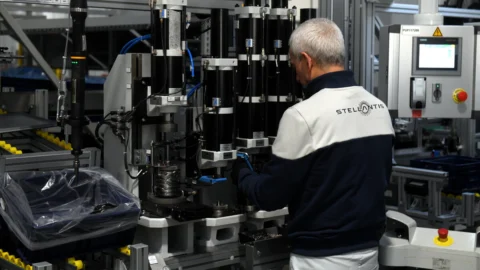
Il 2025 closes with a new setback in Stellantis' Italian production, which slips below the threshold of 380 thousand overall units. The data released by Fim-Cisl certify a total production of 379.706 vehicles between cars and commercial vehicles, down by 20,1% compared to 475.090 units in 2024. A result that confirms, as the union underlines, "the estimates of a further worsening of production data compared to the already difficult 2024".
What weighs particularly heavily is the car segment, down 24,5% to 213.706 units, while commercial vehicles limited the decline to 13,5%, stopping at 166. A comparison with previous years shows the extent of the crisis: in less than two years, volumes have practically halved compared to 2023, when overall production had exceeded 750 thousand units, despite the fact that the target of one million vehicles had been indicated at the institutional meetings.
The rebound in the last quarter avoids a worse collapse
The 2025 budget would have been even heavier without the recovery recorded in the last part of the year also due to the new line undertaken by Filosa managementIn the first nine months, car production had fallen by about a third, putting pressure on the group's entire industrial system in Italy. The production launch partially reversed the trend, in the last quarter, of the 500 hybrid at the Mirafiori plant and the New Jeep Compass in Melfi.
According to the general secretary of the Fim-Cisl, Ferdinand Ulianus, "the result could have been even worse." Uliano explains that these new productions "allowed us to recover part of the loss, which would have been much more significant" without the contribution of the last quarter. commercial vehicles also made a positive contribution, which in the last three months of 2025 recovered around ten percentage points, mitigating the impact of the annual decline.
Mirafiori bucks the trend, but the historical comparison remains severe
In the panorama of Italian factories, Mirafiori represents the only positive exceptionThe Turin hub closed 2025 with 30.202 units produced, scoring one growth of 16,5% compared to 25.920 in 2024. This figure allows the plant to stand out in a general context of double-digit losses, ranging between -13,5% in Atessa and -47,2% in Melfi.
Growth, however, does not cancel the structural downsizing compared to the recent past. Mirafiori had produced 94.710 cars in 2022 and 85.940 in 2023, levels far from the current ones. In 2025 only 140 units were made of the Maserati GranTurismo e GranCabrio, made before the production was moved to Modena.
Uliano observes that "if the growth in volumes is confirmed, it will be possible to progressively overcome the redundancy fund phase", recalling however that the solidarity contract remains active until January 31, 2026 and is 40% used by the approximately one thousand employees involved in the production of the electric 500.
Investments, models, and employment: the crux of the industrial plan
At the centre of the trade union analysis remains the need for a strategic change of pace. For Uliano "it is it is essential that Stellantis strengthens and improves its investment plan presented at the ministerial level in December 2024“, hoping that “the new industrial plan should be brought forward in its presentation and make concrete and credible choices". According to Fim-Cisl, the relaunch depends on the assignment of new investments and new models, by strengthening existing resources and by a decisive relaunch of research and development activities, to guarantee industrial and employment prospects for all Italian plants.
Il 2026 could mark an improvement, thanks to the full-year production of the 500 hybrid, the DS8 and the New Jeep Compass, in addition to the launch of additional models. But the recovery in volumes will also depend on the ability to compensate for production outages that occurred in 2025 and by the stability of the most troubled plants, in a context in which a significant portion of the workforce continues to be affected by social safety nets.
European crisis and emissions rules: still insufficient glimmers of hope
The Italian situation fits into the most broad crisis in the European automotive industryThe European Commission's review of the emissions regulation, which reduces the 2035 CO2 emissions reduction target to 90% compared to 2021 levels, opens to possibility of also marketing thermal engines, plug-in hybrids, and range extenders. Uliano believes "this is a positive sign, but still insufficient for achieving technological neutrality."
Il union reiterates that "the automotive crisis cannot be addressed only with regulatory interventions" and calls for a expansive European industrial plan, supported by common debt and a new Fund with resources comparable to the Next Generation EU. In this framework, the Fim-Cisl announces new mobilization initiatives at the European level in February, with the'aim to support industry and defend employment and supply chain in a crucial phase for the future of the sector.