It releases sun and sea from every pore and since, first born a professional journalist, then converted from the interpretation of facts to that of dishes, he knows well how to describe them in his cuisine, leading you on a fascinating navigation between Sicilian flavors and aromas, especially those of its Messina to which it remains linked as the mythical Colossus of Capo Peloro of which it is fabled as a semi-God to protect and defend the city of the strait.
“When you speak, think, create, act – he declared in an interview – what do you do if not put yourself in your own? We are a continuous expression of our animus, our history, our culture and education; therefore, even in the kitchen, what I do cannot fail to sink deeply and my depth is made of Sicily. My grandfather had a canned fish industry, my family traded citrus fruits, my mother got up at dawn to make sweets, my house was visited by sharecroppers who brought cheese and fruit from the land, my great-grandparents roamed the fields aboard a mule. These are things that remain with you like everything that will come after studies including ".
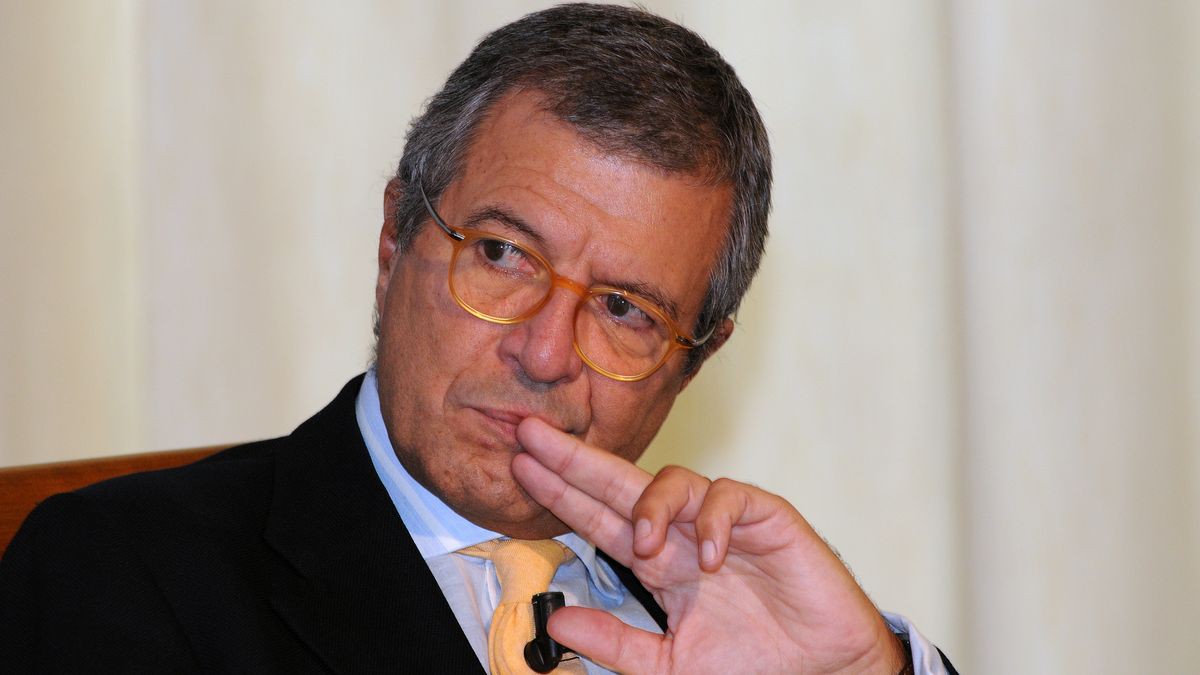
Pasquale Caliri, chef of the exclusive restaurant of the Marina del Nettuno Yachting Club which overlooks the fascinating scenery of the Strait of Messina, Silver Plate of the Italian Academy of Cuisine, member of Eurotoques, Ambassador of Taste, seems to have two souls, that clinging to the rocks beaten by the waves, linked to the popular and gastronomic traditions of his land, and the aristocratic one, even if endowed with a lot of irony, with which he deals with the topics of his cuisine aimed at connoting himself with creative and innovative contributions.
Therefore, if on the one hand the recall of his childhood memories is valid, on the other the results of shrewd choices to enrich his training are valid, such as those of going to ALMA, Gualtiero Marchesi's institute of haute cuisine, where he had masters Pietro Leemann and Paco Torreblanca.
From the Swiss master patron of "Joia", the first European vegetarian restaurant to be awarded a Michelin star, his convictions of an environmentally friendly and health-friendly diet and above all his interest in the food principles of oriental cultures are rooted.
With the latter, the great pastry chef from Alicante, a great innovator of pastry with a personal and refined style awarded as Best Artisan Master Pastry Chef in Europe who made the cake for the wedding of the Prince of Asturias, the future King Felipe refines the concept of a rigor in culinary practice which is above all respect for the rules, for raw materials, ingredients, cooking and a cultural philosophy of cooking on which he articulates an emotional language of flavors and the rediscovery of nature that aims to involve its customers.
The dish that the chef from Messina offers to the readers of Mondo Food this week, Tamagoyoaki di mare is practically the synthesis of his creed, a praise of the Sicilian spirit but also of the resources that have written the book of the gastronomic history of this island, a heritage unique in the world to conserve and preserve.
The technique is all oriental: the Tamagoyaki widespread in Japanese street food is a sort of omelette rolled up on itself several times until it becomes a cylinder to be cut into slices.
The main ingredient, however, is all Sicilian: “U mauru”. This is how the red seaweed "Chondrachantus Teedei" is called on the island, widespread on the Catania coast, calloused and with an intense taste of the sea. The dish is a "Homage to the disappearing sea" devastated by pollution and neglect. The tasty seaweed, in fact, can only take root among volcanic rocks and in perfectly clear waters free from polluting agents.
"u Mauru" ("lean") the red seaweed with which the fishermen on their return made a salad with oil and lemon
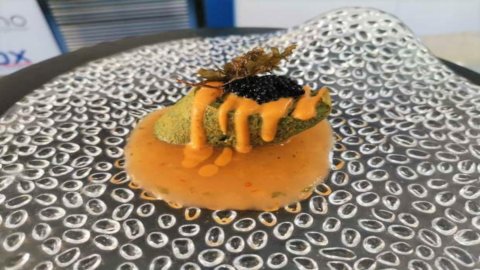
The dish includes a Tamogoyaki made green by the presence of spinach, inside "u Mauru" ("thin", in Sicilian dialect, precisely because it was the meager aperitif of the fishermen who, returning from their day, made it into a salad with oil and lemon) and mussels from the lakes of Ganzirri (Messina).
All placed on a mussel "mpepata" sauce enriched with Pachino tomato, a sea urchin sauce, caviar, fried seaweed to give crunchiness.
Practically a mouthful of sea, iodized, intense, saline, an intense flavor of Sicily
The recipe for sea tamagoyaki, sea urchin sauce on mussel 'mpepata
Ingredients
3 large eggs
30 g. Mauro seaweed
250 g. Mussels
100 gr potatoes
50 g sea urchins
25 g spinach flour
70 g. Pachino cherry tomatoes
Extra Virgin Olive Oil
Black pepper
More Starch
Purified sea water
un'arancia
One lemon
Garlic
Caviar
For the Tamagoyaki:
In a bowl, beat the eggs by adding the freeze-dried spinach, a dozen chopped mussels and the Mauro seaweed to the mixture. In a well-oiled pan, spread a thin layer of the mixture until it thickens, roll it up and add more mixture, gradually until it forms a cannoli with four, five or more layers. Cut it into small flute-shaped pieces.
For the “'mpepata” sauce:
Open the mussels in a saucepan with extra virgin olive oil, garlic, cherry tomatoes, black pepper, lemon zest. Obtain the liquid, filter and thicken with cornstarch.
For the sea urchin sauce:
Blend the sea urchin with the boiled potato, dilute with microfiltered sea water and orange zest.
Composition of the dish:
Cut a slice of Tamagoyaki and place it on the mussel sauce, finish with the sea urchin sauce, caviar and garnish with fried seaweed.