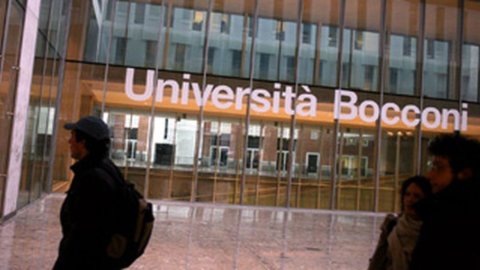
Closed 2015 with the 7th place in the ranking of the best European business schools of the Financial Times, SDA Bocconi also opens 2016 positively with its MBA rising one position in the ranking of the best full-time MBA programs published today by the British newspaper. The school, the only Italian present in the ranking of the 100 top programs, thus ranks at 25th place in the world and 9th in Europe. Once again, the internationality of the programs has pushed Bocconi and SDA Bocconi up in the rankings, both in terms of experience and teaching content and in terms of geographical mobility in the world of work that graduating from Milan manages to guarantee.
The FT ranking of full-time MBAs is in fact based on about 20 parameters, including student assessments three years after graduation and data provided by individual schools. The SDA Bocconi program stands out, among other things, for the increase in the post-MBA salary (+116%), the international mobility of graduates (10th in the world) and the value of international experiences (exchanges, internships, etc. .) during the program (11th in the world).
Another success involved Bocconi in 2015. The MaGER (Master in green management, energy and corporate social responsibility), has conquered the first place out of 100 in the ranking of Eduniversal, the organization that certifies the 4.000 best Masters and MBAs in 30 different sectors, in the world. Well, MaGer is the first in the category "Sustainable development and environmental management". The course has thus leapt from sixth place in 2013, to second in 2014 to first in 2015, overtaking major competitors such as Stanford (2nd), HEC Paris (3rd) and Wharton (5th).
The ranking considered three central criteria: the consideration of the study programme, the remuneration of the first job after the Master's and student satisfaction.
“One of the strengths of our MAster is its international nature,” he explains Matteo Di Castelnuovo, director of MaGER since 2014. “The admitted students come from all over the world: Belgium, Brazil, France, Mexico, Nicaragua, United Kingdom, Russia, Serbia, Slovakia, Vietnam…for a total of 65% of foreign students”, compared to a quota of 25% five years ago. The new course started on January 11th.