It is said that with the creation of the European Central Bank, the Bank of Italy would have seen his decrease role and it would have been reduced to a bureaucratic office responsible for supervising small banks, a research office, important but lacking the power to decide on what to do, and a few important but minor services such as the protection of savers and the dissemination of financial culture. But it would be a mistake for governments to want to free themselves of a structure often considered too autonomous from political directives. And it is precisely this autonomy the source of the authority that the Bank enjoys not only in Italy but in the international institutional and financial world. And in our country this authoritativeness It has served us in the past and will certainly serve us again in a future full of problems and uncertainties like the one we are heading towards.
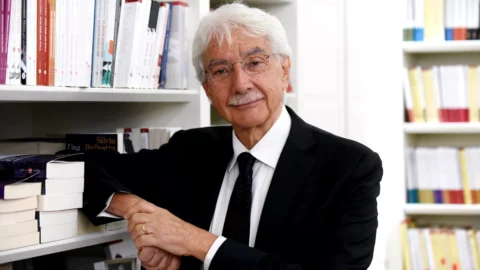
Salvatore Rossi, who was director general of the Bank of Italy after having covered all the steps of a long career for over forty years, told in a slim volume published by Laterza his Bank of ItalyThis is not a hagiographical book, as Rossi, alongside its merits, also highlights the flaws, failings, and cultural and bureaucratic obstacles that have at times caused this institution to lose its deserved reputation as a leader in the Italian public system.
Money, Confidence, and Monetary Policy: The Role of the Bank of Italy
Salvatore Rossi's book is not just a popular science book that, in my opinion, should be required reading for high school students. It is a volume that, in simple terms, manages to explain the role of money and the sense of monetary policy, the relationship between money and the real economy, the risk of inflation and the opposite risk of recession. And then we talk about the role of banks as intermediaries of money between savers and entrepreneurs, and above all of the "trust" that underlies this whole complex work monetary, the lifeblood of the real economy. Trust is also based on the credibility of the central bank that issues paper money, and it must do so wisely and with complete independence, looking only to the general interest. Rossi recalls an image of Guido Carli (governor from 1960 to 1975) appeared on the front page of theEspresso, in which Carli appeared sullen and stern, giving a "majestic and terrifying" impression. And it was precisely this mysterious image of the Bank populated by lay priests serving the people that Carli deliberately constructed. I remember that as a young reporter I went to visit the governor with the newspaper editor. He received us in his almost darkened room. He was sitting at his desk beneath the famous painting of Saint Sebastian pierced by arrows, a testament to the pressure the Governor was destined to endure and reject.
But to be able to discuss with everyone and convince the most reluctant, Carli understood that the Bank had to equip itself with a study service very solid, made by young scholars of value capable of staying in touch with the rest of the world and preparing irrefutable arguments to bring to the meetings where the decisions had to be made economic or monetary policy linesAnd this is still there today and has not lost its importance and authority.
Banking Supervision: The Dark Ages of the Bank of Italy
The second pillar of the bank is undoubtedly the Supervision on banks and other financial intermediaries. In this sector, history is stata Long and complex. Until the late 70s, the basic principle of supervision was the "stability" of the banking system. No bank could fail, lest it undermine savers' confidence in the system and thus prevent a run on the banks to withdraw their savings. Here too, I remember when, in the late 70s, I went to visit the then governor Paolo Baffi and we found ourselves discussing the situation of the Banco di Naples which was a gossip. I said that in my opinion the Bank should be allowed to exit with a deficit, also to send a signal to the public, to the managers, and to all the employees that not all mistakes could be covered up by the authorities. Baffi seemed to appreciate it, even if he didn't express an opinion because he had to weigh the pros and cons. Then the Bank of Naples exited with a deficit.
Supervision has now been transferred to the ECB for the major banks, which also uses the tools and staff of the Bank of Italy and, in any case, alongside stability, the competition e efficiency of the work which must offer excellent services because the allocation of money in the sectors with the greatest potential for expansion is in the interest of the entire economy.
Even in the Bank of Italy there was no shortage periods buiSalvatore Rossi's judgment on the Governor is very severe. Antonio Fazio, a period characterized by the “rejection of modernity” so much so that the bank, for example, had gone in just a few years from being an absolute excellence in technology to one of the last wheels of the wagon that was afraid even to use email.
The Euro and Unconventional Policies
The euro The role of the Bank of Italy has changed, but it continues to have a fundamental role in setting monetary policy. But the Bank remains a beacon of economic rationality enhanced by its independenceIn this sense, maintaining its prestige has a significant impact not only in Italy but also internationally. I remember that the then general director Fabrizio Saccomanni he told me that they had worked hard to strengthen the position of Mario Draghi to have the ECB adopt QE (Quantitative Easing), that is, unconventional monetary policies capable of boosting the economy and avoiding a prolonged recession. We must therefore continue to enhance this cultural and operational heritage of the country, not because we want to return to the lira, but because we must all work together to find a way out of the bondage of low growth and low wages.