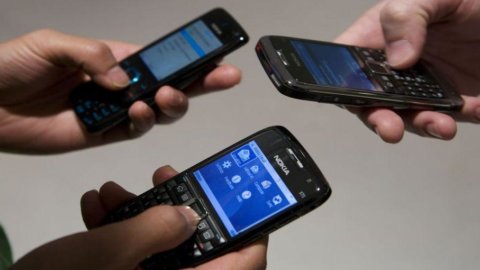
The abolition of roaming for European consumers from mid-June is guaranteed: the three European institutions, Parliament, the Council and the Commission reached an agreement overnight on the wholesale prices that operators apply to each other to offer roaming services. It was the last missing piece to allow the stop on additional costs when traveling abroad to come into effect, as previously decided, in mid-June.
Wholesale rates will be 90% lower than at present, the Council explains, allowing operators to offer roaming to their customers without increasing the cost of domestic calls. At the same time, however, they must be high enough so that operators in the countries visited can recover their costs without increasing retail prices. Furthermore, the cap must allow for continued management and modernization of networks so that European citizens can have stable connections throughout Europe.
Under the agreement, on June 15, 2017 the wholesale price cap for data (those that travel on the Internet and are growing exponentially) will drop from the current 50 euros per Gigabyte to 7,7/GB, and then continue to drop in different phases, up to 2,5/GB on 1 January 2022.
It is a significantly lower ceiling than the one initially proposed by the Commission (8,5/GB), and will still allow companies to invest in next-generation networks (5G), writes the Council. “It was the last piece of the puzzle. From 15 June, Europeans will be able to travel in the EU without roaming charges and operators will be able to continue competing to provide the most attractive offers for their home markets,” said Digital Commissioner Andrus Ansip.
For telephone calls, the amount will drop from 5 cents per minute to 3,2. For text messages sent, it will drop from 2 to 1 cent in June, said a spokesman for Malta, a country which holds the six-monthly rotating presidency of the EU and represents the position of governments.
“Goodbye roaming,” tweeted Miapetra Kumpula-Natri, the MEP who led the negotiation on the legislation representing the EU parliament.
The European Commission will review the wholesale tariffs every two years, and then make any proposals it deems necessary. However, the agreement must be definitively approved by both the member states and the EU parliament.
Once the problem has been solved for consumers, the question of who will pay the bill still remains open, given that telephone operators will continue to pay each other tariffs for the use of mobile phones abroad, with significant differences between prices nationalities of individual countries.
The countries of northern and eastern Europe, where Internet tariffs are lower, are in favor of lower limits on wholesale prices, while those of southern Europe fear that operators will rely on domestic prices to recover what they they will lose out on tourist traffic.