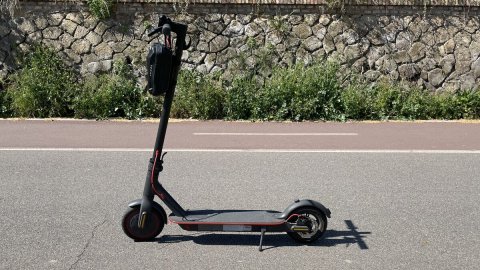
Il electric scooter is the new object of desire, an ecological and simple solution for urban mobility. In 2020 there was a boom in requests everywhere. The cities have been invaded by private vehicles, thanks to the mobility bonus of the Ministry of the Environment which allowed the purchase of sustainable vehicles with a discount or reimbursement of up to 60% of the price, and by the diffusion of shared vehicles through various companies (Wind Mobility, Bit Mobility and Helbiz, Ride Hive Operations, Lmts Italy, Govolt and Bird to name a few).
The electric scooter, which had already populated our country in a semi-clandestine form for some time, was officially introduced into the national circuit by January 1, 2020, visitors can enjoy a tour in any season thanks to the law 160 of 27/12/19, amended by law n.8 of 28/02/20 who converted the paragraph 75, equating electric scooters to velocipedes (bicycles). Thus the decree of the Ministry of Infrastructure and Transport was implemented which introduced the experimentation of the road circulation of electric scooters, also valid for segways, hoverboards and monowheels. The segway is a vehicle with two parallel wheels joined by a platform and on which a handlebar is mounted, the main element for driving it. We can define its shape as a "Roman chariot". The displacement takes place according to the direction of the handlebar and how it leans. It is important to have excellent balance in order to have better leadership ability. The segway was the first sustainable electric vehicle but given its exorbitant cost (around €3.000) it was not very successful and today it is mainly used for safety in shopping centers or for guided tours. The hoverboard is like a segway but without handlebars. It has two wheels but they are independent of each other. You drive according to the inclination of the foot and each foot controls a wheel. The motion is similar to using a skateboard. The driver's ability to balance is essential. The monowheel, on the other hand, is an electric vehicle made up of a battery, a motor, a wheel and a gyroscope that controls the motor. The gyroscope allows the wheel of the monowheel to always return to its equilibrium point. To drive the single wheel you need to use your body as a pendulum and "swing" back and forth for the movement.
The law introduced has allowed the arrival of these vehicles and their testing on the road, cycle paths and pedestrian zones.
All media must report the "CE" marking provided for by Directive 2006/42/EC. Electric scooters do not require a license plate, homologation or licence. The use of the electric scooter is allowed only to adults or under 18 up to 14 years equipped with a helmet and AM driving licence. The helmet for adults is not mandatory but is highly recommended. Security is never too much; in the event of collisions and falls, there is a risk of injury even at not excessive speeds, especially against a moving car or heavy vehicle. For minors the helmet is always mandatory and if not worn you risk a fine of between €50 and €200. Lately there have been thoughts of introducing the obligation to wear a protective helmet for all age groups through a bill presented in Parliament in 2020 but the process is still ongoing and the final text has not yet been approved.
For insurance, it is not yet mandatory for private vehicles, but it is for shared ones. However, we recommend that you take out insurance to avoid any problems. Some companies are starting to offer policies to cover any accident, damage or liability. The base price of insurance for micromobility vehicles starts from €39 for personal use up to the complete gold one (for the whole family) at a cost of around €300. Electric scooter models Ducati Cross-E Scrambler and Ducati Pro 2 they already have Axa Tutela Famiglia insurance included in the price. As for the helmet, even in this case there are plans to introduce compulsory insurance. However, the situation is currently stable.
How the electric scooter works
The procedure is very simple. Rented or bought the scooter, once loaded, just press the button to turn it on; after which just push slightly exceeding 5km/h to activate the engine; finally accelerate with the lever on the handlebar. Once all this is done, the vehicle will move and we will be ready to wander around with our new companion. But how should we behave on the road? What are the rules to be respected for its correct use?
The chaos that was created in the first period, certainly due to the novelty of the means of mobility, showed a series of inappropriate behaviors riding the electric scooter. Many people got on the vehicle without knowing any rules, without using common sense and with very bad habits. The lack of experience on the vehicle has certainly had an impact, but also taking advantage of the fact that the scooter does not have a license plate has allowed many illegal actions to be taken, leading to fines, penalties and even accidents.
Like when you get on any other means of mobility too the scooter has its own rules and you must respect the rules in force. Knowing the highway code, in addition to good civic sense, is absolutely necessary for a civil coexistence between pedestrians, cars and users of private or shared scooters.
What the Highway Code says
Having been equated to velocipedes electric scooters follow the rules ofart. 50 and art. 182 of the Highway Code. Yes you can circulate only on urban roads where the limit of 50 km/h is foreseen and the circulation of velocipedes is not prohibited, and on suburban roads but only on cycle paths. Therefore avoid motorways, expressways or high-traffic roads such as Rome's Grande Raccordo Anulare as someone clumsily attempted to do; besides being illegal it is absolutely dangerous! When driving, pay particular attention to the potholes in the road which can be very dangerous and watch out for the cobblestones which cause the vehicle to lose stability as well as being really uncomfortable to drive over.
La maximum rated power the electric scooter must not exceed 500 watts. We must be aware and careful of this when we buy a vehicle. Higher powers are illegal on the road with the risk of heavy fines (from 100 to 400 euros) and seizure of the vehicle (if the power exceeds 2kw). On sale, especially in Chinese online stores, there are many models with higher power. The purchase of these vehicles is not forbidden but their use in public spaces is. You can only ride in private environments or on the track.
The speed must not exceed 25 km/h on urban roads and 6 km/h on pedestrian ones. Most of the scooters on sale already have the maximum 25 km/h limit, others are free from this block but it is still illegal to exceed this limit (as well as modifying the firmware to increase performance). Here too the fines vary from 100 to 400 euros for violations of speeding obligations. Electric scooters they cannot be equipped with a seat because they must be used by the user only with a standing posture. It is therefore forbidden to install a saddle because in doing so they would be considered mopeds with all the deriving obligations (insurance, number plate, road tax, driving license and helmet). The sale of these vehicles is permitted but their use is only possible in private environments, under penalty of a fine and confiscation of the vehicle.
Scooters must proceed in a single row or side by side in two, but never in greater numbers and the driver must have arms and hands on handlebars, except for signaling the turning manoeuvre.
It is strictly forbidden to use the scooter with two people on itIt is also forbidden to transport animals, objects and use other means of towing. Close attention must be paid to pedestrians, avoiding transiting on the sidewalk; it absolutely is it is forbidden to take the scooter on the sidewalk, it can only be driven by hand. These two actions are the ones that have been least received by people.
You can go against traffic only where the appropriate signage authorizes itotherwise you have to strictly follow the direction of travel. A rule of common sense: let's avoid slipping between red lights and pedestrian crossings, let's wait like the others at the traffic lights! On pedestrian crossings in the event of crossing in the presence of pedestrians, it is mandatory to drive the scooter by hand.
The scooter must have in supplied with an acoustic bell, brakes, front and rear light and must mount a retroreflective device.
From half an hour after sunset, at night and on days with poor visibility for meteorological reasons, you must be easily recognizable. It is mandatory to wear reflective braces or a reflective vest, as well as keep the lights on at all times. For added safety it would be great to equip your helmet with a taillight or buy one helmet with indicators and lights already incorporated as standard. If we do not have front and rear lights in the evening we cannot circulate. In this case the scooter must be driven by hand. Failure to comply with these rules will result in fines ranging from 50 to 200 euros.
The scooter can be used in any weather condition that does not affect road visibility. Driving in the rain is allowed but at your own risk as the stability of the vehicle is significantly affected, as well as getting soaked.
The spaces reserved for mopeds and bicycles must be used for parking the vehicle so as not to obstruct the roadway or sidewalks. We do not leave scooters in front of doors or shop windows, near cars or where they hinder pedestrians. We leave the roadways and sidewalks free and use where possible the stalls or special areas (especially for sharing scooters).
The use of mobile phones while on the march is prohibited, allowed only through the use of headphones. Another thing not to do is listen to music in headphones which can prevent us from listening to what is happening around us.
Failure to follow these rules may result in fines. As previously mentioned, since they are regulated like bicycles, unduly used electric scooters face the penalties provided for by art. 182 of the CDS. Based on violations the administrative fines can vary between 50 and 400€. For infractions committed by minors, the administrative sanctions will be charged to the parents.
All of these listed are simple rules that serve to respect the law and to live the experience on two wheels without too many thoughts, preserving our own and the safety of others. In addition to the norms common sense and attention are the basis of correct usability.
How to do proper maintenance
When we get home, after a day's work or a walk, we put the scooter aside or put it on charge. However, it is good to take care of our vehicle from time to time, it will certainly benefit us.
Maintaining an electric scooter is not a very difficult thing to do. Every model of electric scooter always has a instruction booklet, where all a series of specific parameters are indicated both as regards the use of the product and its maintenance. In addition, all are also always indicated specific technical characteristics of that particular model. Better give it a read so you don't make a mistake!
Maintenance depends on how you use it: if you use it rarely or occasionally, you can do it every 3 or 4 months. If used daily, maintenance should be carried out once every 1-2 months. For some elements such as tires or brakes it is advisable to check more often. However, it is good practice to periodically inspect the electric scooter to make sure that everything is always in order. It is important to understand if, for example, screws or bolts have been lost or if a part of the structure has suffered some accidental damage. Also check if the scooter makes strange noises or if it is excessively noisy during use. Observing the scooter well and checking that each of its components is in place and perfectly functional must become a consolidated habit. Items to look out for are the battery, tires, brakes, cleanliness, and chassis.
La battery, the main component of the scooter, if treated well, cared for and loaded in the right way will last longer.
The battery requires little maintenance, except how to recharge it you don't have to worry about anything else. Most electric scooters use lithium batteries. It is estimated that a lithium battery is completely depleted after approximately 1200-1300 charge/discharge cycles. Incorrect charging of the batteries or their intensive use (so-called discharge) inevitably deteriorate the battery and also compromise its correct functioning. There battery life will depend a lot on how they are charged. The first time after purchasing your new scooter, fully charge the batteries for approximately 8 hours. After one use, however, the battery must be charged with a cold engine, that is, it must be recharged after a few minutes of turning off the scooter and not immediately afterwards. It is good never fully download the battery to proceed with recharging. If it is used several times during the day, it is sometimes recommended to carry out intermediate loads of 30-40 minutes. For moderate use, the recharging time can be longer, lasting about a couple of hours, with breaks of 30 minutes in between. In addition to correct recharging, some precautions must be taken when using it: it is recommended use the scooter with very low temperatures (around 0°) because the battery life time could be much shorter in these conditions. Furthermore, the scooter must never be left exposed to direct sunlight, bad weather or environments with extreme temperatures (over 50° or -20°). Not never reload batteries or leave the scooter near heat sources. These could cause wear, flammability or overheating. Opening the battery compartment will void the warranty. Check that there are no traces of humidity and that after a 5-minute ride the scooter is not too hot. If one of these episodes occurs, the battery must be changed. On the other hand, if you feel a drop in power or a decrease in autonomy, it could be a sign of battery at the end of its cycle. Again you will have to buy a new battery and replace the old one. If you are not going to use the scooter for long periods it is best to disconnect the battery.
Le your shape of urethane they are the part of the scooter more subject to wear.
Tires in good condition are essential for your safety while driving as they guarantee grip on the ground. If you use the scooter continuously, check often the wheel pressure. The scooters mount 8″ or 10″ inch tires. Tires can be of two types: tires with anti-puncture system (tubeless) and tires with inner tubes. If the scooter is fitted with puncture-proof tyres, check that there are no deep cuts or cracks; the tread has a greater thickness and the rubber has internal anti-puncture layers. This type of tire is also suitable for tackling rough roads. If, on the other hand, the vehicle is fitted with tires with inner tubes, the pressure must be checked regularly. An inflated tire will allow for better stability and greater driving safety. Scooters vary but roughly the Optimal tire pressure is around 35-40 psi or 2,4 bar. Very useful tools, also excellent for emergencies, are the portable compressors. There are various types but that of xiaomi is really simple and performing. There tire life it generally settles on 1500 km but varies according to the driving of the scooter. It's important check every month the condition of the tyres. Once the tread is worn out, it will be necessary to change them. Driving with a bad tire is especially dangerous in damp or wet conditions. Having a replacement ready can be useful to avoid running out when you need it.
I brakes they go checked periodically to ensure safe driving.
The first thing to do is try braking with the scooter off and see if they work properly. Most scooters fit little ones disc brakes on the front wheel, while on that rear make use of the wheel arch or fender to brake. As for disc brakes, the first thing to do is check the condition of the pads and discs. It is advisable to check the condition of the pads often, as they are placed close to the ground and tend to accumulate dirt. To clean the brakes you need a damp cloth and then dry everything gently. Average brake pad life is related to mileage and how you drive and they go generally replaced every 500 kilometres. If we have reduced braking capacity, excessive noise or vibrations when we brake, it means that the pads need to be changed. Some models have spring brakes, in this case the spring must be replaced when damaged. Other electric scooter models such as Ninebot ES1, ES2 or ES4 they have no brake pads but the brake is built into the engine and is maintenance free. If you do not know what type of brakes are installed on your electric scooter, always check the instruction manual. Also pay attention to the brake cable connecting to the handlebar. It must not be damaged to avoid incorrect or delayed activation of the braking system.
La cleaning of the scooter should not be underestimated.
Cleaning the scooter it must always be done with water, using a soft damp cloth. Never use a water jet or spray guns. Absolutely by avoid alcohol or chemical cleaners, while you can instead use neutral detergents. It's good, especially after a rainy day, clean dirty parts to avoid encrustations in the mechanical parts or under the frame. Timely remove dirt and dust, pollen and moisture so that the paint is not damaged and rust does not form on the metal parts. The damp cloth is fine for these operations. Be careful not to rub too hard if using a dry cloth, otherwise you risk scratching the frame. Before carrying out cleaning operations with water, check that the battery pack is closed and that other sensitive areas are not exposed to water access. Clean the electrical contacts with a strictly dry cloth or brush. Ad hoc brushes are also available with which you can easily reach any desired point. A toothbrush can also be useful in most cases. For a protection of the parts you can use wax, grease or general purpose lubricating oil.
Il frame and all other structural parts must be subject to maintenance.
For some of these parties it is lubrication is essential: without proper lubrication, friction and subsequent damage could occur. One is recommended for this operation silicone grease spray which keeps humidity away by creating a thin protective layer, able to prevent the formation of rust. Using the precision straw it will be much more comfortable and easier to reach the parts to be treated. Excess grease should be cleaned with a microfiber cloth. Lubricate the electric scooter only in areas already lubricated by the manufacturer. The areas to be lubricated periodically to ensure a smooth ride are the handlebar, the folding part, the suspensions and the wheel supports. Do not lubricate the spray on the brakes and tires which could impair their functionality.
In some parts, however, it will be necessary to check the state of the screws, especially on the folding axle which is the tube that connects the handlebar to the front wheel. The check will be done in the lower part to see if the screws have not loosened, if so, tighten them with a screwdriver. Also check the fastening of the screws on the footrest and if necessary tighten well. Clean these parts if dirt has accumulated to avoid encrustations and signs of oxidation.
Also check the lights if they are fully functional.
If you have any questions or problems, never improvise. If the booklet does not answer the questions, it is better to contact authorized centers or get help from specific sites specialized in the sector.
These described are rules and advice to have a general view of what it means to have a scooter. The electric scooter is a vehicle very simple to use and so is its maintenance.
Follow the rules, have good maintenance, use common sense and your experience with the electric scooter will be perfect.
Have fun and happy driving!