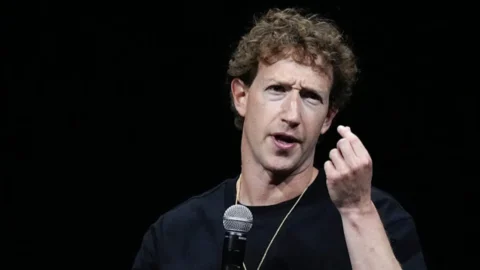
One of the most delicate trials ever faced by the United States has begun in California. Meta. In the dock is the company that owns Facebook e Instagram, accused of failing to adequately protect children and adolescents from the risks of its platforms. At the heart of the proceedings are the functioning of social media, the tools designed to retain users as long as possible, and the way the company allegedly assessed the risks for the youngest.
Four states are taking Meta to federal court: California, Colorado, Kentucky e New JerseyThe proceeding is part of a larger lawsuit initiated in 2023 by a coalition of 29 American states, which claims that Facebook and Instagram were designed to capture the attention of young people, encourage ever-increasing use of the platforms, and collect data on minors.
The stakes are particularly high because states aren't just asking for compensation. They also want interventions on the platforms and changes to some of the features considered most problematic for children and adolescents. In a theoretical scenario and applying a specific calculation criterion, the requests could reach up to $1.400 billionIt is important to underline, however, that this is not a fine already established by the court nor a sum that Meta will necessarily have to pay.
Meta on trial: charges against Facebook and Instagram
The case revolves around three major protestsThe first one concerns the platform designAccording to prosecutors, Meta developed certain features with the aim of increasing the time users spend on social media and encouraging addictive behavior, especially among young people. The focus is on infinite scrolling, algorithms that continually suggest new content, and push notifications. For the prosecution, these aren't just technical features: they're tools designed to engage users, maintain their attention, and encourage them to return to the platforms. "Engaging users, retaining them as long as possible, collecting their data, and then hiding the truth from the public": this, according to California Deputy Attorney General Megan O'Neill, is the logic that guided Meta's business model. And it worked, she argued in court, "particularly well with children."
The second front concerns the children's privacyAll 29 states are accusing Meta of violating the Children's Online Privacy Protection Act (COPPA), the federal law that protects children's data, specifically for allegedly collecting information on children under 13 without the necessary parental consent. On this point, Meta maintains, however, that prosecutors have failed to demonstrate that the company was aware of the existence of specific accounts belonging to children under 13 and that it deliberately ignored them.
The third front concerns the information provided to the publicAccording to prosecutors, there was a gap between what Meta knew internally about the risks of its platforms and what it communicated externally. This is also linked to internal research and documents that have emerged in recent years, including revelations from whistleblower Frances Haugen, which helped shed light on how Meta studied the effects of its products on young people.
The peculiarity of the trial is that the prosecution does not focus primarily on the contents published by users, but on the how social media works. The product, the algorithms and the mechanisms designed to prolong its use are therefore in the crosshairs. For this reason Meta cannot limit itself to invoking the Section 230 of the Communications Decency Act, the rule that in the United States has represented for years one of the main shields of the platforms with respect to the content published by users.
Meta's defense and Zuckerberg's role
Meta denies all charges and defines the States' objections as "limited and unfounded", judging the Required Knowledge economic "enormously disproportionate“The company argues that prosecutors have failed to prove that anyone was actually deceived in individual states and also disputes the idea that common app features could be considered unfair business practices.
On the privacy front, Meta claims that prosecutors have failed to demonstrate that the company was aware of the existence of specific accounts belonging to minors under 13 and deliberately ignored them. The company also claims to have invested in artificial intelligence and age verification tools, including those developed to identify users who provide false birthdates.
The jury will not decide the case. The eight members will have an advisory role and the final decision will be up to to the district judge Yvonne González RogersAmong the expected witnesses there are also Mark Zuckerberg, founder and CEO of Meta, and Adam Mosseri, head of Instagram. The indictment is also expected to present child mental health experts, former company employees, and internal documents that emerged from the revelations of Frances Hagen and from the investigations launched in 2023.
How Much Is Meta at Risk? Money Isn't the Only Problem
The trial should last between four and six weeksThe huge sum of 1.400 trillion remains a theoretical projection and does not represent the expected outcome of the process. A sum of that size, which could lead to the collapse of the company, is considered highly unlikely. More concrete is the hypothesis of a much lower penalty or a out of court settlement.
The real risk for Meta, however, could be structural, especially at a time when the relationship between minors and social media is at the center of international debate and several European states have already introduced age limits to reduce risks and combat addiction. States are calling for profound changes to the way Facebook and Instagram operate, including the removal of infinite scrolling, stricter limits on social media use by those under 18, and changes to algorithms designed to keep users in front of the screen. Also in the crosshairs are some AI models According to the prosecution, these apps were trained using data collected without consent from minors. An unfavorable ruling could therefore force Meta to rethink some of the fundamental features of its social networks and set a precedent for other proceedings against Big Tech companies.
The case comes after a series of lawsuits that have already put the company under pressure. New Mexico, just under two weeks ago, Meta was ordered to pay 567 million of dollars for charges related to the harm suffered by minors; the company announced an appeal. In March, however, a jury of Los Angeles he recognized a compensation of 6 million of dollars to the twenty-year-old Kaley GM in a case involving Meta and Google. The ruling helped fuel a new wave of individual and class-action lawsuits across the country.
And it is precisely the possible domino effect This makes the Oakland trial particularly important. A victory for the states could strengthen the lawsuits already filed by families, schools, and other institutions and pave the way for new proceedings against the platforms. The issue would no longer be simply whether Meta violated a law, but to what extent a Big Tech company can be held liable for the way it designed a digital product.