With Magnifica Humanitas, Its first encyclical dedicated toartificial intelligence, Pope Leo XIV sends a clear message: the technology cannot replace man nor reduce his dignityThe document, 231 pages long and divided into five chapters, addresses the risks associated with AI in areas such as war, work, -promote their right to information, education and organisation to safeguard their interests' (TFEU, Article XNUMX)., democracy and protection of the most vulnerable. For the Pontiff, the issue is not merely technological or economic, but profoundly moral and anthropological. Humanity faces a decisive choice: use innovation to build a more just society or allow progress to fuel new forms of domination and dehumanization. For this reason, writes Leo XIV, artificial intelligence "is not enough to regulate: it must be disarmed and made hospitable."
The encyclical is not limited to the technological dimension, but opens up to a broader cultural horizon, intertwining very diverse theological and artistic references: among the authors cited are JRR Tolkien, Viktor Frankl, and Ludwig van Beethoven, while Pablo Picasso's Guernica and the film Schindler's List are also invoked as symbols of the fight against dehumanization and the oblivion of historical memory.
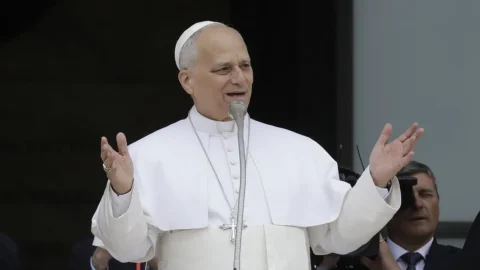
Magnifica Humanitas, the first encyclical of Pope Leo XIV
One of the central passages of the encyclical is the invitation to to safeguard dignity of the person in the digital age"In the age of artificial intelligence, in which human dignity risks being obscured by new forms of dehumanization, we have the urgent duty to remain profoundly human, lovingly preserving that magnificent humanity that has been given to us and shown to us in its fullness in Christ, and which no machine can ever replace in all its splendor." The Pope adds that "true progress always comes from a heart open to others, from an intelligence ready to listen, from a will that seeks what unites rather than what separates." For Leo XIV, artificial intelligence it should not be demonized, but governed with prudence. He calls for rigorous checks, slowdowns when necessary, and even a form of technological "fasting," especially to protect the youngest and preserve inner freedom.
Pope Leo's Encyclical: The Choice Between "Babel" and "Jerusalem"
The encyclical opens with a symbolic contrast between the Tower of Babel and the city of Jerusalem: “The Magnificent Humanity created by God is today faced with a decisive choice: to erect a new Tower of Babel or to build the city where God and humanity dwell together.” For the Pope, every era brings with it the risk of building “an inhumane and more unjust worldHence the invitation to avoid "the Babel syndrome," that is: "The idolatry of profit that sacrifices the weak, the uniformity that flattens differences, the claim of a single language—even digital—capable of translating everything, even the mystery of the person, into data and performance." The encyclical therefore warns against a vision that reduces human beings to numbers, algorithms, and performance.
Pope Leo's Encyclical: The Attack on Big Tech's Power
One of the hardest chapters concerns the concentration of digital powerWithout naming names, the Pope denounces the control exercised by a few technology groups over data, platforms, and infrastructure. According to Leo XIV, when such vast power is concentrated "in a few hands," the risk of manipulation, exclusion, and new social dependencies increases. Hence his criticism of a model in which "small, highly influential groups" can influence information, consumption, and even democratic processes. The Pontiff also warns that "a more moral AI is of no use if this morality is decided by a few" and calls for "clear criteria and effective controls" on the use of artificial intelligence, especially when fundamental rights and public goods are involved.
Pope Leo's Encyclical: Propaganda and the Overcoming of "Just War"
The document devotes ample space to contemporary conflicts and to theuse of technologies in military systems. “It is not right to entrust lethal or irreversible decisions to artificial systems.” The Pope denounces the role of algorithms in spreading polarization, propaganda, and fear. In this context, he reiterates the “overcoming the just war theory”, arguing that today it is “too often invoked to justify any war”. Leo XIV instead calls for tools such as dialogue, diplomacy, and forgiveness, recalling that the recourse to violence “testifies to a relational poverty” with devastating consequences for civilian populations.
Work, exploitation and new forms of slavery
The encyclical also addresses the consequences economics of theautomationIn the "fourth industrial revolution," the Pope writes, unemployment risks turning "into a true social calamity." Leo XIV criticizes an economic model that embraces innovation only to reduce costs and increase profits. According to the Pontiff, some technological systems risk de-skilling workers, subjecting them to automated surveillance and relegating them to repetitive tasks.
For this reason he asks to design "systems centered on the person and not only on performance". The Pope also draws attention to the "work invisible” that supports the digital economy: content moderators, model trainers, and low-paid workers engaged in the extraction of rare earth elements needed to produce electronic devices.
Young people and digital addiction
Particular attention is paid to minors. The encyclical emphasizes how early and uncontrolled exposure to digital devices can have negative effects on sleep, attention, relationships, and mental health. Leo XIV also denounces the risks of isolation, cyberbullying e social pressure generated by social networks, calling for public policies capable of limiting the power of platforms when it conflicts with the well-being of minors.
Against transhumanism
The text openly criticizes the transhumanism, defined as a vision that interprets progress as "overcoming the human." According to the Pope, the idea of a purely technical "salvation" risks transforming human beings into objects to be optimized, to the point of considering some individuals "less useful" or "less worthy." The encyclical instead proposes an opposite vision, grounded in fragility, relationships, and the incarnation of Christ.
Migrants, welcome and the right to hope
Among the social issues addressed there is also that of migrationFor the Pope, a society's treatment of migrants and refugees reveals whether its idea of justice is guided "by fear or fraternity." Leo XIV outlines two priorities: ensuring safe and legal routes, dignified welcome, and genuine integration for those forced to leave; at the same time, ensuring the right to remain in one's own country in peace and security, addressing the root causes of migration, including the climate crisis and economic inequality.
The Church's self-criticism
The document also includes a self-critical passage on the history of the Church and on the delay in condemning slavery and injustice. "In the name of the Church, I sincerely ask forgiveness." For Leo XIV, the errors of the past must prompt us to promptly recognize new forms of exploitation and digital colonialism.
In closing, Leo XIV calls everyone to common responsibility: "Let us not be afraid to get our hands dirty in the construction site of our time," working for a more just society, where the "discarded stones" become the foundation of coexistence. And he concludes with a strong appeal: to stop "the construction site of yet another Babel" and build a true "common home," where humanity does not lose its dignity and the world can once again recognize the face of humanity as a place where God desires to dwell.