Il Italian sovereign debt, as happens cyclically, is preparing to return under the gauntlet of international markets. The triad represented by high interest ratesand, from the restrictive policy of the ECB and from the return to the season of "zero point” of growth, is destined to bring pressure back to Italian public finances.
In 2024, according to projections from the Parliamentary Budget Office, gross Treasury issues will rise to 480 billion euros. The Monetary Fund in its latest World Economic Outlook forecasts growth of 0,7% for Italy, with a cut of even 0,4% compared to the latest forecasts in July. In the period 2024-2026, the Nadef - Update note to the DEF - estimates a stabilization of the ratio between public debt and GDP at around 140%, a number very far from what is foreseen by European rules.
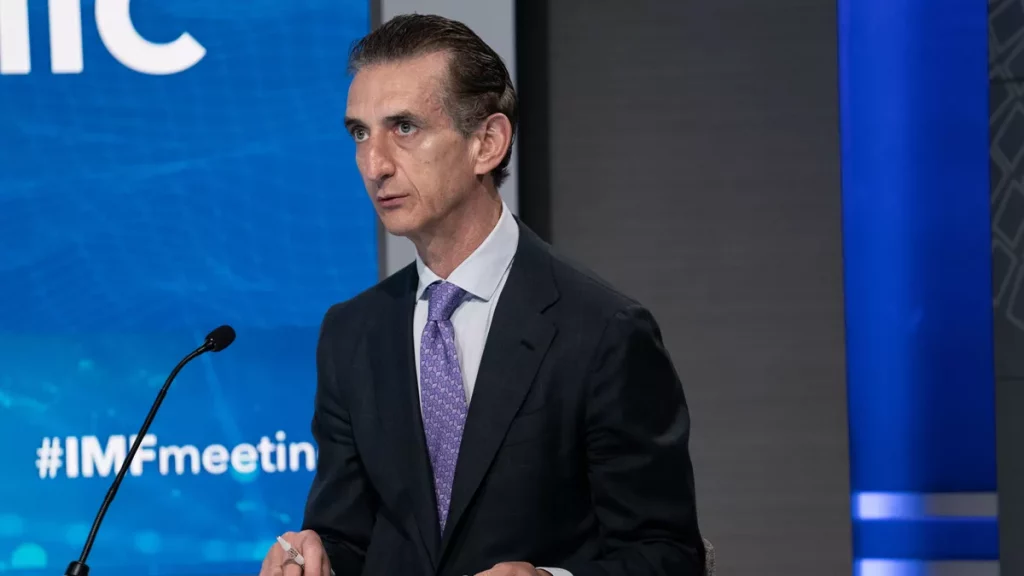
Gian Maria Milesi-Ferretti he is a senior fellow in the monetary and fiscal policy department of the Brookings Institution in Washington. Until 2021 he was deputy director of the International Monetary Fund.
Is it due to the low growth compared to forecasts that Italian Treasury bonds have returned to the market spotlight?
«It is a broader set of factors, a scenario of high interest rates also has a strong influence. The less brilliant economic growth prospects than expected at the beginning of the year are certainly worrying the markets. In the debt/GDP ratio, the growth of the denominator necessarily serves to stem the debt dynamic. But on the other hand, the numerator is also worrying, especially due to the slowdown in the public finance adjustment plan proposed by NADEF".
Are markets starting to reprice Italy risk?
«With very strong uncertainty in the global geopolitical framework, with continuous pressure on the cost of energy, we must all be very humble in our forecasting exercises. In this context of chaos, forecasting is more of an art than a science. There are certainly possible scenarios that are more pessimistic than the baseline scenario."
All the more reason, therefore, that Italian sovereign debt falls under special observation.
«If, however, in a period of economic growth, high employment and high level of GDP, such a “soft” attitude is chosen with respect to public finance adjustments, what can happen if the overall picture of the economy worsens? This is what investors are asking."
In the coming months the cost of servicing the Italian debt, over 100 billion already in 2024, will presumably no longer have the ECB's safety vest.
«What impacts the debt are real interest rates and therefore we look at the value of nominal GDP. The fact remains that long-term rates have risen and this is bad news for countries that have a high stock of debt. The increase in short-term rates, however, should be over, barring further shocks in energy prices. I'm not a "hawk" on monetary policy issues but the persistence of inflation surprised me too."
Is the season of high interest rates destined to remain longer than expected?
«The pre-pandemic regime no longer exists, we have long seen real rates that were negative in the short term and barely positive in the long term. Having seized financial margins in those years to bring the debt dynamics back within a safe perimeter would have been useful."
Does the inflationary effect on state revenues and GDP, not even in the first phase, help to contain the debt/GDP ratio?
«Inflation has effects on GDP and the prices of goods but the economic and industrial structure of individual countries is decisive. Italy imports a large part of its energy products from abroad and therefore their increase does not increase the nominal value of the GDP, while this characteristic affects the prices of consumer goods. Furthermore, export prices do not grow like energy product prices. On the tax revenue side, indirect tax collections should rise with inflation, but we need to understand how much this dynamic is weakened by subsidies and support measures for energy."
Is there a sustainability threshold for Italian debt?
«There is no precise threshold, but the risks increase with the level of debt. The markets are looking at Italy's economic growth, capable of increasing the denominator of the debt/GDP ratio, and at tax revenues, not just at the dynamics of the deficit."
If growth returns to the "zero point" season, with the ECB's restrictive policies on rates and purchases of sovereign bonds, what could happen?
«Asphyxiated growth and high rates are the worst possible combination. But it is important to reiterate that we are looking at the medium-term prospects of an economy, not just at what can happen next year. European funds, among other things, have yet to unfold their effects on growth and productivity in Italy, as well as in the rest of Europe."
Will our difficulty in transferring PNRR funds into the real economy weigh heavily?
«Certainly and in the case of Italy the issue concerns competition and the competitiveness of our economic system. In this field there are signs that financial operators observe carefully, I'll take the example of beach concessions. An absolutely marginal measure from a macroeconomic point of view for a large economy but fundamental to understand how we want to make competition work in Europe's second largest manufacturing industry. It is a measure with a high reputational impact."
Is there room for political maneuver on the revision of the Stability Pact capable of reassuring the markets?
«In recent years, the European Union has made great progress in the awareness of being able to change and innovate some economic rules which are not intangible by definition. Of course there are European countries that are morehawkish"but it seems to me that Europe is open to some important openings."
In the world, Italian internal affairs occupy an absolutely marginal space. The fact remains that Italian debt is monitored and bought in every corner of the planet. On the economic side, what would be the worst signal that Rome can give to the world in the coming weeks?
«The worst signal could come from a populist attitude, in the worst sense of the term, compared to the normal comparison with Europe and investors. Launching into tirades towards unspecified speculators would be detrimental to the reputation of our economic policy. The European institutions absolutely do not want to weaken Italy and the ECB does not want problems with Italian debt. It must always be remembered that Frankfurt is responsible for the monetary policy of the eurozone and not just that of Italy."