
In 2024, sales and exports of the Italian wood-furniture sector will decline: -7,5% for the former and -4,1% for the latter. Percentages in sharp decline compared to 2023. It must be said that these are two figures that are not yet official but filtered by Federlegno-Furniture which, better than any press release, describe the crisis in consumption, which has never decreased in such a way in Italy, that is, family spending on housing.
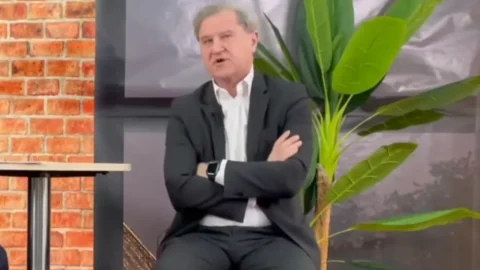
So here's what this means heavy setback for the thousands of SMEs that produce Made in Italy wood and design. A setback that, if you read it together with Edi Snaidero, president of the European Confederation of the Furniture Industry-EFIC, in Europe it seems even more serious than in Italy. "It is a worrying trend - Snaidero underlines - because it involves over 20 thousand SMEs, the great majority of European producers, with one million direct employees and the same number indirect. A vital sector that has a turnover of 112 billion euros". It seems that the European trend is the most serious.
Southern Europe is better than Germany and France?
“We don’t have official figures yet but the markets that fared worst were those in Central Europe, France and Germany in particular, while those in Northern and Southern Europe suffered less.”
However, this is not a good sign for a manufacturing company like the Italian one, which sells its furniture mainly in Europe.
“France has been our main market for years but fortunately our exports are doing well in the United States.”
What can help revive the desire and pleasure of purchasing furniture and household items?
"The drop in interest rates that restore confidence in families and increase the demand for housing. In fact, a country's GDP grows when real estate sales increase, as do renovations that have fueled it for years. For example, the strong growth of the Chinese and Indian economies. However, I also find the recent measure on tax incentives for replacing old household appliances intelligent and useful."
2024 closed in the red, what is the sentiment of companies for the new year?
“In 2023, we were hoping for a recovery in the second half of 2024, which has not arrived, but we are still just below the 2019 level. It will be impossible to repeat the post-Covid sales. For the current year, Southern European countries like Italy seem to be more flexible, more resilient in the face of a situation like this.”
US duties and Italian furniture. A very timely topic, after Trump's challenge to Europe. What consequences will they have?
"We can say that we are in the midst of a trade war between China, the US, the cost of energy and five years of European green policy. All this has caused European industries to lose competitiveness. As for duties, nothing is known yet but our furniture belongs to the high and medium-high range which could be less affected than others".
Five years of European green policy are causing big problems for European manufacturing companies that are facing competition from countries that do not have these constraints…
“These are mainly choices focused, as we have seen, on electricity, which is very expensive, neglecting to experiment with available alternatives such as nuclear power. clean for example. And now it might be too late to go back… Eco-sustainability, the objectives of the European Green Deal plan are out of the question for us, our wood and furniture industry in particular is very advanced and does not intend to go back. But something must change and is already changing in European economic policy. Everything that is happening, what needs to be done and decided, the funding to give Europe back the necessary competitiveness, is written in the Draghi report. But it is necessary to finance the new interventions with many resources, as was done with excellent results with the Pnrr during Covid”.
Why hasn't it been decided yet?
“Unfortunately, Germany and the Northern European countries are against it.”
Don't they want – to put it simply – to take out money to also finance the competitiveness of Southern European countries?
“Yes. But there is no lack of financial resources, there are many of them and they are kept in European banks. And then we urgently need to simplify the European legislative apparatus, prepared in recent years by the Brussels bureaucracies, which has brought European industry to its knees. And last week our associations, 400 people from Italy, were in Brussels to ask Ursula von der Leyen a change starting from the simplification of the legal context, and more pragmatism. The variable majority that Von der Leyen now has will allow for flexible choices to be made from time to time”.
Because what is now common thought among the representatives of the EU countries is that the decision-making and legislative methods in recent years have been imposed by Green Lobbies, supported by Germany and the countries of Northern Europe, which in turn are supported by multinationals that do not have any manufacturing hubs or branches in Europe. The Dutch newspaper revealed this The Telegraph citing confidential contracts: “The EU allegedly “secretly paid environmental groups to promote former Commissioner Frans Timmermans’ green plans”. The investigation by The Telegraph he also mentions one worth 700 thousand euros to steer the debate on agriculture”. For years, according to the newspaper, the EU Commission has subsidized environmental lobbies to “put pressure on” the Green Deal.