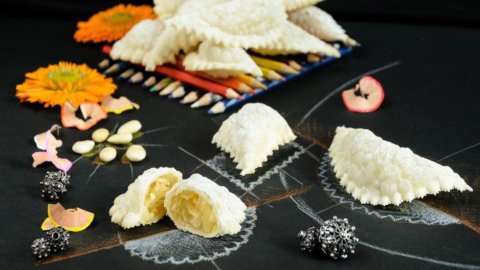
It is traditionally very rich in Sardinia confectionery tradition linked to the Carnival, whose celebrations officially begin on January 17, the feast of Sant'Antonio with the famous fires (fogones, fogarones, foghillones).
Mostly these are fried desserts, as is the tradition throughout Italy, as historically in the period between January and February once in the countryside pigs were slaughtered from which it was derived lard, ideal substance for frying sweets.
Sweets that in Sardinia take on imaginative names and shapes, such as Parafrittus or parafrittos, Sas Tzipulas or Zippulas, Chiacchiere or Bugie, Orillettas, Acciuleddi, Culurgiones de mendula, or Culurgiones 'e bentu.
Culurgiones, a sort of fried ravioli, in the village of Ulassai until the 60s were consumed only and exclusively on All Souls' Day (Sa di' de sos mortus).
Conversely, throughout Ogliastra and in the villages of Sadali and Esterzili in Barbagia di Seulo, culurgiones are not considered just a food, but a precious gift, a sign of esteem, respect and friendship. This caused their use to extend beyond November 2nd.
In addition to honoring the deceased, they were therefore or prepared for special occasions such as the thanksgiving at the end of the grain harvest, to celebrate carnival in February, with lard (culurgioni de ollu de procu), in both sweet and savory versions such as culurgiones de casu fruscu stuffed with fresh Sardinian cheese, spinach and saffron or culurgionis d'Ogliastra stuffed with based on potatoes, pecorino cheese and mint A curiosity: Sa spighita, the typical closure of culurgionis, represents the symbol of wheat to propitiate the new agricultural year at the end of August. According to tradition they were also considered amulets that protected the family from mourning.
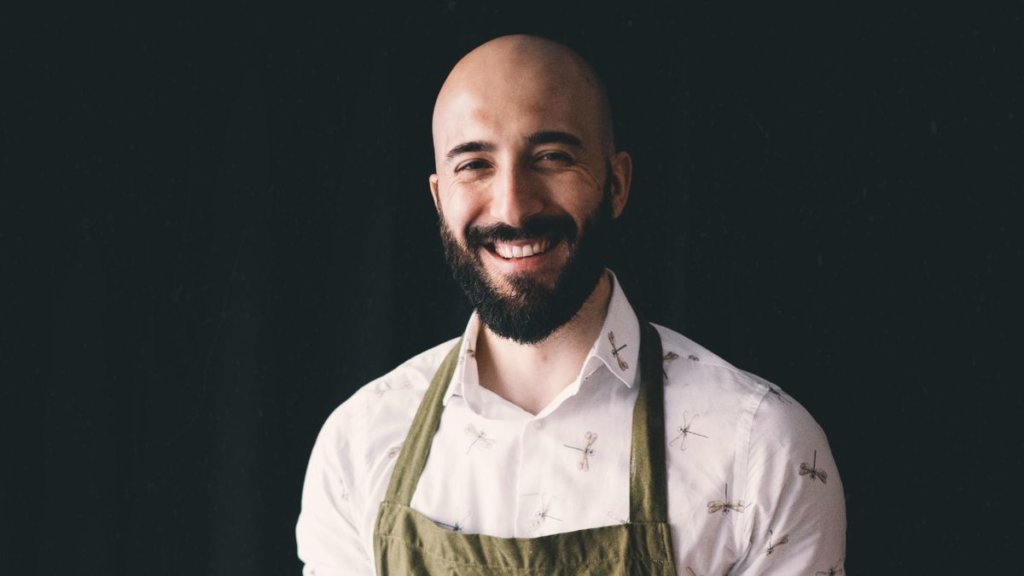
Roberto Murgia, from Alghero, not yet forty years old, had set his life on physical well-being. He had enrolled in the degree course in motor sciences in Cagliari with the desire to become a personal trainer or physical education teacher.
And after graduating he moved to Rome where he found work as an instructor in a gym. But the flavors and aromas of his mother, aunt and grandmother who used to make bread and sweets at home remained in his mouth and nose. As if to say that pastry ran in his blood.
And so, leaving behind his weights, tools and backs, he took up arms and baggage and returned to Sardinia where he opened a traditional pastry shop in Alghero with a name that says it all: "Dolci in corso".
The fame of his laboratory-patisserie has literally exploded within a few years. A bit of the history of the island's sweets passes through its windows, from those of more ancient tradition of which in some cases there was the risk of losing memory, to those of current use. The of him is a work of precision. He makes cakes to perfection, real masterpieces, jewels, hand embroidered with gold and silver threads.
Obviously, great attention is paid to raw materials: «I use – he is keen to underline – only Sardinian products, from Cappelli wheat to almonds, jams, honey, walnuts, sheep's milk and cheese. Raw materials are essential for making good and, above all, healthy sweets».
And since he has always been animated by the sacred fire of passion for pastry-making, he organizes courses to spread the culture of the sweet Sardinian gastronomic tradition both in his restaurant in Alghero and on social networks.
For the readers of First&Food Roberto Murgia proposes i Culurgiones de mendulaAlmond ravioli, sweet carnival version of an old traditional recipe.
The recipe of Culurgionis de mendula (dose for 80 pieces)
Ingredients for the dough:
500 g re-milled semolina
80/100 g lard
Water to taste
A pinch of salt
Ingredients for the filling:
450 gr of almonds
450 grams of sugar
150 grams of water
The grated zest of 3 lemons
1/2 teaspoon of bitter almond essence
1 tablespoon of maraschino
For the glaze:
400 gr of honey
The grated zest of two lemons
Icing sugar
Procedure: (you can prepare everything the night before)
Prepare the filling
Lightly toast the almonds (light drying in a low oven) and chop them finely.
Put the sugar with the water, the maraschino, the bitter almond essence and the lemon zest in a deep-bottomed saucepan. Bring to a boil and add the almond flour. Cook over low heat, stirring constantly as for preparing polenta. Simmer until the mixture has thickened and most of the liquid has evaporated (about 7-10 minutes). Turn off and leave to cool well.
Prepare the dough:
Pour the flour, lard and salt into a bowl and knead. You have to form a rather firm dough like that of fresh pasta (add a little water if necessary)
Knead until smooth, cover with plastic wrap and leave to rest in the fridge for at least 1 hour.
Once the rest has passed, prepare small balls the size of a walnut (or slightly smaller) with the filling and set them aside.
Roll out the dough with the pasta roller, working it several times (folding it lengthwise, then widthwise, etc.). Prepare wide and thin sheets by pulling the dough to the penultimate number of the sheeter.
If you want to create "whole" ravioli like I did, place the balls of filling near the edge (about 1 cm from the edge) spaced about 4-5 cm from each other. Fold the dough that you will have slightly moistened and close tightly by letting all the air out. Take a ravioli-biscuit cutter and cup the ravioli.
If you want to create half-moon ravioli place the balls of filling in the center of the sheet, fold the sheet and seal. Cut out with the toothed wheel giving the crescent shape.
I then completed the ravioli by decorating the "petals" with a toothpick, pressing to form small stripes.
Once the ravioli are ready, fry them in oil at 170°, turning them until they are golden brown. Drain them on absorbent paper.
Now you can decide to finish them off with a dusting of icing sugar or glaze them with honey like I did…
Pour the honey into a saucepan with the grated lemon zest and bring it to heat until it becomes fluid. Then pour it into a large saucepan and put 4-5 culurgionis at a time and turn until they are completely glazed. Arrange on a plate one by one and sprinkle with colored balls.