Conversation with Luigi Maria Sicca: EITHER THE BUSINESS OR THE LIFE. That is, artists and managers compared.
Luigi Maria Sicca is an all-round academic with the addition of great sensitivity and communication and observation skills that make him a unique character. He is full professor of Business Organization at the University of Naples Federico II, and Scientific Director of the Association dotOorg which promotes and activates intra and interdisciplinary research through international exchanges between scholars of various disciplines in the social and "hard" sciences, in philosophy, in the arts (music and painting) in the name of a hybridization inspired by the best humanistic tradition .
In this conversation with Luigi Maria I tried to bring out some interesting points from the fifth edition of his essay “Either business or life. Organizational and epic stories”, Milan, Egea 2020.
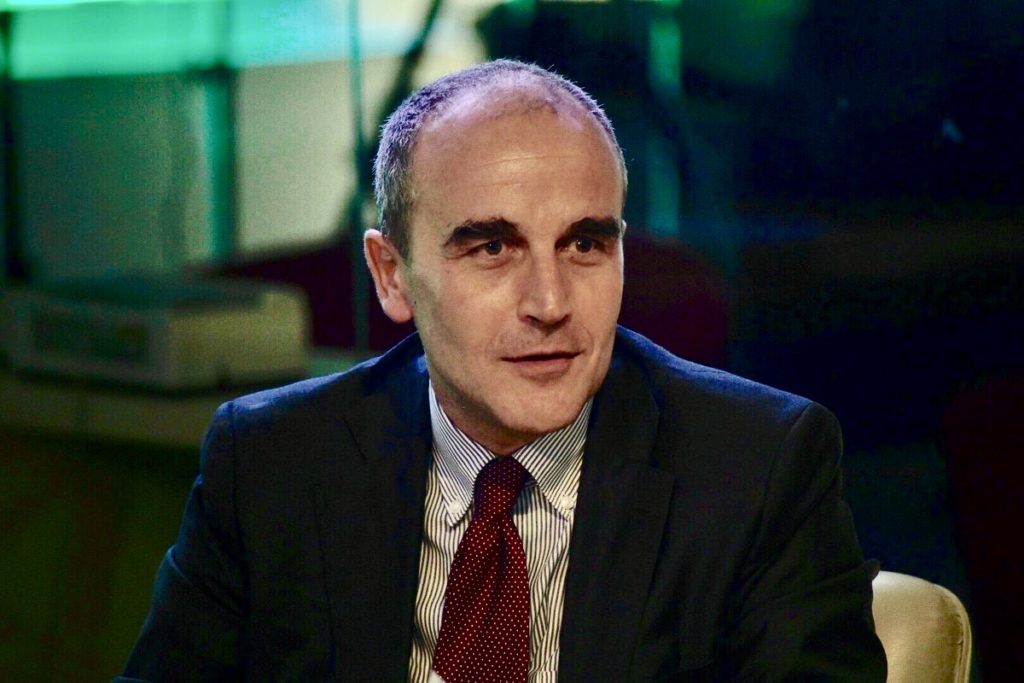
We've known each other for some time and I've always appreciated the multidisciplinary nature of your work and the ability to bring together different approaches and methods. Is there a common denominator between the different fields of research and study you deal with?
Thanks, Emanuel. The common denominator is reality. More and more, with the affirmation of the "scientific paradigm" which in recent centuries has extended to every area of knowledge, academic work reads the world through the categories of individual disciplines. This is certainly a very important approach: it has allowed and still allows us to reach precious goals for the "public thing" as well as for the private one (from Healthcare to the Economy and beyond) and allows us to go deeper into the understanding of the "objects" studied (a company, a professional community, a human body and so on) starting from the "categories", from that toolbox that each researcher carries with him. But in an increasingly interconnected macroeconomic context and given the evolution of geopolitical structures in recent decades, I believe it is important to go back to recovering the spirit of that season we know as "Humanism" which laid the foundations for the formation of Modernity and the European project which today is experiencing an important turning point. Therefore an equal dialogue between disciplinary fields: these should be treated as "looks at the world", but it is precisely the complexity of the world that can be accessed by enlarging the lens, dilating the angles of view. In a spirit of healthy "confusion". This is one of the challenges characterizing numerous research roundtables within puntOorg which finds happy international collaborations.
Either the business or the life, represents an essay with an intense work of collection and storytelling. What is the successful narrative formula you propose?
I proposed to professionals in fields (only apparently) very different from each other, to follow a common narrative path that I illustrate in chapter 1, perhaps the only part of the book that is a bit heavy, academic, but in this case it's up to me to play the bad guy. Thus stories of musicians and stories of managers or entrepreneurs alternate. But "musician" can mean very different things internally, just as one can be an entrepreneur or manager with great variety and variability of ways. With each I discussed the same narrative scheme, divided into four stages: event that triggers the action, commitments to act, management of a solution, evaluation of the experience. At the end of which, the path could virtually start again, treasuring the learnings. There was no shortage of spaces for negotiation with the various authors, even very amusing and humanly understood, but the result was a kaleidoscope of experiences that testify how a shared plot can allow - ultimately - to trace a basic homogeneity, in spite of the variety of experiences: from that of Armando Brunini, Chief Executive Officer of SEA – Milan Airports to that of Rinaldo Alessandrini, internationally renowned harpsichordist and conductor with his “Italian Concert”; from that of Banca Etica to the Rossini Opera Festiva; from the one written by Valerio Iossa, today Human Resources Director of the Municipality of Milan which tells of the experience of the merger between two Italian Municipalities (I would say the first in Italy), to that of Michele Pontecorvo, Vice President of Ferrarelle or Francesco Vizioli (owner of the chair of orchestra conducting at the San Pietro a Majella Conservatory in Naples) with the only invented story, but delicious and full of shade ironic words that say so much about leadership and membership. And so on with all the others. A variety of experiences that allows us to imagine overcoming the increasingly rampant (and reassuring) rhetoric of skills, in the name of an ability to manage unforeseen and "strange" situations, strengthened by the internal solidity of the method. And we know well how much, in times of labor market flexibility, focusing on the ability to adapt and to reinvent oneself by tackling new experiences with a solid method can save careers and lives at all stages of the professional life cycle, from the first to full maturity and beyond. Real source of competitive advantage.
Of all the stories that have been told, which is the one that amazed you the most and amazed you for its uniqueness?
Naturally all the stories present in all editions of Either business or life. Organizational and epic stories from 2013 (the first) to the fifth of 2020 they are like "children" to me. I am Neapolitan and grew up with the tradition of Eduardo's theater. Do you remember the quote from Filumena Marturano?
At least one?
I like to remember how this fifth edition of the volume contains two texts that are more "parents" than children: that of Gennaro Chierchia, professor of linguistics at Harvard University and one of the most authoritative linguists in the world, which opens the door to what will read later with a refined reflection on "Meaning and unconscious contradictions"; while closing the book a letter from prof. Giaocchino Lanza Tomasi who says of a dense world and century, which we should all keep in mind when we do business, such as music, economics, politics or territorial development. I believe in both of these chapters (2 and 27) what precedes, anticipates, generates the narration is said.
Today more than ever, a company's narrative ability is a strategic element and a competitive advantage. What are the most significant suggestions that you would give to an entrepreneur who wants to tell the story of his business?
To let yourself be fertilized by reality. Each of us, even in the exercise of our professionalism, lives an erotically connoted game with the environment. On this line of thought, the reality external to us – which we claim as such and which we claim to know – can also be controlled or, at least, controlled by those portions that must necessarily be managed to achieve short, medium and long-term objectives. Too often in managerial training courses for managers (not only in the university classroom with the very young) dogmas, schemes, even recipes are proposed. This approach has been useful in various phases of the economic cycle in which it was possible to enjoy a certain stability of the macro contexts. However, we also need to know how to deal with instability, with vulnerability, with the sense of mourning that we also have before our eyes and are experiencing in this difficult 2020.
Either business or life. Organizational and epic stories
This new edition intertwines, in a single tape, new successful managerial and entrepreneurial stories and as many in the artistic and musical fields. So storytelling and art management develop seamlessly through the pen of the protagonists at the helm of large, medium and small organizations. This is how we will read about SEA Aeroporti di Milano; Italian concert; Ethical Bank; Rossini Opera Festival (ROF); mad entertainment; Fiesole Music School – founded by Franco Farulli; Thin Lamination; San Carlo Theater Foundation; Strega-Alberti Benevento SpA; Society of the Milan quartet, Ferrarelle SpA, puntOorg International Research Network; SDN; Synlab International GmbH. And many more. With two cameos: that of Gennaro Chierchia, Harvard University, Meaning and unconscious contradictions and a letter from prof. Giaocchino Lanza Tomasi.