The European industry must face the challenge of protecting its competitiveness from dumped imports, especially from India. In Report on the competitiveness of the European economy, presented by Mario Draghi on September 9th in Brussels, comes a strategy has been drawn up to fight unfair trade and maintain the global relevance of European industry and its decarbonisation objectives. The former Prime Minister proposed concrete measures to strengthen the position of the European Union, underlining the support of EU institutions to combat dumping practices and ensure fairer competition.
The Draghi Report places strong emphasis on the need to balance decarbonisation objectives with maintaining industrial competitiveness. Sustainability is a priority for Europe, but rules must be applied fairly on a global scale. The challenge for the EU is to prevent European companies from being penalised by stricter regulations than their competitors, while protecting the environment and fair trade.
The challenge of dumping and the competitiveness of European industry
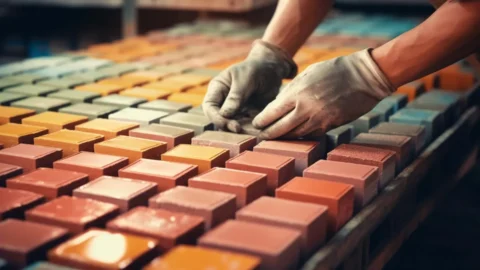
The ceramic tile industry, especially the Italian one, has to deal with foreign producers who do not respect the same environmental and social standards imposed in Europe.
The ceramic industry, in particular the Italian ceramic tile industry, finds itself having to compete with producers from countries that they do not meet the same environmental standards and social issues of the European Union. Draghi highlighted theurgent need to create a “level playing field”, that is, fairer conditions of competition for European companies exposed to unfair competition. Among the priorities of the Report, Draghi proposes theapplication of tariffs and trade policies that allow to the most vulnerable sectors, such as that of Italian tiles, to compete on a global scale in more balanced conditions, avoiding imbalances due to unfair practices of countries already sanctioned.
The growth of Indian industry
The ceramic tile industry in India has seen impressive growth over the past decade, with production capacity increasing from 1,2 billion to 3,7 billion square meters per year. This expansion has led India to gain market share not only in Europe, but also in the United States and the rest of the world.
In recent years, the Asian country has rapidly increased tile exports to Europe, growing by 235% since 2018, in stark contrast to European demand, which increased by only 2%. Despite the imposition of anti-dumping duties In 2023, the Indian ceramic industry continued to penetrate the European market, with exports increasing by 67%, despite an overall market decline of 20%.
European intervention: the limits of anti-dumping measures
The European Union has attempted to limit unfair competition through measures such as the imposition of anti-dumping duties, but the results achieved so far have proven insufficient. The European institutions have recognized the ineffectiveness of the current measures and are exploring new actions to counter Indian unfair practices, which threaten the competitiveness of European companies.
In United States, the government responded with more drastic measures, imposing provisional anti-subsidy and anti-dumping duties on Indian imports, with rates expected to be between 328% and 489%. In light of these developments, the European tile industry is pushing for theEuropean Union adopts equally severe measures to defend its competitive position globally.