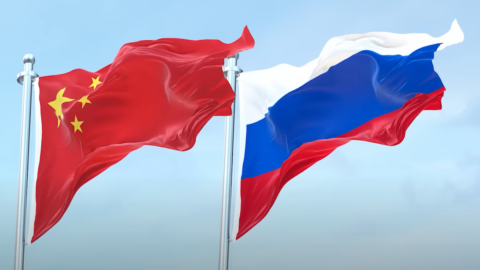
That China , Russia are two countries that are not only geographically bordering but very close politically e strategically It is well known, but it was not so obvious that the Chinese would even end up with theto get passionate for products from Moscow. Indeed, in the Asian country they are quite jealous of their brands, so much so that they have among other things "their Mc Donald's" and "their Starbucks", and are notoriously specialized in to propose in their own way Western culture and consumption patterns.
This time, however, by virtue of a ever stronger friendship – from the war in Ukraine to the leadership of the BRICS – the “made in Russia” is becoming the new “made in Italy”: in fact, not only are there shops specializing in the sale of goods imported from Russia spreading throughout the country, but also the “Russian sounding“, an illicit phenomenon that we Italians know well, namely commercial establishments that sell products that are absolutely manufactured in China but passed off as Russian. With various tricksi: from the signs with the white-red-blue colours of the Russian flag, to the images of brown bears, to the word “Russia” proposed in the name of the shop itself (“Russia Quality Select”, for example) or to theuse of Russian language labels, often distorted with grammatical errors, so much so that the practice has already ended up in the crosshairs of local authorities.
Geopolitics and Marketing: A Strategic Alliance
A push this sympathy for the influential neighbor it's the same Beijing government, with the aim of consolidating the Euro-Asian axis from an anti-Western perspective and above all anti trump, even if the rapprochement – presumed and at the moment partial – between the Kremlin and the White House could ruin Xi Jinping's plans, both on a commercial and a soft power.
China and Russia are in fact recently coming out of a historic rivalry, culminating in the great tensions of the 60s, while in 2024 – according to research by Tsinghua University – practically two out of three Chinese had a good opinion of former Soviets, with an increase of 7 percentage points compared to 2022. It is no coincidence that Russians are now the second most popular group of visitors to China, while before the pandemic they were outside the top 10, and theecho of the success of the brand Russia it has reached as far as Moscow, so much so that President Vladimir Putin himself would like to launch a similar franchise, with 300 outlets, in his own country. And it would not be the first time that the two allied countries do business together: on the axis that leads from the Urals to the Pacific Ocean they move every year $245 billion in goods, in both directions, more than between China and Germany, for example. Until 2022, however, it was very rare to find Russian products in and around Beijing, while today the Chinese companies specializing in Russian products – real or fake – there are almost a thousand of them, according to the survey by the Qichacha bank.
In pro-Russian businesses, which are often real themed supermarkets, the most purchased products are chocolate and powdered milk for babies, which cost less than the equivalent domestic proposals. But the following are also very fashionable: ice creams, especially after a few years ago Putin had sent a package to his colleague and friend Xi, as a gift for his 66th birthday. Since then, sales of Russian ice cream in China have quadrupled: this is also geopolitics.