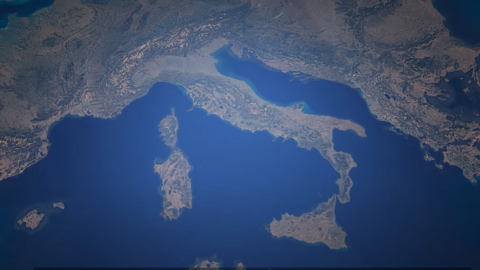
Italy, as we know, is a country of small and medium-sized businesses, but also of small and medium-sized cities. The report "Polycentric Italy. The ferment of intermediate cities," edited by Mecenate 90 in collaboration with the Guglielmo Tagliacarne Study Center of the Chambers of Commerce, paints a picture of these cities defined as "intermediate," of which there are 157 in Italy (73 in the North, 44 in the South, and 40 in the Central regions) and they produce a per capita added value 16% higher than the rest of Italy (34.154 versus 29.534 euros in 2022), thanks also to the fact that it is precisely in those centers that excellent Made in Italy companies with a high innovative content reside.
This means that these realities, according to the report, are resisting the demographic winter better in the long term, containing the population decline to 4,5% between 2024 and 2050 compared to a projected 7,3% contraction in the Italian average. Not only that, they also have a quality of life index that is 7,3% higher than metropolitan cities and a full 27% higher than other cities in the country.
Cities committed to creating opportunities
Intermediate cities are demographically significant and functionally important urban centers as centers of service provision, cities rich in resources and a valuable social and cultural heritage. Places that in many cases have become hubs capable of connecting smaller urban centers to integrate them into a broader network. Cities that have proven to be dynamic ecosystems, alternatives to the congestion of metropolitan areas. Cities that express a social, cultural, and economic dynamism based on the awareness that contemporary challenges require a dual commitment: structural interventions and participatory governance. The findings of the Report therefore deliver profiles of Cities determined to create opportunities to counter vulnerabilities due to the progressive aging of the population, depopulation, and insufficient physical and digital infrastructure.
City in turmoil
“Even though I have to discount my passion for the self-propulsion processes of our society, – writes the President of the Scientific Committee of Mecenate 90, Joseph DeRita – I must admit that, landing once again in reality (in the ten cities of Caltagirone, Catanzaro, Chieti, Lecco, Livorno, Macerata, Novara, Padua, Salerno, Taranto) I certainly find old and new fragilities, but I especially find a strong tension to grow and a strong “subjectivity” of collective development”.
“Compared to the development dynamics of the late twentieth century and the first decade of this century, according to the President of Mecenate 90 Daniele Pitteri, intermediate cities tend to design and define themselves through differentiation, defining their own 'immaterial dimension' through the exaltation of their unique and typical characteristics, while nevertheless thinking and defining their own positioning in an international dimension that enhances, by harmonising them, the drive towards economic development and the quality of social life".
“A more intense relationship between entrepreneurship and the intermediate institutional dimension – he adds Gaetano Fausto Esposito, General Director of the Chamber of Commerce Study Center Guglielmo Tagliacarne – which finds that intermediate cities generally enjoy higher levels of quality of life than the rest of the country and which, in many cases even in Southern Italy, is also reflected in a greater availability of local services for the population. This dimension is particularly evident in demographic and cultural aspects, making these places an ideal setting for cultivating that "joie de vivre" that was one of the success factors of the industrial district development model in the 80s and 90s and which today is reaffirmed and in many ways strengthened, to the point that the intermediate urban dimension can be considered a true connecting fabric between metropolitan hubs and a significant portion of other city centers.
Cities that aspire to reorganize their governance
The Report addresses the key issues that define the governance practices implemented. A shift in political and administrative culture is evident, with a clear need to integrate public and private resources and promote a culture of sharing and collaboration. Examples of cities capable of activating and enhancing local resources are presented. Among the shared themes are environmental sustainability and the systematization of tangible and intangible cultural heritage, including its valorization through tourism development. And there is a growing awareness that the global economy requires knowledge, skills, and innovation fueled by research and development.
Cities between social fragility and innovative forms of welfare
The ten cities taken into consideration, the report states, they are not free from the many social fragilities that afflict many other cities in our country, such as an aging population and a persistently low birth rate, a housing crisis, a growing number of people living in poverty, rising levels of social inequality, severe youth hardship, and educational poverty. In this context, as the research highlights, intermediate cities are promoting regenerative interventions to redevelop and revitalize their most deprived neighborhoods, thanks to the presence of a proactive, vibrant, and creative third sector.
The business system between innovation and sustainability
In terms of production, intermediate cities host businesses active in sectors defined as excellence and highly innovative, including design, Made in Italy, and agrifood. This Second Report also confirms the presence of a production network characterized by small and medium-sized enterprises, with significant innovation capacity and a strong propensity for export. In short, the Report highlights a dynamism in production sectors, albeit at varying scales depending on the cities' geographic location. A distinction is made between more prosperous and competitive cities and less competitive ones, where, however, there are companies capable of competing internationally.
What future for intermediate cities?
“These are years of profound transformations in cities – he underlines the coordinator of the research report Ledo Prato, Secretary General of Mecenate 90 – The intensity and extent are closely linked not only to the investments of the PNRR and other measures adopted in the last decade, but also to the ability of local governments to implement projects inspired by a vision of the cities of the near future, shared with key economic, cultural, and social actors. To have an impact, to leave a mark, two conditions are necessary: a vision of the future and plural participation, with citizens at the center. Intermediate cities seem to have taken charge of the present and attempted to fill it with meaning. Where they have been accompanied by a vision, the present is placing itself at the service of the future.
The numbers of the intermediate cities
The intermediate cities they welcome 10.690.518 residents, 18,1% of the Italian population (data as of 2024); 95 non-metropolitan capital cities; 33 non-metropolitan cities with the presence or accessibility of essential services and a tourism supply index greater than or equal to 4,6 beds per 100 inhabitants; 29 non-metropolitan cities with the presence or accessibility of essential services, Local Labor System Centers with a predominantly manufacturing production specialization.
Over half (83 municipalities) have a population size of 50 or more. The largest is Verona with 255.298 residents; followed by Padua (207.502 residents), Trieste (198.843 residents), Brescia (198.259 residents), and Parma (198.121 residents). In terms of area, the largest city is Ravenna, with an area of 651,85 square kilometers, while Riccione has the smallest land area, at 17,9 square kilometers. The most densely populated city is Monza with 3.758 inhabitants per square kilometer while Enna is the city with the lowest population density with 71 inhabitants per square kilometer.
Since 2010, the ranking of business growth rates has consistently seen metropolitan areas, as well as intermediate cities, dominate. Considering the 12 regions with at least one metropolitan area within their borders, we note that in eight (Piedmont, Veneto, Liguria, Emilia-Romagna, Tuscany, Calabria, Sicily, and Sardinia), intermediate cities have recorded higher growth rates than metropolitan areas.