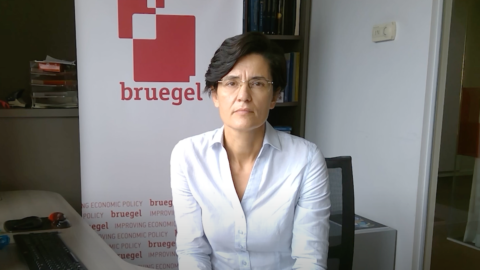
The discussion on the reform of the Stability and Growth Pact it is arriving in these weeks to define the new public finance framework that the European Union will give itself over the next few years. Suspended in 2023, barring a dramatic worsening of the (geo)economic picture, the Stability Pact will return in 2024. For a country like Italy, cyclically exposed to moments of strong financial instability, this is perhaps the political-economic transition most important European event in the next few years. Wisely, Italy will have to find more than one strong ally in Brussels, especially among the big names in the eurozone, to help design a sustainable reform system also in consideration of the characteristics of our public finances. So who better than France to support us in curbing the desire for austerity that regularly arrives from central and northern Europe? Relations between Paris and Rome will therefore have to be preserved with great care, not only to govern issues connected to the migratory emergency. “The new Commission proposal allows for a more personalized tax policy for each individual country. This approach is reasonable and effective at the same time. However, it is not obvious that all countries will accept it,” he observes Maria Demertzis, economist at the Bruegel think tank, with experience at the European Commission and at the Dutch Central Bank.
For a new level of European economic integration, are there too many Eurosceptic forces in charge in the various member countries?
«Let's say that there is no margin for a "new Maastricht". In any event, the proposal does not attempt to change the Maastricht debt and deficit targets. On the other hand, the use of tools that are easier to monitor for public finances is being discussed in ever greater detail».
Economic Affairs Commissioner Paolo Gentiloni spoke of growth and debt sustainability. Where will the Union look for the debt/GDP ratio?
«Realism on the accounts and at the same time emphasis on the need to grow. Importantly, by trying to design paths to debt reduction in a sustainable way, this attempt, at least in theory, should make fiscal policy more sustainable. Disagreements will obviously come over which is the most credible path to debt relief.
And for the deficit/GDP parameter?
“This is the least important part of the current proposal. It makes sense to deemphasize deficits to look at how countries use public resources.
There is talk of a variable adjustment path from 4 to 7 years. What scenarios are opening up for Italy?
«This is perhaps the most controversial issue, it depends on how many discretions are accepted. Consequently there will be more uncertainties to define the final results. The current proposal suggests that the Commission define the time horizon in close collaboration with the member countries".
How could a season of high interest rates longer than expected change the situation for a major debtor like Italy?
Indeed, this is a very big risk for countries that face a very high debt service cost. For this reason, the ECB has also devised a new tool to help those countries that could suffer a rapid increase in interest rates for reasons not justified by the state of their economy".
For years the Stability and Growth Pact was disregarded. What conditions are foreseen for those who do not respect the new parameters?
«The application remains in my opinion the number one problem to be solved. The new Commission proposal aims to impose penalties for non-compliance. It seems that they may be stricter than in the past, but only practice will verify this. But it is not obvious that fines are the most effective way to enforce the rules».
What visions of public finance will collide in Europe? Northern Europe again versus Southern countries?
«In the current proposal, the only thing that countries will find it difficult to accept is the amount of discretion that the Union has given itself. All countries feel uneasy about this."
What does the European Commission expect from Italian public finances in the coming months? And above all: what would you not like to see?
«The first thing is to carry out the reforms linked to the Recovery and Resilience Facility. Italy is the largest beneficiary of grants and loans in the whole Union (almost 200 billion), funds that come with a clear commitment to reforms. Deviating from these commitments would send a bad signal to both European markets and partners. However, I think that given the current macroeconomic environment there is less concern about large deficits, as they will be somewhat inevitable.'