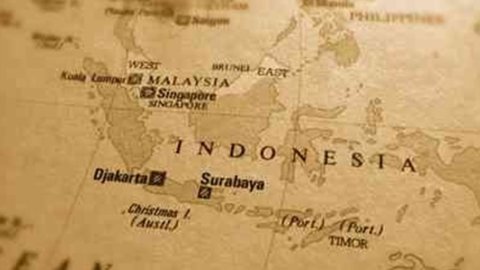
From the 2010 to the 2012 the annual growth rate exceeded 6%, mainly driven by private consumption and investments. In 2013 this process slowed down to 5,8%. As in other emerging markets, the local currency came under pressure from the Federal Reserve's bond-buying program last year. The value of the rupee then fell against the US dollar, since foreign investors proceeded with the sale of financial assets and shareholdings in Indonesia attracted by the newfound competitiveness of the US market. In this respect Indonesia has also been described as one of the "Five Fragile Countries" alongside Brazil, India, South Africa e Turkey, due to the excessive dependence on foreign investment to cover the current account deficit and to grow assetsà productive. Among the measures taken, Bank Indonesia raised its key interest rates several times between May and December 2013, from 5,75% to 7,5%, with the aim of supporting the currency and curbing capital outflows. And, in fact, since the beginning of 2014 the stock market and the exchange rate have proved to be more resilient. However, economic growth slowed to 5,2% in the first quarter and 5,1% in the second quarter of this year, adding to the decline in exports and government spending. GDP growth is expected to slow to 5,4% this year, followed by a 6,2% rebound in 2015. After 6,4% in 2014, inflation is expected to ease slightly to 6,2% % in 2015.
The Indonesian banking sector is still quite small in size, where projected domestic credit to the banking sector amounts to about 50% of GDP, but has improved significantly over the past decade. Public banks account for only a third of the total and the percentage of bad loans has decreased over the past two years to 6%. However, state-owned banks are still highly exposed to the dynamics of state-owned enterprises.
And, despite generally satisfactory growth rates, atradius indicates in the lack of structural reforms the weakness of the business environment, in terms of widespread corruption, a poor legal system, an inflexible labor market and a lack of infrastructure. All with the risk of continuing to limit growth. Labor market reforms and a reduction in benefits, for example, have regularly been postponed due to the popular pressure and resulting political resistance. As regards the fight against corruption, still widespread in society and in business. The lack of infrastructure has become one of the most significant obstacles to economic growth. In particular, the rural areas surrounding Java and large cities suffer from non-existent or failing infrastructure.
There are still too many barriers to foreign productive investments, a direct consequence of the lack of infrastructure and energy supplies, and in this context it is no surprise that the share of investment in oil extraction and infrastructure remains disappointing. Without forgetting that a further problem comes from protectionism, that is, from when Indonesia has adopted a more nationalist stance in its economic policy. In January 2014, the export ban on raw minerals went into effect, with the consequence of shaking up the mining industry and scaring off investors. And since then new minerals and concentrates have been added. New trade law directives approved in February 2014 allow the government to limit both inbound and outbound trade flows, while specific conditions remain vague.
Cutting fuel subsidies and addressing the growing budget deficit remain issues of primary importance. The annual budget deficit has increased since 2010, reaching 2,2% of GDP in 2013, largely due to fuel subsidies which account for more than 15% of the national budget. Such subsidies also limit government spending on necessary infrastructure and social spending, endangering long-term fiscal sustainability. These subsidies have also stimulated energy imports, putting pressure on the trade balance. The current 2015 budget plan includes $31 billion in energy subsidies, or more than 20 percent of the budget. Every year, More and more public money is being spent on fuel subsidies over social and capital spending programs, despite the country being almost entirely self-sufficient in oil production and remaining a major energy exporter, thanks to exports of liquefied natural gas.