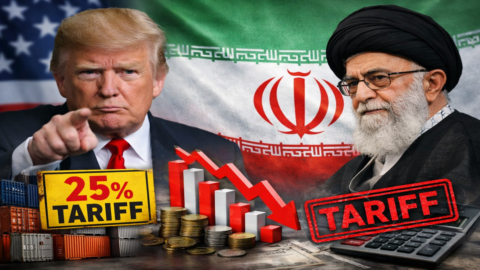
The war between the United States and Iran began a week ago with the corollary of other outbreaks in the Middle East and already presents a very high bill so much so that it could carry heavy loads impact on budgets of the countries involved, the United States first and foremost. And, while Operation Epic Fury, the US military campaign against Iran, entered its seventh day today, both President Donald Trump and Defense Secretary Pete Hegseth said that the conflict it could go on for weeks.
According to an analysis by the Center for Strategic and International Studies, reported by CNN, only the first 100 hours of the military campaign US against Tehran are cost the US 3,7 billion dollars, or more than 890 million dollars a day. Only a small part of this figure is already foreseen in the Pentagon budget: approximately $196 million in operating costs, while over 3,5 billion are currently not covered and may require new appropriations from Congress. The timelines are based on the limited information released by the Department of Defense, which, unlike previous campaigns in the Middle East, has been very brief in its updates. The costs are broken down into three main categories: military operations, capabilities used and equipment losses.
The costs of air and naval operations
Air operations represent the main expense item of daily activities. According to the CSIS, in addition 200 hunting are participating in the campaign, including stealth aircraft such as the F-35 and F-22 and planes such as the F-15, F-16 and A-10, in addition to the fighters embarked on aircraft carriers. The use of aircraft alone cost approximately 125,2 million dollars in the first 100 hours, with an additional cost of approximately 30 million a day. Also the naval presence It is significant: two aircraft carriers, 14 destroyers, and three ships for joint coastal warfare between the Persian Gulf, the Arabian Sea, and the Eastern Mediterranean. Operating the fleet in the first 100 hours cost 64,5 million dollars, with an estimated increase of approximately 15,4 million for each day of operations.
Ammunition is the most impactful expense item
But the heaviest expense item remains that of munitions, which alone is worth approximately 3,1 billion dollars. In less than four days the United States has used over 2.000 devices, between cruise missiles Tomahawk, air-to-ground missiles and guided bombs. Initial attacks used mainly long-range weapons, but as Iranian air defenses weaken, the United States is gradually moving to cheaper quantities, such as Jdam bombs, CSI reports. To give an idea of the cost difference, A Tomahawk missile costs $3,6 million; an equivalent Jdam costs $80.000.
A significant portion of the expenditure also stems from defense against Iranian missiles and drones. According to the Pentagon, Tehran launched approximately 500 ballistic missiles and 2 drones. The cost of the interceptors used in the first 100 hours is estimated at around $1,7 billion, although a significant portion of the defense effort was supported by regional allies such as Qatar, Bahrain, Kuwait, and the United Arab Emirates.
The admiral Brad Cooper, commander of U.S. Central Command and leader of Operation Epic Fury in the Middle East reported on X that US forces “hit approximately 2.000 targets with more than 2.000 munitions” in less than 100 hours of operation. number of ammunition used exceeds the number of targets hit, as some munitions miss the target or prove ineffective. In the first month of Operation Iraqi Freedom, The United States used approximately 1,5 munitions per target, 68 percent of which were guided. When NATO coalition forces bombed the Libya With the entire force being precision-guided munitions, the ammunition utilization rate has dropped slightly to 1,3 per target. It is likely that U.S. forces will use exclusively guided munitions in Operation Epic Fury. Applying the 1,3:1 ammunition-to-target ratio from Operation Odyssey Dawn and assuming U.S. forces hit 2.000 targets within H+100, the total ammunition used would amount to approximately 2.600 in the first 100 hours of the war.
Trump's Future War Moves and Funding Needs
These estimates, the CSI says, are based on the first days of the war, which typically represent the most intense period of an air campaign. Although administration officials have assumed afuture waveHistorically, air campaigns stabilize at a more sustainable pace as new targets need to be identified, damage assessments need to be collected to determine the need for follow-up strikes, crews need to be rested, and aircraft need to be serviced.
In particular, the cost of ammunition will decrease as the United States switches to cheaper ammunition. Nonetheless, the unforeseen costs will be substantial, unlike the operations in the Caribbean that led to the capture of the Venezuelan president Nicolás Maduro, where most of the costs had already been budgeted for.
This means that the Department of Defense will need for additional funds at some point, because the level of budget cuts required to internally finance this conflict would likely be politically and operationally difficult. Trump might decide to ask for one additional allocation to cover the war and any other unforeseen government expenses.
The Bush administration he had done it at the beginning of the wars in Iraq and Afghanistan. The Trump administration may request the funds in a bill reconciliation for fiscal year 2027, although it is unclear whether such a bill will actually be introduced. Finally, the administration could ask Congress to divert part of the 150 billion dollars The Department of Defense's first reconciliation bill will cover these expenses. The political challenge for the administration will be that any funding move will become a focal point for opposition to the war.
Italy has authorized a maximum annual expenditure of 380 million euros
Italy has committed to sending military aid in the six Gulf countries, those most exposed to the ongoing escalation in Iran. The government led by Giorgia Meloni already has the autonomy to send up to 2.000 military in the area, where he authorized a maximum annual expenditure of 380 million of euros between 2025 and 2026.
The justification is to “contribute to the creation of a secure environment and regional stability” of Bahrain, Kuwait, Iraq, Oman, Qatar, Saudi Arabia, and the United Arab Emirates. Numbers and objectives are listed in the Analytical Report on ongoing international missions and on the status of development cooperation interventions in support of peace and stabilization processes, as reported by MF-Milan FinanceThis is the same technical note (“sheet 4, 2025”) cited yesterday by Defense Minister Guido Crosetto to communicate the limit on military aid Italy can offer to the six countries in the conflict. In practice, the government will deploy "a national multi-domain deployment" in the Middle East with defense assets, air defense, anti-drone, and anti-missile systems.