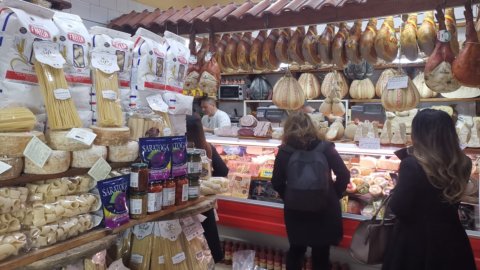
They are 5450 Italian gastronomic treasuresi, traditional food specialties obtained according to rules extended over time for at least 25 years, from the Arrappata di San Chirico Raparo to the Slinzega, from the Papacelle to the Porcaloca. The census created by Coldiretti for the International Forum of Agriculture and Food, it reveals a real map of the flavours, tradition and culture of the table of all the Italian regions, which enhances its uniqueness, the result of a unique biodiversity in the world.
The list of national specialties is rich and curious. In Basilicata in the small village of San Chirico Raparo, in the province of Potenza, from the folds of popular culture and the gastronomic tradition of the peasant table is found the horny one, a soup of legumes and cereals, from beans to chickpeas, from wheat to spelled, while in Lazio you can find the red garlic worm from Proceno, preserved in oil and ideal as a delicacy for appetizers, in Tuscany the poor cuisine sees in the foreground i Pici, a fresh pasta, similar to spaghetti, which is made with water, flour and salt, and the Friulians are proud of the Holy shit, a whole boneless goose stuffed with pork tenderloin, hand-sewn, tied, cooked and smoked.
Food Specialties Census 2022: the different regions
But specialties are found in each region. In Campania there are the Papaccelle, small and colorful more or less hot peppers that are mostly used for pickled preserves, while in Emilia-Romagna the'marinated eel of Comacchio, fished directly in the Po Delta Valley during the autumn season, the result of a traditional recipe. Veneto is proud of Morlach blood ancient liqueur from 1830 based on morello cherries named after the poet D'Annunzio for its typical dark red colour, while Piedmont has the Noble salami from Giarolo, so called because it is made with scraps from the processing of "noble" parts such as pancetta, coppa and ham. In Liguria they are proud of jam and rose syrup linked to the traditional cultivation of the flower, the Apulians have exquisite products such as the cardoncelli, a wild vegetable with a slightly sweet taste. In Molise you cannot give up the typical White bean while in Calabria among the most popular traditional products there areWild oregano and Bergamot jam. In Lombardy, on the other hand, you can taste the Slinzega, seasoned and spiced beef salami, typical of the Valtellina.
The small villages that keep 92% of the typical national products
And if in Sardinia there is the Sa Pompia a fruit similar to lemon from which sweets and liqueurs are made, very traditional in Sicily is the Ustica lentil, grown where tractors cannot reach, so much so that all operations are done on the back of a mule. In the Marches it is typical of the peasant tradition Sour cherries wine, an aromatised wine composed of sour cherries and preferably red Sangiovese or la Roveja, an ancient legume similar to small colored peas. In Abruzzo, on the other hand, a sought-after specialty together with the famous one Campotosto mortadella better known, due to its particular shape, as Coglioni di mule. The. comes from Trentino instead Celeriac from the Val di Gresta with a delicate flavor and a particular shape, while it comes from the Valle D'Aosta they are prepared the flantse or flantson, flattened rye loaves, usually round in shape, to which sugar, butter, raisins, almonds and candied fruit are added. Finally, Umbria is proud of Trasimeno bean, rare and particular variety of legume known since the time of the Etruscans or the Saffron of Cascia.
In the first places bread pasta and desserts followed by fruit and vegetables
The panorama of our food specialties as regards the types you see in the first three places on the podium the team of bread, pastries and desserts (1616), the one of fruit, vegetables and greens (1577) and the group of specialties based on meat (822), followed by cheeses (524) and gastronomy products (320), but there is no shortage of soft drinks, spirits, liqueurs and beers, honey, fishery products and condiments from oils to butter, in a journey of taste that reaches even the most hidden corners of the country . It is indeed no coincidence that in small villages - underlines Coldiretti - was born 92% of typical national productions according to the Coldiretti/Symbola survey, a wealth preserved over time by agricultural businesses with a daily commitment to ensure the preservation of historical crops. A heritage that drives 1/3 of tourist spending to the table to discover a country like Italy which is the only one in the world that can count on the primacy in quality, environmental sustainability and safety of its agri-food production.
Campania beats everyone, second - remotely - Tuscany and third Lazio
The classification of the products at the table sees the Campania in first place with as many as 580 specialties ahead of Tuscany (464) and Lazio (456), followed by Emilia-Romagna (398) and Veneto (387), ahead of Piedmont with 342 specialties and Liguria which can count on 300 products. All the other regions follow suit: Puglia with 329 typical products surveyed, Calabria (269), Lombardy (268), Sicily (269), Sardinia (222), Trentino Alto Adige (207), Friuli- Venezia Giulia (181), Molise (159), Marche (154), Abruzzo (148), Basilicata with 211, Umbria with 69 and Val d'Aosta with 36.
At the basis of the success of Made in Italy - highlights the Coldiretti – there is an agriculture that has become the greenest in Europe with the EU leadership in organic farming with 80 operators, the largest number of recognized Dop/Igp/Stg specialties (319), 526 Dop/Igp wines and with Campagna Amica the largest network of farmers' direct sales markets. “Italy is the only country in the world that can count firsts in the quality, environmental sustainability and safety of its agri-food production.
"Behind every product - reads the report - there is a history, a culture and a tradition that has remained alive over time and best expresses the reality of each territory" says the president of Coldiretti Ettore Prandini in underlining "the need to defend this heritage of Made in Italy from trivialization and from the push towards standardization and flattening downwards because good food together with tourism and culture represent the decisive strategic levers for a unique production model that has won by focusing on the values of identity, biodiversity and the link with the territories”.
THE 2022 MAP OF MADE IN ITALY TASTE
THE TERRITORIES THE PRODUCTS
Abruzzo 149
Basilicata 211
Calabria 269
Campania 580
Emilia Romagna 398
Friuli Venezia Giulia 181
Lazio 456
Liguria 300
Lombardy 268
Marches 154
Molise 159
Piedmont 342
Trentino Alto Adige 207
Apulia 329
Sardinia 222
Sicily 269
Tuscany 464
Umbria 69
Aosta Valley 36
Veneto 387
ITALY 5450
Source: Coldiretti elaboration on the census of traditional regional products 2022