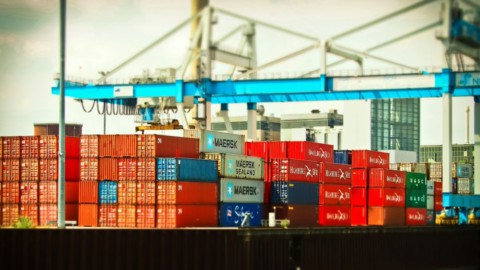
Il Competitiveness Report 2026 ofIstat tells the story of productive Italy in a far from simple moment: duties Americans, tensions partners. e markets increasingly global unstable they put ours to the test companies. Yet, the Italian production system continues to show a certain resilience. In 2025, foreign trade recorded a positive balance of 50,7 billion of euros: the exports grew by 3,3% and the cheap imports of 3,1%, confirming that the Italian economy is able to hold up even in a phase of strong international turbulence.
The picture that emerges is that of a strong industrial polarizationHigh-tech sectors, such as pharmaceutica, non-motorized transportation equipment, and metallurgy are experiencing very high growth rates—between 16,5% and over 50% in the US market—while sectors such as manufacturing, textiles, machinery, and intermediate goods are stagnating or contracting. The gap between "leading industries" and more traditional sectors is widening, revealing a clearly visible polarization in production.
Italy's exports and imports: the importance of non-EU markets is growing.
The dynamics of trade shows a commercial geography increasingly unbalancedExports are growing more steadily towards Countries of the European Union (+4,2%), while they are more contained in the markets extra-EU (+2,4%). On the other hand, imports from non-European countries (+3,4%) are increasing more than from EU countries (+2,9%), indicating growing integration into global value chains.
Compared to its main European partners, Italy appears more exposed to non-EU markets. In 2025, 48,2% of Italian exports will be directed outside the Union, compared to 44% in 2025. Germany, 46,1% of the France and 37,6% of the SpainEven on the import side, the share of imports from non-EU countries reaches 43,4%, higher than that of France (37,1%) and Germany (34,7%) and essentially in line with Spain (43,3%). Italy thus confirms its position as an open and highly integrated economy, but more exposed to global risks.
Italian exports to the United States: unique growth in Europe
- United States they confirm themselves as a key market for the Italian production system. In 2025 they will absorb 10,8% of exports, representing the second destination market after Germany (11,4%). Unlike other large European countries, Italy is the only one to record a significant increase inexports to the USA (+7,2%), while France (-0,9%), Germany and Spain (over -9%) show a contraction.
On the front cheap imports, the weight of the United States is more content (6% of the total), but growing strongly: +30% of the total, with a 42,1% increase in the manufacturing sector, driven by the pharmaceutical sector which grew by 100,2%, reaching 45% of purchases from America. This dynamism was supported by the entry into force, in August 2025, of theEU-US trade agreement.
China: the strategic supplier and growing dependence
Next to the United States, the China confirms its position as the main strategic supplierIn 2025, Italian imports from the Asian country will increase by 17,2%, representing 10,3% of the total. In the manufacturing sector, the increase is 20,1%, with a significant acceleration in the first months of the year. Chinese intermediate goods are becoming increasingly crucial: from 2017 to 2025, their use grew by 60%, while pharmaceutical imports went from 680 million to over 7,7 billion euros, an exceptional increase of 933,7%. This trend highlights growing integration into global value chains, but also greater dependence on foreign supplies in strategic sectors such as semiconductors, energy and advanced components.
The impact of US tariffs: limited but differentiated
The introduction of duties Americans between August and December 2025 had effects overall contents on theItalian exportEstimates indicate that a doubling of tariffs would have resulted in a loss of export growth of 3,2%, equivalent to approximately €1,5 billion. The impact varies across sectors: more negative for mineral products, precious metals, and jewelry, and more moderate for machinery, electrical equipment, wood, paper, and precision instruments. Some sectors, such as pharmaceuticals (+€528 million) and paper (+€38 million), benefit from tariff exemptions and the reorientation of trade flows. At the company level, reaction was cautious about the duties. About 60% of exporting companies did not record any changes in the quantities sold and 75,9% maintained prices remain unchangedOnly a limited percentage have initiated diversification strategies towards new markets, mainly European, while barely one company in 20 has planned direct investments in the United States.
Italy's export sectors: concentrated growth and strong polarization
The growth ofItalian exports in 2025 It is concentrated in a few sectors. The main contribution comes from five sectors: pharmaceutica (+ 28,5%), means of transport other than motor vehicles (+ 22,2%), metallurgy (+ 16,5%), feed (+ 6,3%) and Wood (+3,5%). In particular, exports to the United States are driven by pharmaceuticals (+54,1%) and transportation (+59,5%).
Conversely, twelve out of twenty-two sectors recorded a contraction in exports. The most significant declines were in coke and refining (-15,3%, up to -63,1% towards the USA), chemistry (-5,7%), motor vehicles (-18,2%) and other manufacturing activities. The polarization of Italian manufacturing is therefore increasingly marked.
Stagnant manufacturing and moderate growth in services
In 2025 the industry manufacturing The sector shows substantial stagnation, with a slight decline in turnover (-0,1%), the result of virtually no growth in the domestic market (+0,1%) and a slight decline in the foreign market (-0,2%). In more than half of the contracting sectors, the weakness is primarily linked to international demand.
The field of services Instead, it grew by 1,7%, driven primarily by information and communication activities (+5,1%) and professional, scientific, and technical services (+3,4%). However, the outlook remains uncertain: businesses report difficulties accessing credit, expectations of price increases, and widespread uncertainty about the future direction of the economy.
Multinationals and export companies: the true driving force of foreign trade
Il business abroad Italian is highly concentrated in one limited number of businessesOnly 4,2% of companies operate on international markets, but they generate 55,4% of added value and employ 35,3% of workers.
Within this group, the multinationals They play a key role. In 2023, they generated over 75% of manufacturing exports and 80% of imports. Their presence is particularly significant in strategic sectors, where they account for over 95% of trade flows. In 2025, Italian multinationals increased exports by 2,5% (up to 8,8% to the United States), while foreign-controlled multinationals saw a decline (-2,2%).
The role of companies is particularly important "foreign-dependent”, which depend on foreign supplies that are difficult to replace. These are just 583 companies, but they have significant economic weight: 175 employees, €23 billion in added value, and €130 billion in turnover.
Dependence on strategic imports and geopolitical risks
Global integration involves vulnerability. About 20% of Italian imports concern products strategic, of which 60% comes from Countries at medium-high political riskChina leads the way in critical supplies, with a share of over 11%. Essential products include semiconductors, defense and aerospace, petrochemicals, biotechnology, alternative energy, and advanced robotics, necessitating a targeted industrial policy and greater supply chain resilience.
Italy is more exposed than other large EU countries in energy sector, with a vulnerability accentuated by the geographical concentration of companies, especially in the North-West and North-East.
Impact of US exports on Italian GDP and future prospects
The importance of the US market is also confirmed by the simulations macroeconomics. A hypothesis of zeroing out exports to the United States would entail a reduction in Italian GDP of 1,1%, equal to approximately 20 billion euros, with effects concentrated in the chemical, pharmaceutical, metallurgical and machinery sectors.
Over the long term, foreign demand has contributed positively to Italian economic growth, averaging 0,1 percentage points between 2000 and 2024, though lower than that of Germany and Spain (0,2 points). The growing instability of non-EU markets therefore reopens the issue of strategic repositioning.
Looking to the future, the Report highlights the need for strengthening the European single market, which offers greater stability than non-EU markets, and to explore new outlets international in emerging areas such as India and Latin America.