Regional elections in Calabria 2025 at the start: Sunday 5 and Monday 6 October 2025 Calabrese citizens will return to the polls to elect the new president of the Region e renew the Regional CouncilThis is the third round of regional elections of the year, following the success of the Union Valdôtaine in Valle d'Aosta and the elections in the Brands, where the outgoing governor Francesco Acquaroli was confirmed with 52,4% of the votes against 44,4% of Matteo ricci, consolidating the center-right advantageThis result has given impetus to the coalition, which now aims to replicate the performance in Calabria, considered a fundamental testing ground for the "broad field". There are already other decisive electoral challenges on the horizon: the Toscana will vote on October 12 and 13, with polls showing that advantage the outgoing president Eugenio Giani (center-left) on the center-right candidate Alexander Tomasi, while Campania, Puglia e Veneto they will be called to vote Sunday, November 23 and Monday, November 24, 2025, completing an intense and decisive electoral autumn for the national political balance.
Calabria Regional Elections 2025: Why Voting Is Early and Who Are the Candidates?
The regional elections in Calabria come with a year in advance compared to the natural deadline of 2026, after the resignation of President Roberto Occhiuto, submitted on 31 July 2025 following the opening of a corruption investigationA few days later, Occhiuto himself announced his re-election, championing his results and sending a direct message to voters: "I resign and run again. This time, Calabria's future is decided only by the Calabrians."
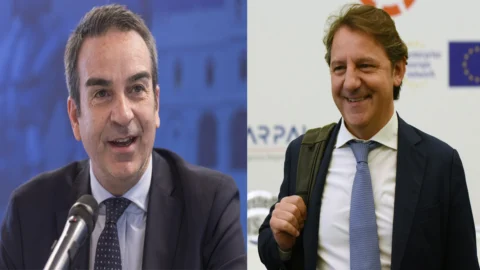
The race for regional leadership is therefore being played out on three main fronts. Occhiuto, the outgoing governor, is running supported by the entire center-right coalition composed of eight lists: Forza Italy, Brothers of Italy, Alloy, We Moderates, South Calls North, Go Azzurri and the civic Eyed PresidentHis campaign is focusing on the results of the first years of government, with particular attention to investments in infrastructure, tourism, innovation, and culture, and on the center-right's ability to mobilize consensus in historically favorable areas.
The strongest challenger is Pasquale Tridico, economist and former president of INPS. He arrives at the election as a member of the European Parliament for the M5S, a candidate for a progressive coalition (the so-called "broad field") which brings together six lists, including Democratic Party, Movement 5 Stars, Democrats e Progressives e Green-Left AllianceHis platform proposes a regional "dignity income" and targeted measures to reduce social and economic inequalities. His electoral strategy focuses primarily on the most economically vulnerable areas and on the promise of a radical change from the center-right's governance.
To complete the picture there is Francesco Toscano, leader of Sovereign People's Democracy, which presents itself as an alternative to the traditional coalitions. His campaign focuses on healthcare, infrastructure, and school buildings. Despite having more symbolic than competitive electoral weight, Toscano could still influence the final outcome, especially in the distribution of seats in the Regional Council.
Occhiuto vs. Tridico TV showdown: here's how it went
Il televised debate between Occhiuto and Tridico, transmitted by SkyTg24, highlighted the main fault lines. On the workTridico denounced the lowest employment rate in Europe (48%) and proposed new hiring in the culture and environment sectors, while Occhiuto replied that public positions are not enough to relaunch employment, claiming tax breaks and tenders already underway. Health remained at the center of the debate: Tridico denounced hospital closures and territorial shortages, calling for medical on-call services in every municipality; Occhiuto called for the reopening of construction sites and new investments. bridge over the Strait, the outgoing governor considers it an attractor of investments, while the progressive candidate deems it not a priority. Differences also on differentiated autonomy and foreign policy: Tridico said he was in favour of the recognition of the State of PalestineOcchiuto is against a regional role on the issue. Finally, on the judicial front, Occhiuto reiterated that he will not resign in the event of indictment, recalling that he had already done so to avoid exploitation; Tridico, however, declared himself available to resign from his post if proceedings were brought against him.
Calabria at the 2025 polls: predictions, percentages, and what could happen
Le latest findings before the electoral silence, which came into force on September 20, they confirm Eyed in the lead, albeit with smaller margins than in the summer. The polls Noto, BiDiMedia, swg, Ipsos e Tecnè indicate Occhiuto between 53% and 57%, Tridico between 38% and 46% and Toscano between 0 and 2%. Only Political thermometer he estimated a possible rapprochement of the centre-left, placing Tridico between 42,5% and 48,5%.
Calabria is preparing to become a decisive test for the centre-left. If the “wide field” does not get results, the progressive coalition will be forced to review strategies, alliances and political language, with possible repercussions on future elections. For the center, instead, the Region represents the opportunity to consolidate the second consecutive victory in the South and strengthen Roberto Occhiuto's leadership, confirming a stable rootedness in the territory and the success of a consolidated political model.
The October polls are therefore going well beyond the local vote: will be an indicator of the state of health of the main Italian factions and the center-left's ability to compete in Southern Italy. The coming days will reveal whether Occhiuto will be able to confirm his presidency, whether Tridico can overturn the odds, or whether Toscano will retain a symbolic yet significant role in the Regional Council, shaping a political landscape that could influence the entire national landscape and the upcoming general elections.
Calabria Elections: Past Results and Voter Turnout
Since 1995, the year in which the regional presidents are directly elected by the citizens, Calabria has seen the prevalence of center-right on five occasions e the center-left in twoIn 2021, Occhiuto won with over 54% of the vote, beating Amalia Bruni (28%) and Luigi De Magistris (16%). In 2020, President Jole Santelli triumphed with over 55%. The center-left had won in 2014 with Mario Oliverio (61%) and in 2005 with Agazio Loiero. The center-right prevailed in 2010, 2000, and 1995. But a fundamental unknown remains: citizen participation, with a turnout that in recent years in continuous decline: from 69% in 1995 it dropped to 64% in 2005, to 59% in 2010 and finally to around 44% recorded in the last three rounds (2014, 2020 and 2021).
Calabria Elections: How Voting Works and the Rules
Those entitled around 1,9 million people are voting, divided into three constituencies. Calabrians residing outside the region or abroad can also vote, but only in their municipality of residence. Voters can choose to vote for the presidential candidate alone, for a candidate with an associated list, or for a list alone, whose vote will automatically be cast for the candidate they support. Split voting is not permitted. It is possible to express up to two preferences for candidates for the regional council, provided that they different sex; otherwise the second preference is cancelled.
The president will be elected by a relative majority without a runoff. The regional council is composed of 30 members plus the president. barrier thresholds are 8% for coalitions and 4% for single lists, with a majority premium which guarantees at least 16 seats (55%) if the winning coalition does not exceed 40% of the votes and at least 18 seats (60%) if it exceeds 40%.