Martin Wolf, the authoritative chief economic commentator of the Financial Times, published a brief intervention on the issue of the moment in the City of London newspaper a few days ago. That is, that of the reopening of economic activities. A question that underlies another perhaps even more dramatic one concerning the choice between human lives and the economy. We thought we'd offer our readers, in Italian translation, this interesting reflection by one of the most accredited and balanced voices on the international economic scene.
Reopening yes, reopening no
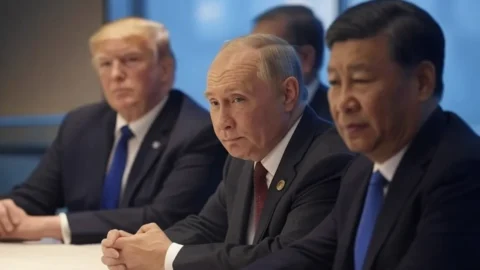
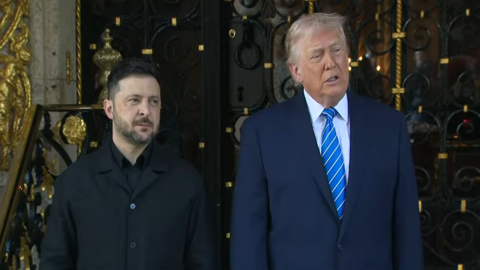
"We cannot allow the remedy to be worse than the disease." Thus Donald Trump framed a widely shared concern. Such a compromise between the economy and the people has also made its appearance in the debate within the various governments on when and how to free the economy from the blockade. In Great Britain, the minister Michael Gove has lined up for the early reopening. Matt Hancock, the health minister, opposed the idea.
Hancock is right: Suppressing the virus is the best policy for both health and the economy.
Politicians, understandably, are starting to question whether there will still be much of the economy to reopen. In a recent forecast, the Office for Budget Responsibility, an independent public body funded by the UK Treasury, projected a 35% decline in UK gross domestic product in the second quarter. A forecast worse than the already frightening OECD estimates.
Inadmissible hypotheses
However, a policy driven by terror cannot lead to good choices. Not all would be well, from an economic point of view, if the closure of the activities were immediately lifted. The underlying assumption is that the economy can recover from where it was before the coronavirus. But this is impossible.
The real question is: what would happen to the economy if there was no more lockdown? The answer is: if the virus were to run rampant again, much of the economic activity to the public would cease to exist.
It is true, if the lockout ends and support for those who no longer have a job also ceases, many could be forced to return to work. With this, economic output could increase. But this hypothesis would further reinforce the already existing disparity between those who can survive at home and those who cannot.
The disease-block cycle
It's also very unlikely that reopening will bring a roaring economy back to life, with the disease still around. Worse, a reopening followed by a rising wave of infections and a subsequent new lockdown, or even a cycle of reopenings and lockdowns, would devastate the economy, as well as the credibility of the political class.
The point is that the economic cost of social distancing is related to the spread of the disease and nothing else. But, as a major new study from the University of California, Berkeley shows, there is much more than that at stake in policy decisions on this issue.
The document analyzes two strategies: the "short-term control", aimed at keeping the infection rate within acceptable limits; and "long-term control", aimed at limiting the total number of infections and ultimately bringing the flow of infected people to very low levels.
These strategies are related to the "mitigation" and "suppression" of the virus, as discussed in a paper from Imperial College London. In the political debate, these two strategies correspond to reopening when the disease reproduction rate is close to one (a constant infection rate, at its maximum) or when the rate is close to zero (implying its near elimination).
The least expensive option
The Imperial College paper also looks at four types of costs: the costs of loss of life, days of work lost on sick leave, the medical costs associated with increased incidence of illness, and the (mainly economic) costs of social distancing, whether imposed by law or spontaneous.
The general conclusion is clear. The least expensive option is strong contagion suppression.
This option saves lives, massively reduces medical costs, and even lowers the economic costs of social distancing during the outbreak.
This lower overall economic cost derives from the fact that the presence of the disease among the population is lower and therefore becomes more manageable. Provided, however, that there are established systems in place to test, trace and quarantine the relatively small number of new cases. In this way people will be able to go out freely and there will be no risk of further blockages of activities.
This, on the other hand, could not happen if the disease were still widespread and therefore destined to periodically re-propose the problems of generalized quarantine.
An investment and not just a cost
This detailed analysis of the entire course of the epidemic provides compelling support for the side of the debate against early reopening. Yes, persisting with the lockdown, until the disease is at really low levels, imposes enormous economic costs.
But this option must also be seen as an investment, the fruits of which will make the future more tolerable.
Furthermore, the extra time that will be gained can also be used to put in place the necessary mechanisms to suppress the disease entirely.
This strategy is the only correct one from an economic point of view. It must also be the right one from a political point of view. People will resent the weeks of isolation. But such resentment is not comparable to the fury if premature opening leads to a resurgence of the disease and new closures.
In the long run, the right thing to do will, for once, also be the least politically unpopular. Crushing Covid-19 and keeping it crushed, that's the priority. Governments have made enough mistakes. They can't make another huge one.