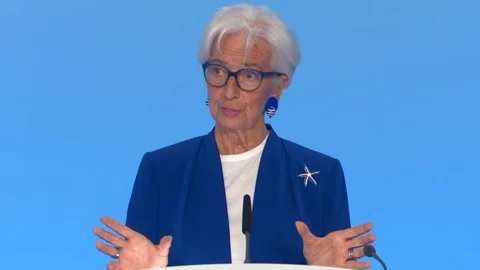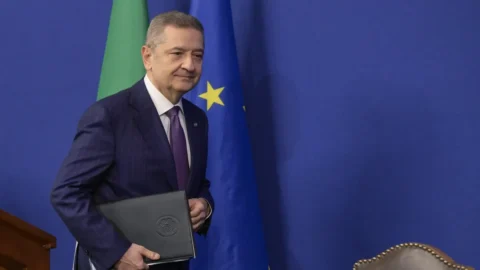
A year after his first speech da Governor of the Bank of Italy, Fabio Panetta returns to the stage of the Salone dei Partecipanti of Palazzo Koch for his second Final considerations. Twelve months ago, with clarity and rigor, he had indicated the main problems that still hold back the country and Europe. A year later, those issues remain firm, perhaps even more intertwined. The structural challenges remain intact and are part of a more unstable global context: conflicts still open, growing trade tensions, and increasing geopolitical fragmentation. Panetta's hope remains: "A common European response can allow us to overcome the difficulties. Italy will also benefit from it".
Tariffs cost global growth a point
“The risk of trade wars materialized on April 2” when the US duties, with the “declared goal of reviving domestic industry and rebalancing the trade balance”, even if “it is unlikely that it will be able to correct the large US trade deficit”. The number one at Bankitalia starts from the trade tensions and ongoing conflicts that are eroding confidence at an international level. The duties currently in force in the United States, although lower than those announced in April, remain the highest since the Second World War.
Panetta stresses, however, that the strategy of using tariffs "as a negotiating lever" to redefine international relations "can lead to effects that are difficult to predict and manage", but due to the close integration of the global economy their potential impact is much stronger than in the past. "The tightening of customs barriers could subtract almost one percentage point from global growth over a two-year period” and in the Usa "the estimated effect is about double”. Furthermore “they could reduce international trade by about 5%, triggering a reconfiguration of global production chains”. But the risk is that “trade, from a driver of integration and dialogue, becomes a source of division, fueling political instability and endangering peace”.
Trump's various U-turns, the governor continues, have created a certain volatility on markets and pushed investors towards “safer” assets, with the price ofgold hitting new highs. “Unlike in previous periods of uncertainty, long-term U.S. government bonds and the dollar have depreciated.”
Defense: “Investing does not mean starting an arms race”
Panetta then spoke about European defence: “The proposal of the Commission it's based on funds national receips e Loans, rather than on European spending and transfers financed with common resources”. This approach, warns Panetta, “risks increasing inequalities between countries and reducing the effectiveness of spending. A unitary program is needed, supported by European debt”. Attention, “investing together in security nit doesn't mean starting an arms race, but to realistically address common threats that no country can counter alone."
Panetta on the EU: rethinking the development model
“The European economy shows structural fragility evident”. Panetta identifies three: stagnation productivity, delay in innovation , dependence on foreign countries. Regarding the first two points: “In the last thirty years, labor productivity in the EU has grown by 40%, over 25 percentage points less than the US”. This delay mainly reflects the difficulty of innovating. Above all, the contribution of young innovative companies is weak. Even if Europe remains “an excellence in scientific research”, this strength “does not translate into productive innovation”. On the artificial intelligence front, European patents are less than a fifth of those in the US. For this reason “it is necessary to rethink the development model that has supported the continent for decades”.
Starting the change: “The capital market”
What does Europe need?Rapid and structural interventions”, says Panetta. On the one hand, "the public sector is indispensable for financing European common goods", on the other, "it is essential to mobilize private capital to finance innovative entrepreneurial projects. To do this, it is urgent to complete the construction of a fully integrated European capital market capable of directing savings towards long-term investments with a high expected return”.
“According to our estimates, an integrated capital market, with a common European bond at its core, would reduce financing costs for companies, activating additional investments of 150 billion euros per year and increasing, in the long term, the product by 1,5%. The effect on GDP could be up to three times greater if the new investments were destined for projects with a high technological content”.
Banking Risk: The Market Has the Word
Sul bank risk in a few words: "mergers represent a delicate moment of discontinuity in the life of intermediaries. They must serve to strengthen them, and for this purpose it is necessary that they are well conceived and aimed solely at creating value". For Panetta "creating value means first of all offering businesses and families financing that is adequate in terms of quantity and cost", "effective, transparent and fair-condition savings tools", "qualified and innovative" services.
In any case: "the judgment on each offer depends on market dynamics and shareholders' choices".
In Italy, it is necessary to intervene on energy prices
Panetta stressed that despite the difficulties, theItalian industry has dynamic and complementary businesses. Good foundations, but they need to be strengthened. “In Italy, more than elsewhere in Europe, it is urgent to intervene on energy cost, following the guidelines already traced”. For the number one of Via Nazionale “it is necessary to act with determination to reconcile the containment of energy costs with the carbonation process”. And he adds: “an effective transition must also take into account the social aspects and production needs, reaching the right balance between ambition and feasibility”.
The central problem remains productivity
“The central problem remains the productivity - in manufacturing as in the rest of the economy". He then underlines the link with the low wages, which has been at a standstill for over twenty years: “To ensure a lasting increase in wages, it is essential to relaunch productivity and growth through innovation, capital accumulation and decisive public action”.
"The innovation must be at the center of our economic strategy. This requires a strong strengthening of investments in research and development to bridge the gap that separates us from Europe and the United States”. An effort that must come “largely from the private sector”. For Panetta “the quality of Italian scientific research has reached that of the main European countries” but “the number of patents remains limited”:
Italy's growth has outpaced that of the Eurozone
OnItalian economy, the governor – in addition to highlighting the long phase of stagnation – also speaks of lights: the growth has surpassed that of the euro area, theoccupation has increased (reaching an all-time high of over 24 million), the unemployment rate has dropped (from 10% to 6%). Finally, the Noon recorded a growth “slightly above the national average”. Results that “were favored by expansionary policies, but would not have been possible without the restructuring of the productive fabric started after the sovereign debt crisis”.
Demographics and Workforce
Two millstones weigh on Italy's growth: population ageing e low birth rate. According to Istat, by 20240 the number of people of working age will decrease by about 5 million. This could lead to a contraction of the product estimated at 11%, equal to 8 in per capita terms”. For Panetta “an increase in the participation rates in the labor market would attenuate this impact”, even if it is a compensation. For expand the workforce must "create opportunities of attractive employment opportunities for the many Italians who leave the country in search of better prospects” and ““regular immigration”, in particular “the share of immigrants with a university degree”.
“Reducing this gap,” he said, “also requires adapting the systems for recognizing qualifications and skills to European standards.” With such a sharp decline in the workforce in the near future, it is necessary to invest in adequate training, including for immigrants.
Debt remains high
Sul Italian public debt – even in the light of recent assessments by rating agencies – “the fundamentals of our economy have improved significantly”. Panetta underlines that “in 2024 the deficit fell to 3,4% of GDP and for the first time since 2019 a primary surplus was recorded”: However, warns Panetta “the path of The recovery of public finances is just beginning. Debt remains high and spending will come under pressure in the coming years." And that "the progress made in recent years must push us to maintain a prudent fiscal policy and to step up the reform action needed to support growth.
Panetta on the Pnrr
In relation to the Pnrr "Italy has so far received 122 billion euros and has used more than half of it. The payment of the next installments will depend on the achievement of objectives relating to the construction of public works; in this regard, the data currently available suggest the existence of delays”. Furthermore, “the interventions planned for the the two-year period 2025-2026 could increase the product by 0,5%. In a phase of cyclical weakness – the governor underlined – it is essential to proceed with determination in their implementation”.
From Bitcoin to Stablecoins: The Risks of Crypto Assets
Panetta spoke about the “connections between the world of cryptoactivity and the financial system”, whose activities are intensifying, and the risks: crypto-assets, such as Bitcoin, “have no underlying; highly volatile instruments, traded mainly in unregulated, opaque contexts”; on the other hand, the so-called stablecoins, “instruments that aim to maintain a stable value with respect to underlying currencies or assets, but which nevertheless expose their holders to risks related to the solidity of the issuers and the variability of the value of the underlying. In the absence of adequate rules, their suitability as means of payment is at least doubtful”.
The Digital Euro and Financial Education
Several countries, the governor points out, have started interventions to ban its use (such as China). “In Europe the regulation MiCAR has introduced rules aimed at protecting customers and promoting an orderly development of the market".
“But it would be illusory to think that the evolution of crypto assets can be governed only by prohibitions or regulatory constraints”. We need a response that is up to the technological transformation underway, capable of satisfying the demand for safe, efficient and accessible digital payment instruments, while preserving the role of central bank money. The digital euro project arises precisely from this need. At the same time, it is necessary to strengthen citizens' financial skills, so that they can orient themselves in the new digital universe and consciously evaluate the opportunities and risks of the products and services available. The Bank of Italy is committed on both these fronts".
Conclusions
La Ue "remains a bastion of the rule of law, of democratic coexistence and of openness to international exchanges and relations – Panetta continued -. However, it cannot afford to remain still. It must have the ability to overcome national particularisms, to translate its economic strength and the heritage of culture and values that it carries into political weight”.
“I have repeatedly argued that a common European response can enable us to overcome current difficulties."
Panetta emphasizes: “Today there is an unavoidable need, but also a concrete possibility, to complete the common market; to simplify, but not eliminate, the rules that govern it; to create a single capital market centered on the regular issuance of European securities”.
"Also Italy will benefit from a incisive common response. In our country, the problems of growth and innovation that are plaguing Europe today emerged earlier, and in an accentuated way. We are paying for old structural weaknesses that we have not been able to overcome”. However, “we are seeing signs of change: in manufacturing and services, in the financial sector. It is a concrete basis on which to build by committing to reforms, fighting vested interests, offering prospects to young people. We have the responsibility and the possibility to do so”.