

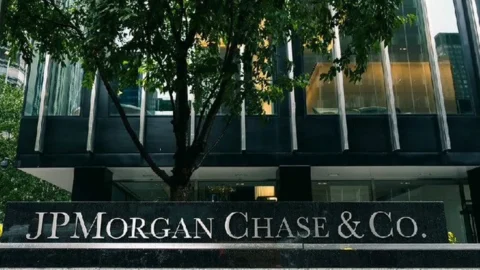
First work tools, then air traffic, and now banks. In the United States, the string of technological disruptions continues, this time involving some of the major financial institutions: JPMorgan Chase, Bank of America, Wells Fargo, US Bank, True e Capital OneThousands of customers have reported problems accessing online banking services And in the money transfers, although not all banks experienced system failures. On the same day, a technical problem also affected United Airlines, causing delays in the departures of some flights.
The two episodes do not appear to be connected and come within a few days of each other. Microsoft blackout and thethe temporary ban on flights ordered by the Federal Aviation Administration (FAA). The banking disruptions are said to be caused by a problem in JPMorgan Chase's internal systems, which slowed down some transactions with other institutions and also caused delays in payments via Zelle, the platform used in the United States to send money between individuals. The bank has a cyber attack is excluded and ensured that customers could continue to access their accounts and funds.
US Banks in a Crash, Hacker Attack Ruled Out: What Happened?
The disruptions began on the afternoon of Monday 16 November, when thousands of users Users began reporting problems accessing banking websites and apps, as well as delays in money transfers. According to Downdetector, reports peaked around 14 p.m. on the East Coast of the United States and 20 p.m. in Italy. The most affected banks were JPMorgan Chase, with over 4.600 reports, and Bank of America, with more than 2.000. Problems were also reported at Wells Fargo, US Bank, Truist, and Capital One. The latter three banks, however, stated that their systems were functioning normally; the disruptions primarily affected transactions involving Chase.
It is precisely in the systems of Chase Bank, one of the largest banking groups in the United States, which would be born on problemAccording to the reconstruction of the CNN, citing sources familiar with the matter, the failure originated within the bank and also had consequences on transactions with other institutions. JPMorgan spoke of a bug in one's system, barring a cyber attack.
The consequences have also been felt on payments via ZelleSome customers reported delays in sending and receiving money, but the platform clarified that its network was functioning normally. The problem, therefore, was related to difficulties with the banking apps through which users access the service.
JPMorgan assured customers that they could still access their accounts and funds, although some transactions took longer than expected. The institutions also ruled out any consequences for deposited funds and account holders' personal data. The main payment systems also remained operational. Federal Reserve, among which Fedwire, FedACH e fednow: the disruption therefore did not affect the central bank's infrastructure.
The situation gradually improved over the course of the evening. JPMorgan Chase announced that transactions were back to normal processing around 18:30 PM on Monday, 23:30 PM in Italy. restoration However, the systems do not guarantee that all outstanding payments have been completed.
United Airlines flights grounded for several hours
While banks were trying to get back to normal, too United Airlines had to face a problem techniqueA failure in the airline's systems caused flights to be grounded for several hours, causing inconvenience to passengers.
The company confirmed the malfunction through its X account, responding to traveler reports. It later announced that the issue had been resolved, with no evidence of a cyberattack emerging.
Even in this case, therefore, the origin would have been technical. The episode adds to the problems that had already affected American air traffic in the previous days, but there is no indication that the different faults are related to each other.
From Microsoft blackouts to banks: the issue of digital fragility returns.
The temporal proximity of the disruptions has inevitably rekindled attention on the dependence of banks, airlines and other essential services from digital infrastructuresThere is currently no evidence of a connection between the JPMorgan Chase failure, the United Airlines failure, the recent Microsoft blackout and the problems that had involved the Federal Aviation Administration (FAA). The causes given for the different episodes remain distinct.
Jody Westby, CEO of the consultancy firm Global Cyber Risk, however, urged not to stop at the initial explanations related to software bugs or technical failures, asking verifications more in-depth to clarify the origin of the problems and ascertain any correlations.
At this time, there is no evidence of a coordinated attack. However, the incidents demonstrate how a malfunction, even when limited to a single system, can spread rapidly and cause widespread disruption. vulnerability which increasingly concerns services that are fundamental to daily life and the functioning of the economy.