The time “is ripe” for the Eurozone to “share risks. Our country and its banking system have reduced sectoral risks and Italy requires risk sharing tools, but not at any price”. This was assured by Giovanni Tria, number one of the Treasury, speaking on Tuesday at the annual meeting of the ABI. The reference is to the completion of the banking union through the common guarantee on deposits, an issue he spoke about yesterday also the president of the ECB, Mario Draghi, at the hearing in the European Parliament.
As regards the evolution of the ESM into a European Monetary Fund with tasks of fiscal surveillance and management of sovereign debt restructuring procedures, the Economy Minister added that Italy is not against it, but some proposed interventions " would have a profound effect” on the institutional level causing “overlaps and negative repercussions on the financial markets, also because these interventions would not be compensated by corresponding progress in terms of risk sharing”.
According to Tria, therefore, the ESM's transformation proposals must be evaluated in the context of an in-depth analysis of the functions and tools it will be equipped with, with the aim of achieving a "sufficiently balanced governance".
THE GOVERNMENT IS AIMING TO CUT INDIRECT TAXES
On the domestic front, Tria said that the government aims to reduce "direct taxes with the aim of reducing the tax burden on households and businesses". The Economy Minister then underlined that "albeit at a not entirely satisfactory pace (we are one point below the European average) the country has positive growth rates and the latest data are positive on employment", but there is nonetheless "the risk of a moderate downward revision of growth estimates”.
The main reasons, said the minister, “are to be traced back to the reduction in exports, the slowdown in consumption in countries such as the United States appears to be one of the main causes. The lower export of capital goods is consistent with the reduction in investments".
THE RISKS OF A TRADE WAR
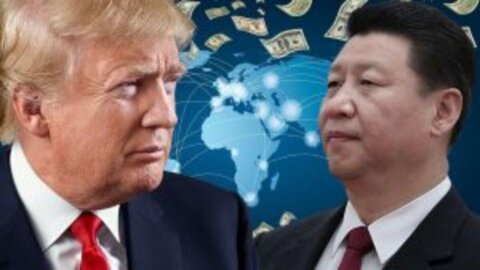
All of this, according to Tria, demonstrates that “free international trade is essential for the continued growth of our economy. We are exposed, and it is in our interest to work to avoid a global trade war. The imposition of tariffs by the United States and the further protectionist measures subsequently launched by the United States and China - she said - are worrying companies which could lead to downward revisions of investment programmes. He also raises serious concern about the possible further expansion of protectionist measures by the United States on the European car industry. Italy is a major exporting country”.
THE GUIDELINES OF GOVERNMENT ACTION
As regards the fundamental guidelines for the Government's action in the coming months, there are three: a tax reform that especially benefits low incomes, interventions in favor of social inclusion with particular emphasis on poverty and the labor market, the relaunch of public investments while also removing bureaucratic obstacles. All this, underlined Tria, while avoiding "any trend reversal in the structural balance".
VISCO: WE ARE WEAKER THAN 10 YEARS AGO
The intervention of Ignazio Visco is of a different sign, seeing a more fragile country than the one hit 10 years ago by the financial cyclone. According to the governor of the Bank of Italy, who spoke from the same stage as Tria, the reforms have “lost momentum due to fears about the costs, often immediate, and doubts about the benefits, which mature gradually and over a relatively long period of time. In these conditions, faced with a new crisis, we would be much more vulnerable today than we were ten years ago".
However, this does not mean that prudence in controlling public spending should be abandoned: “Demand support policies – added Visco – must be carefully dosed, paying attention to the balance of public finances and the need to keep the dynamics of the ratio of debt to output. It would be risky to rely solely on them in an attempt to get out of the low growth trap in which Italy has been in for a long time and to return to a path of lasting and sustained development”.
VISCO: STRENGTHEN THE BANKING SYSTEM, THE REFORM OF POPULAR MUST BE COMPLETED
As for the reforms to be implemented, according to the Governor it is necessary “to continue the commitment to strengthen the banking system, especially in the component of smaller institutions, and to remove the structural brakes on the potential growth of the economy. A system capable of disbursing credit in a healthy and efficient way, even in adverse economic phases, needs the remaining competitive disadvantages to be removed. The interventions undertaken, aimed at improving the efficiency of judicial and administrative procedures, go in this direction; we must not stop”.
Not only that: Visco also remarked that "the reform of the cooperative banks must be completed, so as to allow the remaining cooperative banks of a significant size to achieve the necessary improvements in terms of transparency of the governance structures, the ability to resort to the market, possibility of participating in aggregation processes”.