If 2025 was the year of investments in global'Artificial intelligence, in Europe – which is struggling in the sector – and in Italy above all, it was without a shadow of a doubt the year ofbank risk. The data provided by now comes to certify this Dealogic, according to which last year, thanks to the increase in profits and stock prices, the cross-border bank mergers in the European Union have reached the quota € 17 billion, a level five times higher than the 3,4 billion of the previous year. This is the highest figure ever reached since the 2008 financial crisis, that of subprime mortgages and the bankruptcy of Lehman Brothers, to be clear, when these operations reached 19,5 billion euros.
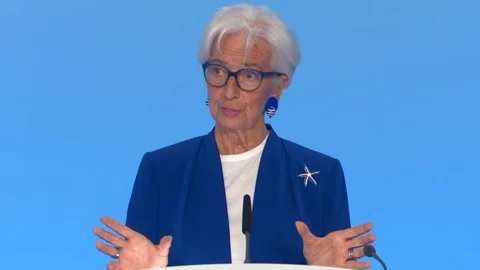
And there are those who, after years of stagnant acquisitions, are celebrating this renewed desire for M&A. First of all the ECB, which for years now has been pushing for banking consolidation and trying to weaken the resistance of governments, still too inclined to intervene in a nationalistic way (see Unicredit on Commerzbank or Unicredit itself on Banco Bpm).
“Politicians have long been calling for a greater consolidation in the banking market fragmented EU, which executives say has been hampered by regulatory barriers and political resistance, causing the sector to lose ground to major US competitors,” notes the Financial Times, according to which, “although progress in reducing red tape for pan-European banking has been slow, there are signs that European banks are nevertheless making progress operations to expand beyond the border".
Banks: the main cross-border transactions in Europe
The number of cross-border bank mergers in the EU remained relatively low, with only 19 operations last year, but the numbers are increasing.
Let's start with the most relevant one: the 7 billion euro sale by the Spanish company Banco Santander of much of its Polish assets to the Austrian First Bank.
Other bank mergers in the EU include the €6,4 billion acquisition of Portuguese New bank on the part of the French Bpce, which manages the Banque Populaire and Caisse d'Epargne networks, and the €1,8 billion acquisition of the German Olb on the part of the French Mutual credit. Not to mention Unicredit which in 2025, despite strong opposition from the German government, rose to 26% of Commerzbank.
What is behind this excitement? Fernando de la Mora, co-head of financial services at Alvarez & Marsal, explained to Ft that the surge in EU banking deals is driven by higher sector valuations, a stable macroeconomic environment, low default rates, and the advantages of scale for large technology investments, while Hyder Jumabhoy, co-head of the financial institutions group at law firm White & Case, said that the top 20 EU banks have accumulated $600 billion in excess capital over the past three years, which they are eager to deploy in deals.
McKinsey: $190 billion in bank mergers worldwide
What is happening in Europe is not unique, on the contrary. A recent report by McKinsey quantifies in $190 billion, double the 2024 figure, the figure reached by banking mergers and acquisitions worldwide.