Thousands of enthusiasts in over 150 venues, including restaurants, historic wineries, taverns, and farmhouses, with more than thirty thousand seats available, are preparing to celebrate Bagna Cauda Day in Asti, Piedmont, and around the world on the weekends of November 21, 22, and 23, and November 28, 29, and 30, with a final highlight being the second edition of the "Bagna della Merla" festival, scheduled for January 28 to February 1, 2026.
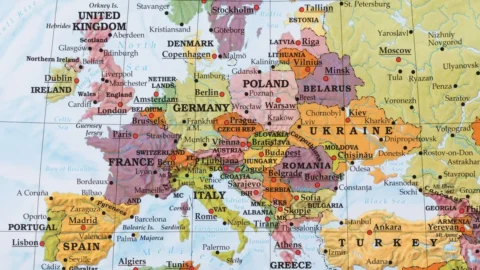
The event, first held in Asti in 2013, has now crossed the borders of Piedmont, also involving Valle d'Aosta, Liguria and several foreign locations: the ritual of Bagna Cauda Day will also be celebrated in Shanghai with the Association of Piedmontese in the World China and the FIC – Italian Federation of Chinese Chefs (29 November), in New York, in Japan, in London and in other European capitals.
The international success of this initiative, conceived and promoted by the Astigiani Cultural Association, lies in the fact that the event celebrates one of the most authentic symbols of Piedmontese cuisine, transforming it into a collective ritual of conviviality, memory, and taste while maintaining its original spirit, an expression of the roots and identity of a community.
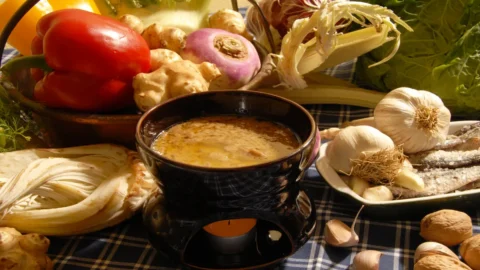
Bagna Cauda can be defined as a "gastronomic system" that, starting with a simple hot sauce of garlic, oil, and anchovies, expands to encompass the convivial culture and the cornerstones of daily peasant food based on seasonal vegetables and wine. The first mention of it in the oldest sources on food and cuisine is found at the end of the 14th century in a treatise by the physician Antonio Guainerio, active in Piedmont between Turin and Chieri. Guainerio cites the Piedmontese peasants' passion for garlic, a key ingredient in "sapor rusticorum," a typical and beloved medieval hot dish, creamy and dense. It's not far-fetched to see this peasant sauce as the ancestor of Bagna Cauda. Although described almost four centuries later, the "Salsa called the Poor Man's Sauce," reported by the "Piedmontese Chef Perfected in Paris" in 1766, is likely a direct descendant of that medieval "sapor rusticorum," refined and lightened in its dosages. The presence of salted anchovies in the medieval sauce is especially plausible considering that this product was widely imported and traded by Asti merchants throughout Northern Italy. In past centuries, some considered Bagna Cauda, thanks to the garlic, useful for warding off vampires, witches, and masche. History tells us that on November 11, 1855, General La Marmora served Bagna Cauda to Piedmontese troops in Crimea.
Bagna's success can also be attributed to the humble yet widespread activity of the anchovy sellers, the anciuè, who until recently systematically canvassed the countryside for door-to-door sales. These sellers came mostly from the Maira Valley and other valleys connecting southern Piedmont and Provence. An association of anchovy sellers in the Maira Valley is still active. Thanks to the itinerant anciuè, who transported them in barrels or in large, colorful cans holding 10 or more kilos, the anchovies could be purchased by peasant families in small weekly quantities.
As per tradition, every Bagna Cauda Day participant will receive the new fabric Bib, the official symbol of the event. The 2025 edition is illustrated by Raffaele Iachetti: the protagonist is a large head of garlic emblazoned with the motto "Use your head," a humorous yet profound invitation to reflect, in a time that demands we return to thinking for ourselves.
Among the scheduled events is a convoy of vintage cars that will depart from Asti on Saturday, November 22nd, heading to Vessalico, a small village in the upper Arroscia Valley in the province of Imperia, famous for its production of a special, highly digestible garlic. Here, the symbolic garlic braids with anchovies from the Ligurian Sea and extra virgin olive oil made from Taggiasca olives from the Roi oil mill in Badalucco will be delivered. Retracing the Col di Nava road, the vintage cars will reach the Nizza Monferrato winery, where Piedmontese vegetables, starting with the famous cardoon and Barbera d'Asti DOCG, will be added to the load. The convoy will then reach Asti, where the large fujot (a kind of Olympic-style brazier) will be lit in the town square.
All participating establishments are listed on www.bagnacaudaday.it, divided by geographical area (Asti, Monferrato, Langhe, Turin, Alto Piemonte, and beyond). Each establishment has its own profile listing available seating, contact information, and the type of bagna cauda, identified by the famous flavor traffic lights: Red for the classic "as God commands" version, Yellow for the "heretical" version, with diluted garlic, and Green for the "atheist" version, without garlic.
The beloved Acciù mascots, made of cloth and bringing good luck, will also be present. The website also lists participating hotels and agritourisms for a weekend of scents and pleasure: Bagna nanna.
Bagna Bike is also back, an experience that combines sport, nature, and tradition. On Sunday, November 30th, thanks to the collaboration between EbikeOne and Il Cicchetto, participants will be able to experience an exciting e-bike tour through the vineyards and landscapes of Monferrato, with a final stop in Sant'Agata to celebrate the convivial ritual of Bagna Cauda together. Menus cost €38, with Ruché €15. Reservations can be made by calling +39 335 7573794 (EbikeOne – also WhatsApp) or +39 0141 320225 (Il Cicchetto).
Bagna Cauda Day is not just about flavor and conviviality, but also about concrete environmental action. Part of the proceeds will fund the development of the Bosco degli Astigiani in the hills of Viatosto, on over five hectares of land donated to the Municipality of Asti by Banca d'Asti. Every fujot lit will thus contribute to the growth of a large public park dedicated to sustainability and biodiversity.
The official recipe for Bagna Cauda
On February 7, 2005, the Asti Delegation registered a recipe "considered the most reliable and passable." Deposited in Costigliole d'Asti with a registration signed by notary Marzia Krieg, it was selected by the study commission, which met several times to taste and compare the recipes.
Ingredients for people 12
12 heads of garlic,
6 glasses of olive oil (extra virgin, ed.) and, if possible,
a small glass of walnut oil,
6g of red Spanish anchovies
Method
Slice the garlic cloves, previously peeled and destemmed. Place the garlic in an earthenware pot, add a cup of oil, and cook over very low heat, stirring with a wooden spoon, taking care not to brown. Then add the anchovies, desalted, boned, rinsed in red wine, and dried, stirring gently. Cover with the remaining oil and simmer the sauce for about half an hour, making sure not to fry the sauce. At the end of cooking, you can add a knob of very fresh butter if you prefer a milder flavor. Pour the sauce into the appropriate "fujot" (earthenware pots) and serve with the following vegetables: raw: Nice cardoons, Jerusalem artichokes, white cabbage hearts, endive, and escarole, fresh and unpeeled peppers, raw spring onions quartered and soaked in Barbera wine; cooked: beetroot, boiled potatoes, baked onions, fried squash, roasted peppers.
It is tradition to collect the "thickness of the bath" at the end by scrambled inside the egg.