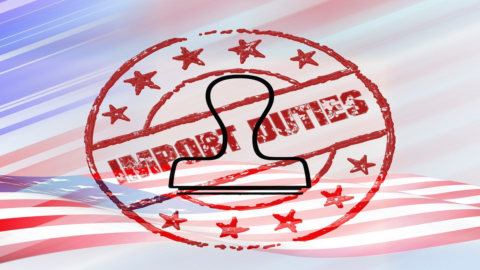
With theAgreement reached between the United States and the European Union on trade tariffs, it loosens – at least temporarily – the tension between the two major economies of the West. The agreement provides for a15% tax on a large part of European goods exported to the US, thus avoiding the 30% increase threatened by Washington in recent weeks. In exchange, the Union agreed to purchase $750 billion in American energy and to allocate others 600 billion in direct investments in the United States. A complex maneuver, which reassures the markets butbefore numerous questions on the political and economic level.
From the Italian Government one has arrived cautious reactionFrom Addis Ababa, where she is on a mission, the Prime Minister Giorgia Meloni He expressed cautious optimism: “I think it's a good thing there is an agreement, but I can't judge the merits of it unless I know the details.” In an official note Subsequently, Palazzo Chigi spoke of a "negotiated solution" that avoided "the trap of a head-on collision" and of a result resulting from "teamwork between European institutions and member states, including Italy." The government described the basis of the agreement as "sustainable," but only on the condition that the new 15% tariff not be added to existing tariffs.
In the face of possible impacts on the national economy, the government has already announced that be ready to intervene: “We continue to work in Brussels to strengthen the Single Market, simplify our rules, cut red tape, diversify trade relations and reduce our dependencies. Finally, We are ready to activate support measures at the national level, but we ask that they also be activated at European level, for those sectors that might be particularly affected by US tariff measures".
Finally, the government says it is ready to "pursue the goal of maintaining the unity of the West, knowing that any division would make us all weaker and more exposed to global challenges."
Behind the facade of unity, there remains theambiguity about what the compromise actually includesThe fear, not openly stated, is that some key sectors of Made in Italy—from wine to fashion—will remain exposed to tariffs that are no longer "threatening" but still penalizing.
Opposition attacks: "Trump has won, Europe has surrendered."
If prudence prevails at Palazzo Chigi, Harsh accusations are raining down from the opposition. For Giuseppe Conte (M5S) “only Trump won, von der Leyen and Meloni knocked out”. Elly Schlein, leader of the Democratic Party, had already feared "a failed compromise" even before the agreement; after the announcement, his party spoke of an "unconditional surrender of Europe" that "will also cost Italian companies many billions."
The dem Enzo Amendola he labels the agreement as “a game of golf that will be remembered as the most expensive and disastrous in history”, while for Richard Ricciardi (M5S) This is yet another proof that "we have the Europe of the United States." The tandem Fratoianni-Bonelli (Avs) denounces "an act of force that brings the EU economy to its knees".
The position of Maurizio Lupi (We Moderates), who defends the choice of compromise: "It's too easy to say 'let's arm wrestling' when the future of businesses and families is at stake."
Businesses: "Better than the worst, but it's not enough."
Il The judgment of companies is suspended between relief and concern. “It's not the best result, but at least the uncertainty is over,” he summarizes. Claudio Feltrin, President of FederlegnoArredo. Also Confindustria recognizes that the scenario is now clearer, but report potential damage: according to a simulation by its Research Centre, the new arrangement – combined with a weak dollar – could reduce Italian exports to the US by 22,6 billion.
I sensitive sectors remain on alert. “15% is a worrying threshold,” he warns. James Bridges, President of Federvini, which calls for "further room for negotiation." The components and automotive sectors will benefit from a tariff cut from 27% to 15%, while nothing changes for steel and aluminum: the punitive threshold of 50% remains in place.
A festeggiare, at least for now, are the high-tech sectorsZero tariffs for civil aircraft, advanced robotics, semiconductors, and industrial machinery. But here too, companies are calling for "support measures" to offset the costs of the agreement.
Reactions from abroad: "A necessary compromise, but not a solution."
Abroad, the dominant reaction is caution. The German chancellor Friedrich Merz He spoke of an “avoided trade conflict,” especially for the German automotive sector, which will see tariffs halved. Antonio Costa, President of the European Council, praised the compromise as “protecting the fundamental interests of the EU2 and stimulating competitiveness.
Ursula von der Leyen e Donald Trump they congratulated each other on a agreement that “offers stability and clarity"But many are emphasizing that this is just the beginning. "It's just a way to limit the damage," he said. Manfred weber (PPE), asking for relaunch new trade agreements and structural reforms of the single market.
“We need to finalize the details as soon as possible,” warned the Dutch Prime Minister. Dick Schoof. The list of exemptions is still evolving.Aircraft, generic drugs, semiconductor components, and some agri-food products will benefit from zero tariffs, but the fate of alcohol, cosmetics, and luxury goods, crucial to Italy, remains uncertain.
Italy between stability and uncertainty: now guarantees are needed.
The compromise between the EU and the United States avoided the worst. The threatened 30% tariffs were replaced by a more "digestible" 15%, in exchange for major energy purchases and European investments in the US. but the unknowns are far from dissolved.
Italy, with its exports strongly linked to agri-food and quality manufacturing, risks pay a higher price than other European partnersWine, cheese, fashion, design: the Italian productive fabric looks to Brussels and Palazzo Chigi waiting for answers and concrete guarantees. Because the agreement, although presented as "a success of Western unity", it's not enough to protect Made in ItalyThe details – as often happens – will make the difference.