Il UK is preparing to introduce one of the world's toughest measures on the use of social media by minors. Prime Minister Keir Starmer has announced his intention to prohibit access to social platforms for kids under the 16 years, with the aim of strengthening the protection of young people from the risks of the internet.
The decision follows the example of Australia, the first country to have adopted such legislation, and is part of an increasingly heated international debate on the relationship between adolescents, technology and mental health.
Why the UK wants to ban social media for under-16s
In introducing the measure, Starmer explained that the decision was based both on evidence gathered in recent years and on personal reflection as a father. "All I've ever wanted for my children is for them to be happy and safe," the prime minister stated, emphasizing that, in his view, social media is not currently a safe environment for children and adolescents.
While acknowledging that the digital platforms they also brought benefits to the new generations, Starmer reiterated that "governing means making choices" and that, faced with current risks, "a total ban is the right choiceAccording to the Labour leader, social networks in fact contribute to amplifying phenomena such as cyberbullying, online harassment and exposure to harmful content, with increasingly evident consequences on the psychological well-being of young people.
The government is also concerned about the mechanisms platforms use to retain users online, such as infinite scrolling, designed to increase usage time. According to Starmer, these dynamics end up generating digital addiction and take away space from fundamental activities such as studying, reading, outdoor play and rest.
When will the UK's social media ban for minors come into force?
On the legislative level, the British government aims to proceed quickly: the objective is approve the regulation by the end of the year, completing the process before Christmas. Once approved, the law should come into force between the beginning of 2027 and spring of the same year.
In recent years, London has progressively strengthened its approach towards Big Tech, introducing more rigorous age verification systems, greater transparency requirements for algorithms, and specific measures to limit the dissemination of sensitive content intended for minors.
Social media banned for minors: which countries have already introduced restrictions?
The British crackdown is part of a rapidly evolving international framework. After Australia, which led the way with the first national ban for under-16s, other countries have also initiated or approved similar restrictions. FranceFor example, Parliament passed a law limiting access to social media to minors under 15, while President Emmanuel Macron has repeatedly called for the new rules to come into force quickly.
At the same time, several European countries are evaluating similar interventions: Norway e Greece they are studying possible restrictions, the Slovenia takes into consideration a limit of 15 years, while Portugal e Spain They are discussing the possibility of setting the threshold at 16 years. Even in Italy The issue is increasingly present in political debate: currently, there is no general ban, but the rule that prevents minors under 14 from independently registering on platforms without parental consent remains in force.
Which social networks could be banned?
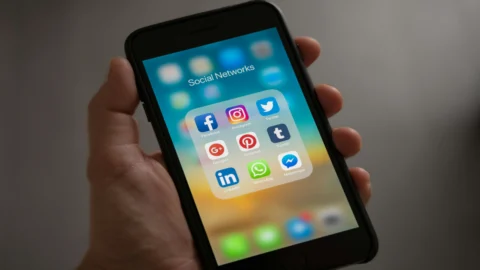
One of the remaining issues concerns the identification of the platforms actually affected by the ban. The hypotheses under discussion in various countries focus primarily on the major social networks, such as Facebook, Instagram e TikTok, while the case of messaging applications such as WhatsApp, often considered indispensable tools for daily communication between parents and children.
Just the definition what exactly falls under the category of “social media” will be one of the decisive elements for the effectiveness of future regulations and for their concrete impact on the digital lives of young people.