Tourism in Italy is more than just an economic activity: it is a living testimony to a unique cultural, artistic, and social heritage. Visiting villages, wandering the streets of historic centers, and lingering in ancient squares means preserving centuries of history, supporting local communities, and keeping alive traditions that stand the test of time. Every trip to Italy is a 360-degree experience, in which art, architecture, gastronomy, nature and spirituality They intertwine, creating a dialogue between past and present that enriches anyone who ventures there. In a complex geopolitical period, marked by economic uncertainty and international tensions, Italy presents itself as a haven of beauty and cultural stability. Here, history speaks through the stones of medieval castles, Renaissance palaces, Baroque basilicas, and piazzas that have witnessed centuries of daily life and major historical events. Each village and city of art thus becomes a place where collective memory and the resilience of its people are concretely manifested: by visiting these places, tourists contribute to sustaining a heritage that is both fragile and extraordinarily enduring.
From the Alps to the islands
From the Northern Alps, where snow-capped peaks meet the first buds of spring, to the lakes reflecting historic villages and villas, to the golden hills of Tuscany and Umbria, the Italian landscape is a continuous narrative, uniting nature and culture in a harmony hard to find elsewhere. Sicily and Sardinia, with their hilltop villages, crystal-clear seas, and age-old traditions, offer visitors an authentic connection with local history, customs, and cuisine, creating a multisensory experience that stimulates both mind and heart. Discovering Italy means traveling through different eras in just a few hours: from the Middle Ages with its towers and narrow streets, to the Renaissance with its perfect piazzas and works of art that have shaped world culture; from seaside towns to mountain villages, from Sicilian volcanoes to the rolling Tuscan hills, each stop tells a different story, yet they all converge in a single experience of wonder.
Italy, a symbol of resilience
In times of global uncertainty, Italian tourism takes on an even deeper value: it becomes a symbol of continuity, cultural identity, and resilience. Traveling in Italy means not only enjoying its beauty, but also supporting the communities that preserve it, helping to ensure that small villages, artisanal traditions, and religious festivals continue to thrive, despite the challenges of the modern world. Each tourist thus becomes a temporary custodian of this richness, taking with them not only memories and images, but also a sense of responsibility toward culture and history.
Italian heritage is not just aesthetic
Its heritage is educational, emotional, and spiritual. Every square, every church, every alley offers lessons about life and time, the resilience of communities, and the art of preserving beauty in all its forms. Eating a typical dish in a small village means savoring the history of that land; strolling through the medieval alleys means walking through the centuries; admiring a sunset on the Amalfi Coast means reconnecting with the power and delicacy of nature.
Italy as a refuge of memory
In this sense, Italy presents itself to the world as a safe and luminous refuge, a place where beauty is not fleeting or ephemeral, but rooted in culture, history, and nature. It is an invitation to slow down, to breathe, and to enjoy authentic experiences in a world that too often moves quickly. It is an invitation to understand that a country's wealth is not measured solely by numbers or economic indicators, but by its ability to offer emotion, memory, and authenticity. Choosing Italy as a destination means embracing this complexity: a country that resists crises, that celebrates life, and that, through art, nature, and traditions, demonstrates that beauty can be a stable anchor in uncertain times. Every trip to Italy is therefore much more than a vacation: it is an experience that teaches us to look at the world with different eyes, to value the past without neglecting the present, and to preserve what makes humanity truly unique. Traveling to Italy during Easter means immersing yourself in a timeless heritage.Stroll among medieval towers, Renaissance frescoes, and squares alive with ancient rituals, discover flavors that tell the story of the region, and feel the energy of landscapes that change with the seasons. It's a type of tourism that nourishes the soul, celebrates life, and makes every trip an unforgettable experience. In this context, an Easter weekend becomes much more than a simple break: it's a journey through eras, cultures, and traditions that, together, make Italy a priceless treasure, where beauty is never predictable, but always surprising and profoundly authentic.
Northern Italy: Mountains, Lakes, and Cities of Art
Aosta Valley and Piedmont The Western Alps welcome travelers with mountain villages like Cogne and Saas-Fee (near the border, for those seeking spectacular views), where spring creeps into the still-snowcapped landscapes. Turin, with its elegant Baroque architecture, historic cafés, and Egyptian Museum, offers a weekend of art and sophistication.
Lombardia From Milan to Bergamo Alta, Lombardy is a blend of modernity and history. Milan's Duomo and the Brera Art Gallery are must-sees, while Lake Como villages, like Bellagio, offer romantic views and lakeside strolls.
Veneto and Trentino-Alto Adige Venice, with its narrow streets and canals, remains an enduring symbol of Italian beauty, but the villages of inland Veneto, like Asolo, offer slow and authentic tourism. In Trentino-Alto Adige, mountain villages like Ortisei are immersed in the scents of the woods and Alpine traditions, perfect for spring walks amidst nature and history.
Friuli-Venezia Giulia A border region, where diverse cultures meet and landscapes range from snow-capped mountains to the Adriatic coast. Trieste, with its Central European charm, historic cafés, and Piazza Unità d'Italia overlooking the sea, tells a unique story of trade, art, and literature. Udine and Gorizia offer historic villages and elegant palaces, while small mountain towns like Sappada offer hikes through woods and pristine valleys.
Liguria A cradle of spectacular landscapes between sea and mountains, it is famous for its colorful villages perched on cliffs. The Cinque Terre—Riomaggiore, Manarola, Vernazza, Corniglia, and Monterosso—can be explored along scenic trails offering unforgettable views. Other lesser-known villages, such as Camogli, preserve their maritime traditions, offering authentic atmospheres far from mass tourism. During Easter, religious celebrations and processions blend with daily village life, creating authentic and evocative tourism experiences.
Emilia Romagna and Lombardy A region rich in history, art, and gastronomy, where art cities and medieval villages alternate with rolling hills and the Adriatic coast. Bologna, with its towers, lively piazzas, and elegant porticoes, is a concentration of culture, flavors, and history: strolling through the city center immerses you in centuries of architecture and tradition. Ferrara, with its Renaissance walls and stately palaces, and Modena, home of balsamic vinegar, offer experiences that combine art, gastronomy, and the daily life of its villages.
Central Italy: Medieval villages and dreamy hills
Toscana Tuscany is a journey into the heart of the Renaissance and the countryside painted by the great masters. Florence and Siena are must-sees, but villages like San Gimignano and Pienza offer medieval alleys and towers rising against the blue sky. The hills of the Val d'Orcia, a UNESCO World Heritage Site, are perfect for scenic walks and local wine tastings.
Umbria Assisi, with its Basilica of Saint Francis, is a place where art, spirituality, and nature merge. Spello and Bevagna, small medieval villages, offer an authentic experience among quiet squares and artisan workshops.
Marche and Lazio – In the hilltop villages of the Marche, like Gradara, medieval history can be felt in every stone, while Lazio offers villages nestled between nature and history, from Civita di Bagnoregio, the "dying village," to small historic centers that are little-known but full of charm.
Molise Molise is a relatively unknown region, yet rich in authentic villages and ancient traditions, perfect for slow-paced, quality tourism. Campobasso, with its medieval town and Monforte Castle, represents the region's historic heart. Towns like Pietrabbondante, famous for its Samnite theater, and Termoli, with its medieval town on the Adriatic Sea, offer picturesque views and a timeless atmosphere. During Easter, processions and religious events allow you to experience Molise's spirituality up close, blending history, culture, and nature in an authentic and unforgettable experience.
Southern Italy and the Islands: Sea, Colors, and Tradition
Campania The Amalfi Coast, with Positano and Ravello, offers breathtaking views: pastel-colored houses cling to the cliffs, the sea sparkles, and scenic trails offer unforgettable vistas. Naples, with its historic center and unique culinary tradition, is the beating heart of the South. Easter here is celebrated with processions and traditional dishes like Neapolitan pastiera.
Puglia Alberobello, with its white trulli, and Ostuni, the "white city," offer villages worth photographing from every angle. Here, tourism is slow, amidst olive groves, farmhouses, and the crystal-clear sea.
Sicilia – a mosaic of cultures and landscapes. From Noto and Ragusa Ibla, baroque villages and UNESCO World Heritage sites, to Taormina and its sea views, every corner tells a thousand-year-old story. Easter traditions, processions, and typical dishes make the experience unique and immersive.
Sardinia Sardinia, with its wild coastline and villages like Bosa and Castelsardo, offers a nature- and culture-filled tourism experience, far from the crowded tourist routes. Easter is celebrated with ancient rites, amidst medieval churches and breathtaking views.
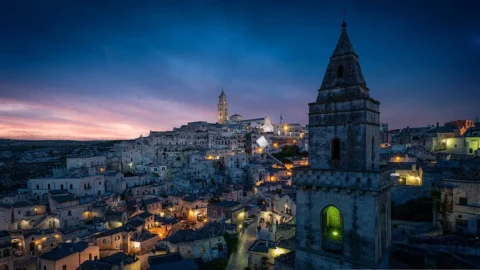
Basilicata A region of surprising contrasts, where mountains, valleys, and hilltop villages coexist with pristine coastlines and historic cities. Matera, with its Sassi di Matera, a UNESCO World Heritage Site, is a must-see: the ancient dwellings carved into the rock tell stories of millennia of life and offer unique photographic opportunities. The small villages of the Lucanian hinterland, such as Castelmezzano and Pietrapertosa, nestled in the Lucanian Dolomites, offer spectacular views, nature trails, and direct contact with living traditions.
Calabria With its wild coastline and picturesque villages, this region blends pristine nature and ancient culture. Tropea, with its seaside houses and white-sand beach, is one of the most evocative destinations, while Scilla and Chianalea offer fairytale views of the sea and ancient alleys. Calabria's hinterland, with villages like Gerace and Stilo, offers medieval churches, Norman towers, and breathtaking views of the valleys. Here, Easter is celebrated with deeply rooted rites, including solemn processions and culinary traditions that reflect the identity of a proud and welcoming people.
The value of tourism in Italy
Discovering Italy means letting yourself be surprised every day, learning to look beyond the obvious, rediscovering a sense of wonder. It's a journey that enriches mind, body, and spirit, an experience that remains etched in your memory and heart long after your return. It is a country that teaches you to know its history, to understand beauty, to celebrate life in all its nuances: a unique heritage, to be protected, lived and loved, always.