According to preliminary estimates from Istat, in December 2023 the national consumer price index for the entire community (Nic), including tobacco, increases by 0,2% on a monthly basis and by 0,6% on an annual basis (from +0,7% in the previous month). On average, in 2023 consumer prices recorded a growth of 5,7% (+8,1% in 2022). Net of energy and fresh food ("underlying inflation"), consumer prices grew by 5,1% (+3,8% in the previous year) and net of energy alone by 5,3% (+4,1% in 2022).
Down with energy goods, up with food
The slowdown on a trend basis in inflation is mainly due to the prices of regulated energy goods (which accentuate their decline from -34,9% to -41,7%), those of recreational, cultural and personal care services (from +4,6% to +3,6%) and processed food goods (from +5,8% to +5,0%); on the other hand, support for the inflation dynamics comes from the easing of the decline in the prices of unregulated energy (from -22,5% to -21,1%) and from the acceleration of those of unprocessed food goods (from + 5,6% to +7,0%).
In December "underlying inflation", net of energy and fresh food, decelerates from +3,6% to +3,1% and that net of energy goods only from +3,6% to + 3,4%. The prices of food, household and personal care goods slowed down slightly on a trend basis from +5,4% to +5,3%, as did those of high-frequency purchase products (from +4,6% of November at +4,4%).
The cyclical increase in the general index is mostly due to the growth in prices of transport-related services (+1,4% also due to seasonal factors), of unprocessed food goods (+0,7%) and durable and non-durable goods (both +0,5%); the effects of these increases were only partially offset by the decrease in energy prices, both regulated (-3,5%) and unregulated (-2,1%).
Based on preliminary estimates, the harmonized index of consumer prices (HICP) increases by 0,2% on a monthly basis and by 0,5% on an annual basis (from +0,6% in November). In 2023 the average annual change in the IPCA is equal to +5,9% (+8,7% in 2022).
Istat: “The decline in inflation continues”
In the comment, Istat explains: “According to preliminary estimates, the phase of decline in inflation continues in December, falling to 0,6% from 11,6% in December 2022. On average in 2023, consumer prices increased by 5,7% compared to the previous year, a clear slowdown from 8,1% in 2022. This trend is mainly affected by the easing of tensions on the prices of energy goods (+1,2%, from +50,9% of 2022). Prices in the food sector instead show an acceleration in average annual growth (+9,8%, from +8,8% in 2022), despite the attenuation of their trend dynamics, highlighted in the second half of the year. In 2023, price growth net of volatile components (underlying inflation) is equal to 5,1% (from +3,8% in 2022). Based on preliminary estimates, the drag on inflation to 2024 is +0,1%".
Coldiretti: “Nine billion more spent to eat less”
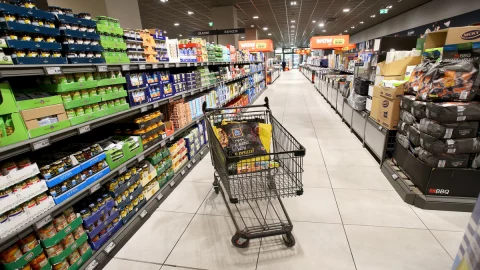
In 2023, Italians spent around 9 billion more to eat less and had to cut the quantities purchased due to high prices. This is what Coldiretti estimates based on Istat data on inflation compared to the previous year. These are the effects of the increase in consumer prices in the food sector which in the past year - underlines Coldiretti - show an acceleration in average annual growth with +9,8% compared to +8,8% in 2022.
In the second half of the year – specifies Coldiretti – there was, however, a marked attenuation of the trend dynamics, with food prices increasing by an average of 5,8% in December even if tensions remain on both fresh and refrigerated fruit ( +13,9%) than on fresh or chilled vegetables (+13,1%) for consumers while agricultural producers are unable to cover production costs. If at the top of the ranking of trolley-saving strategies there is the use - underline Coldiretti/Censis - of discounts and promotions, in second place is the cutting of waste, with greater sensitivity towards the reduction of food that ends up in the waste bin with economic and environmental, also through the use of the next day's recipes, with the cooking of leftovers. According to Coldiretti/Censis, 76,9% of Italians regularly prepare a shopping list with relative planning of what to buy which helps to keep impulse purchases under control and manage family budgets more carefully.