Il household appliances market has not been shooting for three years. In fact, it is still falling, in Europe, by double digits, as has never happened before, because for the first time it is a structural crisis of volumes. Let's be clear: the decline concerns the European companies. The Chinese they advance instead and are snatching, in the free standing sector, quotas and sales from EU competitors. They are also attacking with the same aggressive strategies, albeit with inadequate products, the rich built-in sector. And, without Brussels intending to protect employment, factories and supply chains of great value. Instead, freedom is given to what in many cases turns out to be a constant practice of dumping. These are giants with enormous liquidity. Companies like Midea, which in its debut on the Hong Kong Stock Exchange raised at least double the resources expected and requested, is spoiled for choice when it comes to the possible shopping of brands, production sites or entire companies. Even Haier, despite difficulties related to the market crisis, should still be able, without debt, to acquire Electrolux. And in fact it seems to be in pole position for the deal, beating Midea and Hisense.
Home appliance sales down 16%
La overproduction of the gigantic ones factories Chinese, not absorbed by the internal crisis, pours a large quantity of products made at extremely low costs into the North American, European and Middle Eastern markets, thanks to the massive funding of the government and autonomous regions, which have always practiced a strong local protectionism in China. In the first months of the year, flat steel products, also used for household appliances, recorded a decline of 12,4%. As for sales in Europe, in the first six months of the year have recorded a drop of about 16%, after a dramatic -20% in 2023. Which – as one of the first Italian suppliers of components underlines – means that the closure of the three Polish production units of the Beko Europe Group it won't be the only one. What will remain of the Italian white goods factories of Beko Europe, involved like the other European brands in the fall in sales? Very little, and it will be a slow but unstoppable agony, since, according to rumors gathered in political circles, two or three Italian sites should remain. Never mind meetings at the ministry for the relaunch and reorganization plan.
Factories under pressure: only 30% of operating capacity
Any plan will not give positive answers in the short term, since the accounts I am strongly negative. First: companies can no longer sustain the three-year collapse e sales structure and margini. Second: the average saturation of European factories (all of them, not just Beko Europe), as anticipated, is around 30-40%, resulting in a heavy loss of competitiveness. To return to 80% saturation, i.e. competitiveness, sales should make an improbable sensational leap, tripling the numbers. Third: since this goal is not possible, negotiations will start from two hypotheses. The first: chiusura of duplicate sites or strong reduction of the size and the highly specialised . This scenario is very clear to employees and union representatives, as it involves the entire sector. A quick list of the Layoffs announced or already underway in the sector is significant: 1.300 employees to be cut in the factories of the Honey, 3.500 of BSH household appliances of the Bosch Group by 2027, 1.100 of the Whirlpool throughout the world, despite after divestments, closures, voluntary resignations. Haier Italy He announced 113 redundancies at Candy and has already sent 400 home in Romania.
New Factories in Egypt: A Threat to Europe
Please note: what many people are unaware of is that the orders previously under the jurisdiction of the Polish production sites have not been eliminated, but transferred to Turkey and Romania. Furthermore, the Beko group, as Haier and Midea are about to do, has recently inaugurated a large Home appliance factory in Egypt, which will inevitably take away significant orders from European sites. On the other hand, the stalemate in the Suez Strait and the blockade of the Red Sea and South Asia are not destined to decrease, but rather to grow. What is increasingly difficult and very expensive to transport from Asia will inevitably pass to developing countries near Europe. A dramatic new scenario, therefore, where once again the protagonists will not be Europeans.
Layoffs and Closures: A Sector in Retreat
In addition to the layoffs already announced, the sector is facing a series of closures e downsizing between small and medium-sized enterprises in the supply chain, a phenomenon that often goes unnoticed. It involves specialized labor, employees and, for the first time, as a very serious signal, even high-level personnel: the closure of the three lines of the two Polish factories has led to the dismissal of about ten engineers at the Marche plant specialized in the production of cooktops. "The repercussions of this operation are also heavy on the Fabriano area - he had underlined Pier Paolo Pullini of the Fiom secretariat of Ancona – there are 14 functions impacted at 100%, high professionalism all dedicated to the development of the models of the Polish plant in Lodz; a strong reduction in the workload for at least another twenty engineers, who work cross functional both on the dryer and washing platforms”.
The logistics disaster
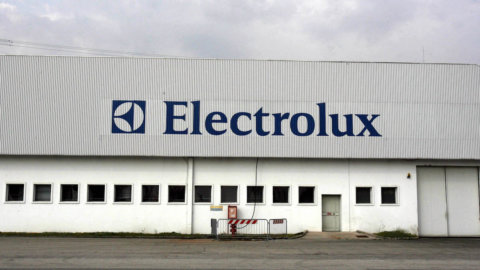
All the freestanding and now also the high-end, the only segment that had remained sheltered from price competition, is at risk. “In Melano, the Whirpool site, for example, where high-end built-in appliances are manufactured – comments Pullini – the redundancy fund began in March 2022. And more generally, the uncertainty of supplies certainly does not help, made even more burdensome by the speculations of shipowners following the blockades of the maritime straits. Container ships do not leave, for example, if they are not fully loaded, and this means that the times are no longer respected and, even worse, that they are unpredictable”. The lines consequently stop. As for social safety nets, there is talk of the need for refinancing although Beko Europe has not yet resorted to the extraordinary redundancy fund (but the ordinary one is running out) while for other companies like Electrolux, the unions will meet the top management on October 8. "We are still waiting for the meeting with the Minister of Enterprise and Made in Italy, to find out about Beko Europe's programs. What we are asking the minister are not spot interventions but a real industrial policy to deal with the serious consequences of three years of structural crisis in volumes".