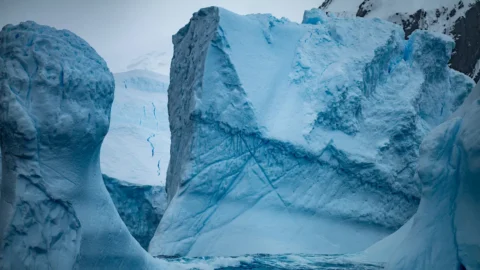
In these hours the Greenland It is under the spotlight for geopolitical reasons after the threatening announcement by the American President Donald Trump of wanting to conquer the country, which is part of Denmark, the EU, and NATO. But there is another way to look at Greenland: through art. Greenlandic art emerges as a fundamental tool for narrating the country's identity and safeguarding its culture. Contemporary art, in particular, represents one of the most effective means for understanding Greenland's identity, as it arises from the dialogue between traditional practices and modern artistic languages. Through this intertwining, Greenlandic artists affirm the continuity of a living and constantly evolving culture, capable of resisting external narratives and extractive interests that often reduce the territory to a mere resource. Art thus becomes not only an aesthetic expression, but a social and political practice in the deepest sense of the term: a means through which the protection of the territory, the transmission of historical memory, and the defense of cultural dignity are communicated. Through artistic self-narration, Greenland reclaims the right to tell its story as an autonomous cultural entity, beyond and against the economic and geopolitical logics that have long conditioned its representation.
The Roots of Inuit Civilization
Greenlandic civilization has its roots in Inuit culture, developed in an extreme environment yet rich in symbolic meaning. For centuries, survival required a profound understanding of nature, which was transformed into knowledge, myths, rituals, and artistic forms. Traditional art was not separate from everyday life: objects, carvings, oral stories, and spiritual practices constituted a unified cultural system, in which human beings were an integral part of the natural environment.
From tradition to contemporary art
Contemporary Greenlandic art arises from the dialogue between this cultural heritage and modernity. Today's artists employ diverse media—painting, sculpture, photography, video, and performance—while maintaining a strong connection to traditional symbols and values. Ancient materials coexist with modern technologies, demonstrating that Inuit civilization is not static, but capable of transformation without losing its identity.
Artists and voices of contemporary Greenland
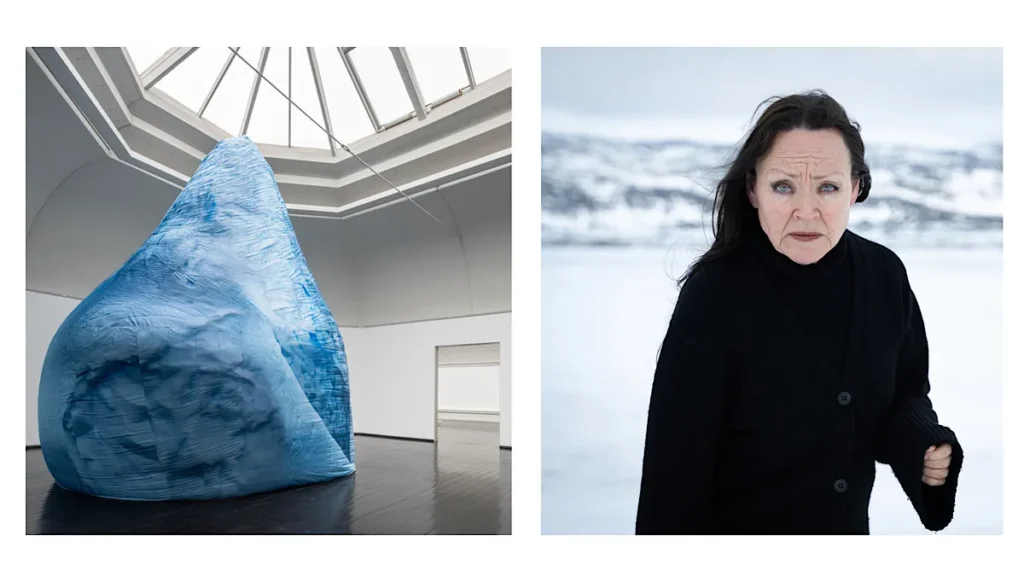
Figures like Pia Arke They challenged the colonial narrative, reworking historical images to restore Greenland's right to self-representation. Julie Edel Hardenberg analyses the impact of media and language on contemporary culture, while Inuuteq Storch, through photography, tells the story of Greenlandic daily life from the inside, breaking exotic stereotypes.
Artists like Aka Høegh e Buuti Pedersen they maintain a strong connection with myths, landscapes and traditional symbols, reinterpreting them in a modern key. Jessie Kleemann, finally, uses performance and visual poetry to reflect on the body, spirituality and Inuit female identity.
Art as a social practice
In Greenland, art is not only individual expression, but often takes on a societal function. social and communityMany artistic projects directly involve local communities, becoming tools for cultural transmission and intergenerational dialogue. In this context, art goes beyond economic and political interests: it is not oriented towards the global market, but towards building a collective conscience and to the defense of cultural dignity.
Beyond politics and economics
In a territory often at the centre of geopolitical interests and exploitation of natural resources, art represents a form of cultural resistanceThrough artistic expression, Greenland asserts its existence as a living civilization, capable of interpreting the present and imagining the future according to its values. Global issues such as climate change are addressed not only as environmental problems, but as lived experiences, affecting identity, memory, and social relations. Greenland needs to be reevaluated, recognizing it not only as a geographical space or strategic resource, but as a complex and dynamic civilization. Contemporary Greenlandic art demonstrates that tradition and modernity can coexist, offering an alternative perspective on the contemporary world. Through art, Greenland can express itself, affirming the value of its culture and its right to be recognized as a cultural and human entity, beyond any economic or political interests.