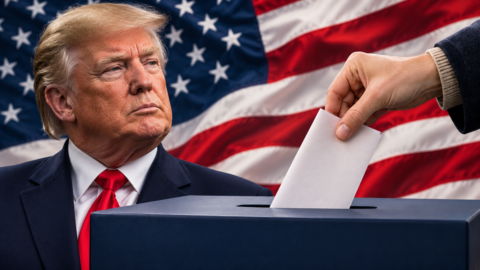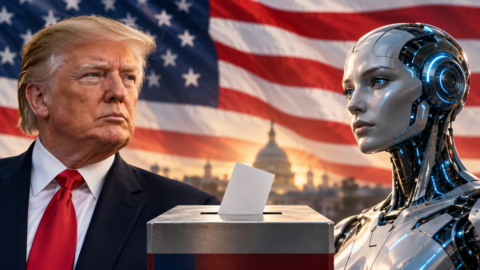
According to an Associated Press-NORC Center for Public Affairs Research poll released earlier this month, 64% of Americans believe that theArtificial intelligence (AI) is developing too quickly and expresses the fear that it risks getting out of hand of those who invented it. For 81% of Americans, the priority in this field is precisely maintaining human control over AIOnce again, however, in a society deeply divided along party lines, Americans' attitudes are shaped by their political orientation. The excessively rapid pace of AI development is a source of extreme concern for 76% of Democrats, but only 54% of Republicans.
The two camps, however, are closer in both demanding greater human oversight, a point strongly supported by 86% of Democrats and 82% of Republicans, and in expressing grave concern that AI could cause a significant decline in employment levels, a point of concern for 82% of Democrats and 78% of Republicans.
This same survey indicates that confidence in President Donald Trump's ability to address the problems related to AI stops at 39% of respondents, a figure that is slightly higher than the tycoon's approval rating, which fell to 34% last Wednesday for the New York Times.
In fact, The Donald does not seem to show any intention of reassuring Americans with effective control initiatives. Indeed, at times it even seemed to have taken a diametrically opposite path.
The Biden administration's precedent
On October 30, 2023, the Democratic President Joe Biden had promulgated theExecutive Order 14110 (Safe, Secure and Trustworthy Development and Use of Artificial Intelligence) in an effort to prevent potential threats from AI to civil liberties and national security, while ensuring that U.S. AI companies have the opportunity to compete globally with their peers.
Specifically, the order required developers of potentially high-risk AI systems in sensitive sectors to share their findings with the federal government before release; it directed government agencies to develop guidelines to combat the use of algorithms for discriminatory purposes in hiring and to ensure that AI users respect consumer privacy; and it directed the Department of Labor to study the impact of AI deployment on future employment levels.
While theXNUMX-XNUMX business days While still debating the contents of what would become the AI Act the following year (i.e., EU Regulation 2024/1689), Biden wanted to position the United States at the forefront of the world in the governance of these systems. Nonetheless, despite pre-dating European regulation and being the most comprehensive and comprehensive federal measure on AI issued to date, the president's executive order was more form than substance.
For example, it did not establish what powers the federal administration had to block AI systems it deemed dangerous or harmful, beyond resorting to legal proceedings with always unpredictable outcomes. It did not accept the proposal—also from industry insiders such as Sam altman, the co-founder and CEO of OpenAI, called for introducing a licensing system for more advanced systems. He did not comment on how copyright and intellectual property laws applied to AI.
It did not even require the release of information on the sources used to train the AI and the size of the models, elements that many experts believed were necessary to better assess the potential dangerousness of the systems.
Trump's entrance on the scene
Despite its relative moderation in promoting responsible innovation, the Biden's decree did not survive upon the inauguration of his successor at the White House. Among the seventy-eight executive orders of his predecessor that Trump revoked on the very day of his second inauguration, Executive Order 14110 stood out, which The Donald had listed among Biden's "unpopular, illegal, and radical" measures.
Three days later, the tycoon issued a directive (Removing Barriers to American Leadership in Artificial Intelligence) with the stated goal of preventing the development of AI systems from being hampered by what Trump, in intentionally demeaning language, called "ideological biases and social engineering agendas." The Donald's initiatives reflected one of the pillars of the Republican platform for the 2024 presidential election, which committed the party to "supporting the development of AI in the name of freedom of expression and the prosperity of the human race."
I the tycoon's first measures They especially welcomed the criticisms that the two main organizations of high-tech companies – NetChoice and the Software and Information Industry Association – had leveled at Biden's provision, railing against regulatory measures that, in their opinion, not only jeopardized the investments made up to that point, but would also slow the pace of technological progress and clip the wings of the ability of American companies to compete on the global market.
Controls and inspections that are more virtual than actual
On the other hand, the deregulation It is a policy typical of the neoliberal policies adopted by Republican administrations since the time of Ronald Reagan in the 1980s and has not been foreign to the Democratic Party either. Jimmy Carter, for example, had anticipated Reagan, opening the air transport market to free competition in 1978 and gradually revoking federal controls on the price of oil starting the following year. Another Democratic president, Bill Clinton, allowed the deregulation of the telecommunications sector.
However, in such a sensitive sector as AI, Trump also seems to be subject to counter-pressures. Last September 29, he promoted the development of a Valid identity document, White House Accord on Super Intelligence (as he dubbed AI with his well-known penchant for inventing new names, not just for toponymy). The leaders of six major high-tech companies—Anthropic, OpenAI, Google, Nvidia, Meta, and Xai—signed it, committing to adopting controls and conducting audits on the development of their AI systems. Trump stated, in his usual self-congratulatory tone, that the text is "morally binding" on its signatories.
But, in perspective, the problem lies precisely in the definition of tycoonMoral commitments, in fact, are not legally binding. This is already attested by the preamble to the measures proposed in the document, which leaves room for broad discretion in complying with what was apparently agreed: "We believe that each company should implement four levels of controls and verifications." The use of the conditional is anything but a guarantee that what was agreed will be achieved.
Confirmation also comes from the observation that the document does not establish sanctions for any non-compliance. It also doesn't contemplate independent audits or enforcement by federal authorities to carry them out. The text alludes to "laws and regulations"—which "it might be sensible" to enact—but places them in such an unspecified future as to make them nothing more than wishful thinking.
Therefore, with its length of just 300 words or so, equivalent to no more than one typewritten page, the White House Accord on Super Intelligence It is even weaker than Biden’s Executive Order 14110, which, while lacking the force of a congressional act, still had the authority of a presidential decree, and at around 20.000 words long, it at least attempted to go beyond the surface of AI issues.
Exorcising alarmism
On the occasion of the signing of the White House Accord on Super Intelligence, Trump also has America.gov launched, a new portal that, according to the tycoon, will use AI to allow US citizens to access the services provided by the federal administration much more easily, starting with the issuing of passports.
Not even a week later, on October 4th, The Donald announced the creation of the Super Intelligence ForceThis is a federal task force to coordinate federal AI policies with industry, public interest organizations, and infrastructure providers to ensure that the United States maintains a global leadership position in AI and avoids being overtaken by advances made primarily by the People's Republic of China.
Together with the appearance of America.gov, the birth of this task force – to lead which the tycoon has appointed Jay Clayton, the Director of National Intelligence – denotes Trump's adoption of a strategy to try to induce Americans to accept the risks of AI In the name of personal gain, global competition, and the defense of America's global leadership. It's a way to allay Americans' fears without resorting to regulatory measures.
The Trump administration between controls and deregulation
The initiatives of September 29 and October 4 also reveal a fundamental uncertainty in the federal government's position. In fact, two orientations are coexisting within the Trump administration.
The first, which sees the most authoritative exponents in the Secretary of the Treasury Scott Bessent and in the White House chief of staff Susie Wiles, would like to push for the introduction of forms of regulation. Bessent, in particular, fears the dangers to financial markets posed by uncontrolled or improperly programmed AI systems. Not surprisingly, the Treasury Secretary has stated that the Washington government is unwilling to provide companies with legal protection for any damage caused by AI systems because humans, not the systems themselves, would be responsible. Furthermore, at the end of September, the Federal Trade Commission—the federal agency for consumer protection and free competition—opened an investigation into Anthropic and OpenAI for their alleged use of unfair and deceptive practices.
Against, David Sacks, co-chair of the Council of Advisors on Science and Technology, leads the opposition to regulatory measures, while the influence over Trump of Jensen Huang, the CEO of Nvidia, one of the most fervent advocates of the need for rapid development of AI systems, grows.
In this second context, it is possible to place the only binding aspect of the White House Accord on Super Intelligence, that is, the signatories' expressed willingness to meet periodically, although the frequency of these meetings is not specified, "to establish standards and best practices to improve the security of their systems." Since Trump also signed the September 29 document in his capacity as President of the United States, some commentators believe this joint commitment by the companies—endorsed by the White House's signature—could pave the way for a suspension of antitrust measures to allow AI companies to work together on security.
Moreover, a recommendation in this sense came from the CEO of Anthropic, Dario Amodei, the author of the essay We Must Pace the Frontier On September 12, it relaunched its proposal to deliberately slow down the development of AI models to ensure their safety. Nonetheless, once the robustness of antitrust law in this sector has been undermined, there's a risk it will be weakened for less noble purposes as well.
What future?
The most effective way to prioritize security would be to make its violazioni more expensive than the potential revenues from the hasty, uncontrolled development of AI systems. This is where Congress, however, should intervene, as numerous bills are pending.
The range extends from the proposal of the Democratic representative of California Ro khanna to ban “recursive AI” and establish a federal AI department, as suggested by progressive Vermont Senator Bernie Sanders and Texas Democratic Representative Greg Cesar. However, there is also a project developed by Anthropic which would allow the Commerce Department to block AI models only with the consent of a judge and only if they could lead to cyberattacks with at least $1 billion in damages and a minimum of 50 deaths or serious injuries.
In the elections of midterm, in which all the seats in the Chamber of Deputies and a third of the Senate are up for grabs, are now less than ten days away. Their outcome could also be decisive for the future of AI.
According to the "Washington Post", among the determining factors of the vote on November 3rd, AI would occupy the fourth place in terms of relevance after the cost of living, political corruption and medical expenses (Amber Phillips, The Top Issues in the Midterm, October 22).
In some elections, the issue of AI is even a priority. In Ohio, for example, in the race for the Senate seat formerly held by Democratic candidate J.D. Vance, Sherrod Brown based his campaign on accusing his Republican opponent, Jon Husted, of being the political face of the data centers established in the state.
Il Alex Bores' program, a House candidate in a New York district, is focused on AI regulation and exposing Trump's collusion with some high-tech executives. Leading the Future, a super PAC that champions the economic benefits of AI in the name of the economic benefits of technological innovation, is investing several million dollars to prevent Bores from winning.
However, it is not particularly encouraging and even sounds paradoxical that 20% of voters are planning to find out about the candidates and their programs through AI, even though they are aware of the probable unreliability of the information received, as reported in a very recent report by the "New York Times" (Tiffany Hsu, Steven Lee Myers and Julian E. Barnes, Injecting AI and Its Risks into the Vote, October 23).