Over the past twenty years, contemporary African art has gone from being a marginal presence at major international fairs to one of the most exciting phenomena on the global market. This is neither a passing fad nor a simple geographical rediscovery. The growing interest among collectors stems from African artists' ability to interpret the present through innovative languages, deeply rooted in their own cultures yet universal.
For a long time, the African continent was described almost exclusively through an anthropological or ethnographic lens. Ritual masks, wooden sculptures, and traditional crafts have occupied the Western imagination, overshadowing a generation of artists who, instead, engage with painting, photography, video, performance, and new technologies with the same awareness as the great protagonists of international art.
It is precisely this freedom of expression that has changed the collectors' perspective.
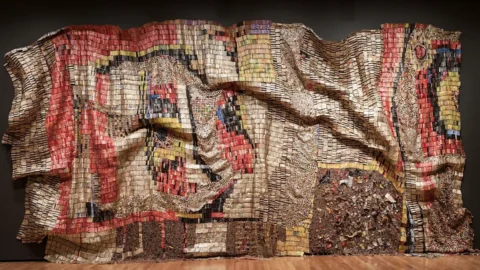
Contemporary African art does not seek to be interpreted as "African art," but as great contemporary art. Cultural identity remains a fundamental element, but it no longer constitutes an interpretative limit. Rather, it becomes a privileged perspective from which to observe issues that concern global society as a whole: migration, memory, colonialism, urban transformation, the environment, the role of women, new cultural identities, and the relationship between tradition and innovation. What is most striking is the extraordinary narrative quality of these works. Many African artists construct images that do not seek spectacular effect, but tell stories. Each canvas, each photograph, each installation contains a layering of meaning that invites the viewer to pause, to question, to engage with the work. It is an art that restores depth to the time of contemplation, in an age dominated by the speed of digital images. Aesthetically, contemporary African production is distinguished by an extraordinary chromatic energy. Intense colors are not merely a stylistic signature, but become narrative tools capable of expressing vitality, spirituality, and resilience. Alongside this chromatic richness, found materials, fabrics, archival photographs, everyday objects, and traditional techniques reinterpreted in a contemporary way coexist. The result is a profoundly original artistic language, difficult to classify within the categories of Western painting. International collectors have recognized this production as one of the most dynamic cultural laboratories of our time. Major museums have contributed decisively to this shift. Exhibitions dedicated to African artists in major European and American museums have demonstrated that the continent is no longer a periphery of global culture, but one of its new creative centers.
The market has also followed this evolution
Major auction houses have been recording steady growth in sales of African artists for years. International galleries have expanded their representation of artists from Nigeria, Ghana, South Africa, Morocco, Senegal, and other countries on the continent. At the same time, major specialized fairs and new African cultural institutions have emerged, strengthening an increasingly autonomous and recognized artistic ecosystem. However, reducing this interest to mere financial returns would be a mistake. Contemporary collectors increasingly seek works that speak to their own time. African art offers precisely this opportunity. It does not offer an exotic perspective on the world, but rather a complex reflection on contemporaneity. In an increasingly multipolar cultural system, African artists demonstrate how it is possible to construct a universal language without abandoning one's roots. There is also a less obvious, but perhaps even more important, element: authenticity. In an art market where speculative strategies and ephemeral tendencies sometimes prevail, many collectors recognize in contemporary African art a strong coherence between aesthetic research, personal experience, and cultural responsibility. The works are not created to chase the market, but from an expressive urgency that restores credibility to the artistic gesture.
This is probably the deepest reason for its success.
Contemporary African art does not represent a new market category, but a new way of interpreting the relationship between art, identity, and society. It reminds collectors that a work is not merely a patrimonial asset, but a meeting point between cultures, memories, and visions of the future. Collecting these works means participating in this transformation, recognizing that the future of art will be increasingly less defined by geographical boundaries and increasingly by artists' ability to interpret the complexity of human experience. It is this universality, combined with the strength of still surprisingly free artistic languages, that makes contemporary African art one of the most vibrant and appreciated realities of international collecting today.
On the cover work by: El Anatsui – Earth's Skin (2009)