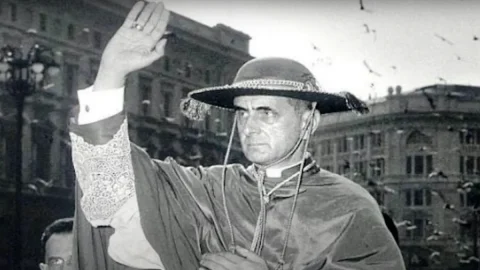
Il December 25, 1960in Piazza del Duomo in Milan, around a large decorated tree, the national "Christmas in the square" event took place: thousands of metalworkers (the unions estimated that there were one hundred thousand), in strike For months, they had been meeting with their families for a demonstration organized by the CGIL, with the support of the UIL, while the CISL formally decided not to participate so as not to offend the sensitivity of Catholics. But its members and militants certainly did not abandon the initiative.
On that day we were close to the end of a very difficult year for Italy; it would be enough to mention the popular uprising against Tambroni government, the protests in Genoa, deaths in Reggio Emilia and Sicilia, in the month of July, and all the repercussions and social imbalances of the economic "miracle". In particular, workers in the electromechanical sector were in struggle and inaugurated a decade that would end with the hot autumn of 1969. The most important union leaders they were in square and they took turns at the microphones. At the top of Fiom-Cgil were the communist Luciano Lama and the socialist Piero Boni, two personalities then in their forties who would later leave an indelible mark in the history of the Italian trade union movement.
Montini, the archbishop of the workers
But the event that wrote the history of that day was thehomily which was held a few steps from the demonstration inside the cathedral by the cardinal and archbishop of the city (from 1954 to 1963) Giovanni Battista Montini the future Pope Paul VI. That admirable speech was published by the Osservatore romano which repeated it several more times in the following years because it represented a turning point "to dispel - as they said - the enormous misunderstanding between work and religion". The passwords of the cardinal were a surprise for everyone that none of the thousands of people who, outside the magnificent bronze doors of the Cathedral, stood in the square in the cold would have ever imagined. «Today, this same celebration – said the cardinal – urges us to observe if by chance there are brothers in difficulty near us, brothers who suffer. Yes, they are close to us. We cannot overlook this circumstance, even if it is annoying, brothers who suffer. We have all been informed that right in the square of our Cathedral a large demonstration of workers who have been on strike for several weeks has been called at this very hour, not taking into account that this time and this place should be sacred to prayer and the peaceful collaboration of people. If this may displease us and if we must have reservations about the reasons and ways that caused this event, we cannot, however, fail to cordially pity the thousands of working families who today find themselves in poverty and distress with bitterness in their hearts and anxiety for their bread and their work". "We would have loved for this celebration to come to us with peaceful and honorable agreements."
L'Unità puts the archbishop's best wishes to the workers on its front page
The Unit published in first page the concluding sentences of the homily: «We send our paternal greeting to all these workers, all urging entrepreneurs and workers to hasten the conclusion of the unfortunate dispute through peaceful and fair means, hoping to all that Christian sentiment and not exclusive and prevalence of material goods makes the profession of justice and peace easier. And may Christ grant us this fortune." Without advertising and ostentation, the archbishop had met with the Christian trade unionists and the ACLI, involved the parish priests, responded with respectful firmness to Confindustria, which had been very polemical with these priests of the "workers' towns" who took initiatives in favor of the workers and above all against their dismissal.
Montini, the secret arbiter of disputes
Montini, in the exercise of his pastoral ministry, had intervened during the disputes contractual of OM, Pirelli, Breda, Dalmine, Borletti, Siemens, Gilera and many other industries. He had always done so in defense of his brothers who suffer, with scrupulous attention not to invade the competences of others and the discreet stimulus to the two parties - through letters or hearings - so that they did not tire of seeking negotiation, dialogue. And precisely on the occasion of the metalworkers' dispute, the cardinal even tried to favor a constructive arbitration through the diocesan office of social pastoral care and the Ambrosian social institute. For these confidential but authoritative initiatives Luigi Macario, leader of the Fim-Cisl thanked him in a letter.