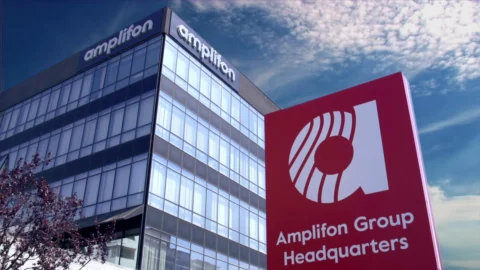
Amplifon ha announced the acquisition of Gn Hearing on March 16, a historic Danish manufacturer of hearing aids, for approximately 2,3 billion eurosThis transaction, which will be finalized within the year, will not only increase the size of the Italian group but will also profoundly change its business model. After more than 75 years of experience in distribution, audiological services, and direct relationships with users, Amplifon is entering research, microchip design, and device manufacturing. With Gn Hearing, the group will be able to oversee the entire hearing care value chain, from technological development to production, from wholesale to in-store service. Amplifon will therefore no longer be simply the main meeting point between hearing aid manufacturers and the people who use them. It will become a global manufacturer itself, combining its retail core with a new industrial and technological dimension.
This is the deeper meaning of the acquisition. Amplifon is not simply buying a supplier, which is already the group's main one, but incorporates the necessary skills to directly design and manufacture the devices that will reach patients. "We are excited about this transformative operation that, upon closing, will allow us to be present across the entire value chain, from microchip design to customer services through our stores," explained the CEO. Enrico Vita a interview al Corriere della Sera of 26 June 2026.
Amplifon returns to industry
To understand the scope of the operation we must start from the complementarity between the two companies. Amplifon It has built its leadership on clinical expertise, knowledge of patient needs, and an international network of specialized centers. Gn Hearing Instead, it operates upstream in the supply chain, where it develops, produces, and wholesales hearing aids. The combination It therefore brings together two activities in a single group which until now have been on different sides of the market. On one side, the ability to design and produce technology, on the other, direct knowledge of the people who will use it. "The key factor is that we will combine the role of service providers value-added to that of designers and producers of devices,” Vita observed. For the CEO, it also represents a return to his professional roots, after an initial career spent in industry and research.
Upon completion of the acquisition, expected by the end of 2026, a reality with approximately 3,3 billion euros of aggregate revenues will be born, over €800 million in gross operating profit and more than 20 employees. The new group will be present in over one hundred countries.
Il retail will continue to be the core business, with approximately 70% of revenues, while GN Hearing's wholesale business will represent the remaining 30%. Amplifon will therefore maintain its identity, but will add the ability to operate directly in the industrial part of the supply chain. headquarters will remain in Italy, while Milan and Copenhagen will become the two strategic hubs of the group“We will be a One Company based in Italy, with a single soul and two hearts, one in Milan and one in Copenhagen,” said Vita, recalling how Denmark has historically been considered the “Silicon Valley of audio.”
Amplifon has assured that Ballerup, GN Hearing's headquarters just outside the Danish capital, will remain a global hub for technology, innovation, and wholesale operations. The intention is to preserve the acquired company's industrial culture, expertise, and identity.
From patents to artificial intelligence
With Gn Hearing they will enter the Amplifon perimeter four research centers, approximately 700 researchers and nearly 3 patents. The company also has an international industrial structure, with manufacturing operations in Denmark, China, Malaysia, and the United States.
The passage is particularly important because the hearing aids They are becoming increasingly technologically complex devices. Their value depends not only on their ability to amplify sounds, but also on the quality of the chips and software used to analyze the surrounding environment, recognize the human voice, attenuate noise, and adapt the listening experience to the individual's needs. Gn Hearing also designs microchips, “the heart of hearing aids” explains Vita. The Danish company was also among the first in the sector to develop devices equipped with functions based on artificial intelligence.
The ReSound Vivia platform, launched in 2025, uses a dedicated AI chip and technology trained on 13,5 million sentences spoken in different languages. The device is designed to prioritize sounds coming from the direction the user is facing, improving speech understanding in crowded places or with high background noise. "We wanted this transaction because technology plays an increasingly important role in our industry, especially with the advent of AI. Upon closing, we will have acquired one of the most innovative manufacturers in the world, which also launched AI features and has grown faster than the market in recent years," explains Amplifon's CEO.
For Amplifon, the possibility of directly connect research and knowledge Patient satisfaction can be one of the main benefits of the procedure. The information gathered in hearing centers can help guide product development, making them more personalized and more responsive to the challenges faced in everyday life.
According to a report by Equita, approximately 15% of potential users Return the devices after the trial period. One reason is the difficulty distinguishing the voice of the person you're speaking to from other sounds. Artificial intelligence could reduce this problem, thanks to the ability of new devices to learn from different listening situations and automatically adapt their performance.
The network of centers becomes an industrial platform
The transformation also concerns the role of the Amplifon networkUntil now, the centers have primarily served as a channel for selecting, adapting, and selling products made by various suppliers. After the acquisition, they will also become a distribution platform for appliances produced within the new group.
GN Hearing generated revenues of approximately €965 million in 2025, with a pro forma adjusted EBITDA of nearly €220 million. Approximately half of its revenues come from the Americas, 30% from Europe, and the remaining 20% from other markets. The company operates primarily through a business-to-business model and uses several brands to cover different segments and channels. These include ReSound, Beltone, Interton, Danavox, Jabra, and Danalogic. Amplifon confirmed that the brands will be preserved and further developedReSound will remain the flagship medical brand, Beltone will continue to focus primarily on the North American market, while Jabra will maintain its position in devices sold in the B2B and OTC non-prescription channels.
According to Equita, in 2025 Gn Hearing would have produced approximately 4 million hearing aids, all distributed through the wholesale channel. Thanks to the integration with Amplifon, production could reach 6,5 million units by 2031, bringing the Danish company's global market share from about 17% to 22%. In the same period, approximately 2,5 million devices could be distributed through Amplifon centersThe percentage of NG production placed in the group's grid would thus increase from 20% in 2025 to approximately 40% in 2031.
The retail network would then become a competitive advantage also on an industrial level. Gn Hearing could reduce its dependence on external distributors, while Amplifon would have a direct channel to bring internally developed technologies to patients.
The acquisition It will also strengthen the group's presence in the United States, the world's largest hearing care market, and will allow it to expand its business in countries where Amplifon currently does not operate directly or has a more limited presence, including Japan, South Korea and Brazil.
Synergies come from internal production
The nature of the synergies also confirms that the operation is above all an industrial turning pointAmplifon expects net EBITDA benefits of between €60 and €80 million per year at full capacity by the end of 2029. The main contribution is not expected to come from overlaps between the two organizations or staff reductions, but from internalizing volumes. This will allow Amplifon to gradually increase the share of devices produced by GN Hearing and sold through its own network, reducing purchases from other manufacturers. In 2025, Amplifon will have distributed approximately 2 million devices, of which 800 made by Gn Hearing and 1,2 million purchased from other suppliers. Equita estimates that the average cost incurred for the equipment produced by Gn is significantly lower than that paid to other manufacturers.
Bringing the number of Gn devices distributed in Amplifon centers from approximately 800 thousand to 1,8 million, the average cost per appliance could decrease from approximately €185 to €135. According to Equita's simulation, the savings would generate gross synergies of approximately €100 million. The net target of €60-80 million is more conservative and includes approximately €20 million in potential negative effects, including the possible reaction of other manufacturers. These benefits could be supplemented by further advantages, not yet quantified, related to economies of scale, production, indirect purchasing, and working capital optimization.
I one-time costs of integration They are estimated at around €80 million and should be sustained over the two to three years following closing. Equita expects that, thanks to the consolidation of GN Hearing, organic growth, and synergies, Amplifon's revenues could increase from €2,4 billion in 2025 to over €4,3 billion in 2031. Over the same period, adjusted EBITDA could increase from €540 million to approximately €1,1 billion, while the margin would rise from 22,6% to 25,5%.
Financing and the new shareholder balance
La The cash component of the acquisition amounts to approximately €1,7 billion. Gn Store Nord will also receive 56 million new Amplifon shares, for an estimated value of close to €600 million. Taking into account transaction costs, the overall commitment is valued at around €2,4 billion.
In May 2026 Amplifon completed a capital increase of 453 million euro through placement of 45,3 million new sharesThe controlling shareholder Amplifier, attributable to president Susan Carol Holland, participated in the operation with 100 million euros. Tamburi Investment Partners subscribed for €30 million in new shares, increasing its stake. The financing also includes a senior loan of approximately €1,35 billion. At closing, Gn Store Nord will become Amplifon's second largest shareholder., with an estimated share of around 17%, and will be able to propose its own representative to the board of directors.
The acquisition will bring net debt to approximately €2,5 billion at the end of 2026. Equita estimates a ratio of net debt to pro forma EBITDA of 3,3x, expected to decline to 2,8x in 2027 thanks to the combined group's cash generation. The level of leverage is therefore one of the key factors to monitor post-closing. Equita, however, believes debt could be rapidly reduced and has upgraded its recommendation on Amplifon stock to "buy," raising its target price from €12 to €14.
The challenge of a completely new group
The acquisition gives Amplifon direct control of technology, production, and a growing portion of supplies. At the same time, it exposes it to risks that previously fell primarily on manufacturers. As a distributor, Amplifon could choose the devices it considered most innovative or affordable on the market. As a vertically integrated group, it will have to directly support research investments, decide which chips and platforms to focus on, and face the risk that a new product may not achieve the expected results.
Equita identifies precisely in integration and technological innovation the main points of attentionThe new model reduces some of the flexibility that Amplifon had as a purely retail operator, but offers significant advantages in terms of scale, cost control and distribution capacity. The group believes that the mutual knowledge between the two companies could make the process easier. Gn Hearing is already Amplifon’s main supplier and the companies have been collaborating for years.
"There is enthusiasm among people between Italy and Denmark because they are facing an integration between two complementary companies, without overlap, that know each other well and above all have a relationship of mutual trust”, explains Vita.
Amplifon can also draw on the experience gained from previous acquisitions, starting with the integration of Gaes in Spain. This time, however, the transformation is more far-reaching. It's not just about adding a new sales network or strengthening its position in another market. Amplifon is entering a business that hasn't previously been the core of its model. After closing, it will no longer simply select and adapt devices to patient needs. It will be able to design the microchips, develop the software, produce the devices and distribute them through its own network..
It is the transition from world leader in audiological services a global hearing care industry groupA transformation through which Amplifon aims to directly connect the two ends of the supply chain, technology and patients.