2021 could be a crucial year for the audiovisual market both for the entry into force of the Community provisions on the transition to second generation digital technology (DVB-T2) and for the impetuous development of the use of television via the network.
A new report was released on Thursday Sensemaker (company specializing in digital marketing) created using data taken from Auditel, standard and digital, Audicence Analytics by Comscore to which other data have been added from a research carried out specifically on large consumers of video in all modes and with all devices, both those usually connected to free platforms and to subscription ones. The objective of the research was the "measurement" of video consumption during the months spent at home forced by the pandemic. Therefore, in some respects, a photograph of phenomena somehow induced by exceptional circumstances and which, in any case, highlight trends already underway from previous years.
Let us first look at the most indicative data. non-linear television streaming, has grown over 52% compared to the linear, traditional one (digital terrestrial and satellite) which instead stands at around 11% compared to the previous year. It simply means that faced with the choice of "subjecting" to the proposal of generalist broadcasters, the public prefers to "make up" their own schedule, with its measures of time and space devoted to video consumption. This is the most relevant data and confirms the trend already highlighted for some time with the rapid development of SVOD platforms (Subscription Video on Demand) and the consequent success of Netflix, DiscoveryPlus, DisneyPlus etc. It is also interesting to observe another indicative figure: compared to the previous year, the number of off-line views and the number of hours spent in front of a video have grown enormously (Auditel lists six types: TV, smart TV, smartphone, computer, game console and tablets) which stands at over 136% compared to the previous year.
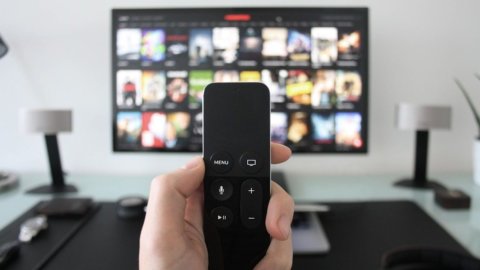
They are merciless data for traditional television which strongly threaten its stability on the market. The technological transition of a reception apparatus, the classic home television, the modern "hearth" of the family gathered in the living room to watch the Sanremo festival, could be a model destined for rapid extinction. The BBC has estimated that this could happen by the end of the decade. The terminological definition itself may no longer be adequate: today it is difficult to speak of a "television" when it is by now the presence of "smart TVs" is increasingly widespread in homes i.e. televisions connected to the network through which you "can do" many more things than with traditional television. But it's not just a matter of terminological clarification: for Rai it represents a serious threat to one of the pillars of its survival. It is known, in fact, that according to what is explicitly stated with a ministerial provision of 2016, a "television" means a device "... capable of receiving, decoding and displaying the digital terrestrial and satellite signal directly or via an external decoder or tuner". Which could simply mean that if the owner of a device whatever it is does not have a tuner it can be exempt from paying the fee. It's not a trivial matter.
Let's go back to the numbers of the research proposed by Sensemaker: the operator that recorded the highest number of views in terms of market share it was Sky with 47% of the total, followed by Mediaset with 36% and finally by Rai with 12%. As regards the time spent in front of the devices, however, the ratios change: Mediaset is in the lead with 38%, followed by RAI with 32% and finally Sky with 25%. Other interesting data refer to the content preferred by viewers: the majority, with more than 50%, like films and fiction and, more generally, so-called "Full Content" content (in other words complete content packages: an integral episode of a reality show as well as an episode of fiction) which grew by over 236% in the June-December 2020 survey period compared to 2019.
The ongoing transition from linear to non-linear television, from generalist to fragmented broadcasting aimed increasingly at differentiated "audiences" is therefore in full swing. As we mentioned earlier, the data reported by this survey refer to certain theoretically anomalous conditions with respect to those preceding the pandemic. However not only do they not contradict what was already known previously but rather they impress an acceleration of the phenomenon completely unexpected and unpredictable.
The research has a great value: it now highlights with greater clarity the crossroads of competition which lies exactly between the quality/quantity of the contents offered and the methods of using them compared to what users are willing to pay. Therefore a mix of products, technologies and costs identified and growing, both from the point of view of the users and from the point of view of the suppliers. It won't be easy for traditional broadcasters to keep up with the competition: the market is large but not infinite and could soon have standing room only. Not so much the strongest will be able to survive but the fastest to adapt to the change that this research has clearly highlighted.