There are those who observe the markets, those who try to anticipate them, and those who, apparently, seem to arrive a few minutes before the news. It is precisely on this fine line that the case of the abnormal movements register at Wall Street shortly before a Donald Trump's announcement on talks with Iran. In that short window of time, the S&P 500 futures – the main stock index on Wall Street – and those on the Petroleum They recorded unusual swings, generating impressive gains and timing that could not go unnoticed.
La White House has however denied any misuse of privileged information, calling the accusations “unfounded” and “without evidence.” Yet, this is not an isolated episode: similar movements are repeated with a frequency that fuels suspicions about the possible role, direct or indirect, of the US administration.
Suspicious Movements on Wall Street Before Trump's Post: What Happened?
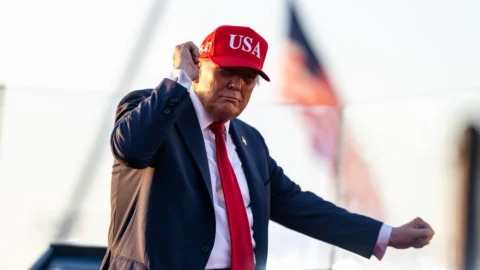
Shortly after 7 a.m., on the East Coast of the United States, the president released a message that quickly changed the market mood: he spoke of a possible suspension of attacks on Iranian electricity infrastructure and of "constructive conversations" underway. The impact was immediate: oil futuresS&P 500 jumps 3,35% in about ten minutes, generating a theoretical increase in value of almost two trillion dollars. On the other side, the oil futures collapse double-digit growth, consistent with a less tense geopolitical landscape. So far, the dynamics are understandable; however, it's what happens before the post that raises more than a few eyebrows.
According to what reported by Financial Times, about fifteen minutes before Trump's post, some trader they placed big bets on oil futures. The operation hit for entity – approximately 6.200 contracts for a total value of 580 million dollars – and above all for the timing, at a traditionally quiet time of day.
It wasn't just oil: during the same period, S&P 500 futures rallied, European stocks showed unusual movements, and even gas markets showed unusual activity. Despite no evidence of wrongdoing, many traders labeled this pattern "suspicious," wondering who could be so confident in betting so aggressively just before a major geopolitical development.
To complicate the picture, Tehran ha denied that they were talks underway with Washington. Mohammad-Bagher Ghalibaf, speaker of the Iranian parliament, confirmed the absence of negotiations, directly contradicting Trump's statement and raising concerns doubts on whether the announcement was more useful influence the markets and investors who bring about real diplomatic progress.
SEC and market controls: how many guarantees?
Proving insider trading is extremely complex: it requires concrete evidence that someone accessed confidential information and used it for specific financial transactions. Without this, any suspicion remains hypothetical.
The Securities and Exchange Commission (SEC), the US body responsible for combating market abuse and insider trading, has appeared to be relatively inactive regarding similar incidents in recent months. Its chairman is Paul Atkins, considered close to Trump and in favor of a more permissive approach, especially toward innovative financial operations and the crypto world. This context raises doubts about the ability—or willingness—to thoroughly investigate such timely moves.
Trump and his market-shaping announcements: not the first time
The episode is part of a larger sequence. At the beginning of January, on the Polymarket platform, a 32 thousand dollar bet on capture of Venezuelan leader Nicolás Maduro – then considered unlikely – quickly turns into a $400 win. Again, on March 10, Trump declares that the war is "basically over," triggering a market rebound, only to be contradicted a few hours later by Defense Secretary Pete Hegseth, who says the conflict is "just beginning."
Further events confirm the pattern: on March 20, the US stock market lost 1,8% during the day, weighed down by statements from Trump himself and rumors of a possible military intervention in Iran. Then, shortly before the close of trading, a new statement hinted at a gradual reduction in attacks, and markets fully recovered their losses within minutes. Negative statements followed by sudden increases, often at key moments of the day, have become a recurring pattern.
Trump and Unpredictability: Manipulation or Political Strategy?
Experts point out that the oil market is highly liquid and that large-scale operations, although important, are not unusual, especially in times of geopolitical uncertaintyHowever, already unbalanced positions can amplify swings, and markets often anticipate events, especially when repetitive patterns are observed in the behavior of political figures like Trump. His statements, often released at the most delicate moments of the financial day, can reverse the performance of indices in a matter of minutes, making unpredictability a powerful market tool.
An aspect that is far from secondary, considering the weight of the stock market since political consensus: from large financiers of electoral campaigns to the millions of American citizens with pension funds invested in the markets. With the midterms are upon us and a declining approval rating for Trump, every market movement can become a political tool, capable of reassuring supporters and investors and sending signals of strength just when the leadership is under pressure.
Markets and politics: an increasingly blurred line
This leaves a gray area where political communication, strategy, and finance are intertwined. On the one hand, there is no concrete evidence of abuse; on the other, the recurrence of suspicious movements inevitably raises questions. Even without a formal investigation, it's clear that Donald Trump can influence the markets with a simple post.
The crucial point is not so much whether he does it for speculative or political reasons, but to understand the real effect of his words on the market. duties, cryptocurrency or financial advice disguised as slogans: every word can make or lose billions in a matter of minutes. One tweet generates panic, the next euphoria, with tangible consequences for the economy.
Meanwhile, the markets do what they do best: react. Even when someone may have already read the news ahead of time.