There is no true democracy without an elite capable of taking the lead. driving responsibility, not to exercise dominion, but to hold together vision e realism, rootedness and openness, ethics and competence. In every era of change, the future has needed men and women capable of fulfilling courageous choices, to represent general interests and not particularisms, to go beyond the present to generate hope.
Back: We need a new ruling class. Here's why.
Today, like yesterday, we need a new generation of managers, public and private, political and technical, cultural and civil, which are not recruited within self-referential circles, but which emerge through transparent, formative, open and meritocratic pathsIn recent decades, we have witnessed a progressive desertification of the leadership function: parties have become empty containers or electoral committees; the selection of political classes has transformed into co-optation; the administration has been devastated by the spoils system and deprived of stability and competence.
Above all this, a decisive factor must be considered: the loss of common values, the lack of a shared culture of public responsibility and the absence of governance rules appropriate to public management. The crisis of the ruling class is not just a functional issue: it is first and foremost a cultural crisis.Without a shared ethic, without a vision of the common good, without citizenship education, the selection of elites is reduced to a mere distribution of roles. The ruling class must possess not only technical skills but also the ability to have a long-term vision, to connect with people's needs, and to communicate effectively. Ultimately, it must be capable of humbly serving institutions.
Back: the demanding lesson of the great liberal Southerner
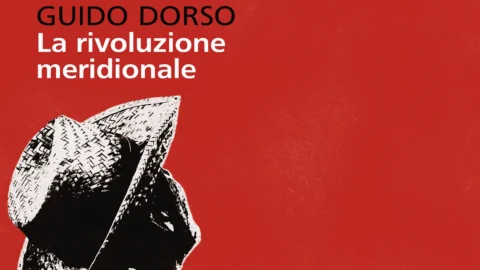
Dorso offers us a demanding lesson: the ruling class cannot be just one group that governs. It must be the place where society thinks, plans and reforms itself.It must be a space where authority is accompanied by legitimacy, where power is combined with responsibility, where leadership is built by listening, educating, and including. Building a new ruling class therefore means starting from the foundations: investing in schools and universities not only as places for the transmission of knowledge, but as hotbeds of critical thinking, civic sense, and ethical awareness.
This is also with a view to realising the investments and the reforms envisaged by the Pnrr, so that they do not remain abstract promises but translate into real opportunities for access, growth and valorization of human capital. It means giving back value to public function, making the choice to serve the state, the community, and institutions attractive. It means creating transparent access and advancement paths, in which merit and commitment prevail over personal affiliations and loyalties. But it also means, and perhaps above all, giving voice and space back to young peopleNot as rhetoric, but as a true strategy for renewal. A solid democracy cannot be built without a new pact that allows new generations to access the places of power, participate in decision-making, and contribute to shaping the future.
Back: a precious legacy for a necessary democratic revolution
Today more than ever we need a leadership that is not afraid of the new, which includes and does not exclude, which does not limit itself to managing what already exists, but which knows how to plan for what is not yet there. The present time demands a cultured, competent, and inclusive ruling class. But above all, it demands a ruling class with a soul. One that knows how to restore to politics its lofty function, its dignity, its capacity to build. One that sees collective action as a possibility for transformation, and not just a survival strategy. Dorso, with his intellectual rigor and its civil passion, left us a precious legacy. He pointed the way, revealed the risks of adaptation, denounced inaction and opportunism, but above all, he believed in the possibility of a democratic revolution based on culture, ethics, and participation.
Today that one revolution It's not just possible: it's necessary. And it will once again rally a clear-headed and determined minority. It's up to us to recognize it, support it, and empower it to become the new leader of a country that can no longer afford the luxury of mediocrity. Because every future depends on the quality of those who imagine it. And on the responsibility of those who have the courage to begin it.
°°° Luigi Fiorentino is the President of the Guido Dorso Research Center in Avellino