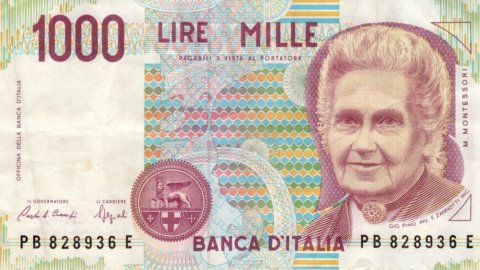
Italy and the lira, a long love story that some would like – unfortunately – to bring back to the fore. The old Italian currency, which many regret for the purchasing power it guaranteed to citizens - however to the sound of very heavy devaluations - before embarking on the path with no possibility of returning to the single European currency, in reality a small positive record led to home. And these days, with the government's budget package that is judged risky for the budget and an element of uncertainty for the stability of the Eurozone itself, it has a strange effect to remember that in 1960, at the beginning of the golden years of the economic boom, the lira was even judged as the most stable currency in the world.
It was neither the Bank of Italy nor the governments of the time who established it, led in that calendar year first by Antonio Segni, then by Fernando Tambroni and finally by Amintore Fanfani (all three exponents of the Christian Democrats who had the majority in Parliament ), but the prestigious Financial Times, or the same international observers who today often put Italy and the stability of its public finances in their sights. At the time, not even the political turmoil, in reality even more frequent than now (it was the period of governments that fell after a few months), had not affected the solidity of the Italian economic system, which took off in those years.
The average exchange rate of the Italian lira with the US dollar in 1960 was 620 lire to one dollar. Already much more than in the early 900s, when 1 dollar could be bought for just over 5 lire, but down compared to the years of the world war (when it was pegged to the franc) and also at the end of the 50s, when had reached 625 lire (a value that will return to the annual average in 1963-64). Since 1960, however, the Italian currency has done nothing but constantly lose value, then with a sensational leap in the mid-seventies, when to buy a US dollar it went from 653 lire in 1975 to 832 the following year. In the early 80s, the threshold of one thousand lire for one dollar was exceeded, and already in 1985 the historic record was reached, never broken again, at 2.200.
In 2000, the last year calculated before the changeover to the euro, that for banks and post offices it officially took place on September 1, 2001, the lira-dollar exchange rate was 1 per 2.100 on average for the year. Italy officially entered the European Monetary System on 24 November 1996. On 1 January 2002 the euro began to circulate regularly, changed to 1936,27 lire. The last day of life of the Italian lira was February 28, 2002.