No time to cash in victory for the 30 billion dollars of the new stock plan, that for Elon Musk faces yet another blunder of a troubled 2025. At the center of the storm this time there are robotaxis, the self-driving shuttles that were supposed to revolutionise urban transport and which instead risk to derail not only the visionary image of the entrepreneur, but also Tesla's financial stability.
Robotaxis: The (Failed) Race to the Future
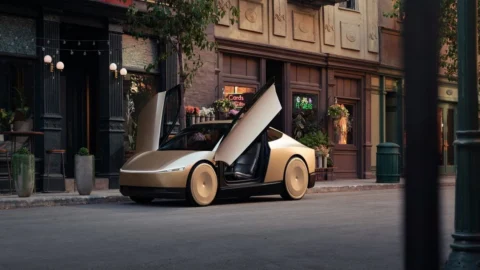
It's June 22nd in Austin, Texas. Tesla launches in grand style its first autonomous taxisA fleet of Model Ys with a safety operator on board, but no manual control. The event goes viral for all the wrong reasons: cars exceeding speed limits, braking suddenly, climbing onto curbs, veering into the wrong lane, and dropping off passengers in the middle of multi-lane roads.
The result? A shower of criticism, an official investigation launched by the National Highway Traffic Safety Administration (Nhtsa) and a 6,1% drop in Tesla shares in two days, burning through $68 billion in market capitalization.
Class action: Musk and Tesla in trouble for fraud
On August 4th, the day Musk's bonus was approved, the plot twist occurred. A group of shareholders, led by the doctor Denise Morand, deposit one class action in Texas Federal Court, accusing Musk, Tesla and its CFOs of financial fraudThe accusation is that of having hidden serious risks of autonomous driving for inflate stock prices and deceive investors.
According to the plaintiffs, between April 2023 and June 2025, the stock rose 44% precisely because of an overly optimistic narrative about a still immature technology. Now they ask for damages unspecified, but the stakes are very high.
The robotaxi's infinite loop
Un symbolic episode It has been making the rounds on the web: a robotaxi stuck in a parking lot due to some traffic cones, unable to react to a trivial unforeseen event. The car has kept going around in circles for five minutes, while the passenger, a frequent user, remained trapped. Not even the operator on board could intervene: the system prohibits it.
The car was finally saved by Tesla remote supportBut the damage to its reputation, in terms of confidence in autonomous driving, has been done.
Yet, Musk is accelerating. After the disaster of the first tests, therobotaxi operating area in Austin it went from 20 to 228 square kilometersThe fleet has grown from 15 to 35 vehicles and is aiming for XNUMX by the end of the year. This aggressive growth highlights Tesla's owner's determination to accelerate, even at the cost of enormous reputational and technical risks.
Another blow: Tesla sentenced to 243 million
Just days before the civil suit, a federal jury in Florida had ordered Tesla to pay 243 million dollars for a fatal crash that occurred in 2019 while the Autopilot system was active. This is the first full conviction after years of legal disputes, and it casts a further shadow over the brand's credibility.
The shareholders cite this very case as concrete proof of systemic danger related to autonomous systems.
An increasingly “Musk-centric” Tesla
Meanwhile, Musk has gotten a new one approved 30 billion super bonus, after the previous $56 billion plan was struck down by a Delaware court. The new payout will allow him to increase his stake in Tesla beyond 15%, further strengthening his control over the company. More than a prize, it's a coup.
But centralization comes at a price.. After the endorsement of Donald Trump and the lightning entry into his government, the abandonment and the desire for his own party, the Tesla customer loyalty has plummetedIn the US, only 57,4% of buyers are returning to buy a new Tesla (up from 73% last year), while in Europe sales dropped by 33% in the first half of the year.
Il 2025 is a year to forget so far Tesla's industrial performance is also thriving. The Cybertruck, touted as revolutionary, has proven to be a flop. Sales are declining in the US (-8% in the first five months), Europe (-45% in April), and China (-8,4% in July). The brand is struggling, models are aging, and Chinese competition (primarily BYD) is gaining traction.
Grok 2 and the relaunch on artificial intelligence
If Tesla falters, Musk doesn't give up. The new front is called artificial intelligence, and that's where the founder stakes his future. But even this ground begins to crumble. On July 10th, in just 72 hours, social X – formerly Twitter – experienced one of its darkest moments: anti-Semitic responses from Grok, the xAI chatbot, censorship by Turkey for content deemed offensive towards Erdoğan, CEO Linda Yaccarino's sudden resignationA diplomatic and corporate storm that exposed the fragilities of an ecosystem built on speed rather than governance.
Yet, Musk relaunches. Despite everything, next week will come Grok 2: an updated version, open source, accessible to all, with the ambition of challenging OpenAI, Google, and Anthropic in the field of generative AI. Open, modifiable, and integrable code: Musk wants to build the "popular" alternative to closed, corporate AI. Meanwhile, the construction of Colossus 2, the mega data center built with Nvidia, the computational heart of its technological empire.
2025 is maybe the most difficult year for Elon MuskTesla under attack, investor confidence plummeting, sales stalling, billion-dollar lawsuits, and a shattered reputation. But the tycoon continues straight onA single man in command, for better or for worse. With one foot in the vanguard and the other on increasingly shaky ground.