The Six Nations ended in a tour de force that began yesterday at lunchtime with yet another Italian defeat and ended with England's triumph with the Grand Slam.
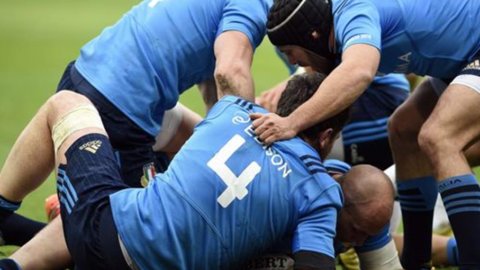
Italy had little to expect of themselves, while hosts Wales wanted to end a tournament not quite up to their standards on a high note that gave confidence to their movement. They did it, we weren't able to conclude even with a little self-respect: 67-14. A difference of 53 points admits of no justification, but once again the culprit is being hunted down. The injuries, too many. The coach, the youth movement, the lack of experience. The truth lies among all these motivations and once again the new manager who will arrive in a few days – probably from Ireland – will have to start from scratch. The hope is that, this time, it will be done for real and everything will be invested in a team with an average age of no more than 25, cleaning up both the ranks of the players and the hierarchical ones of the Federation.
Even Ireland, in Dublin, sought and found redemption against a subdued Six Nations. He beat Scotland 35-25 thanks to a simple and coherent game, which discovered the weak points of the Scots: touche and kick. Scotland confirms that they are a mature and competitive team at the highest levels, they lack a level aerial game and a consistency that they don't always manage to achieve. Ireland, on the other hand, does not show room for growth useful for facing the highest oval spheres, but remains solid and orderly on its key points. Lastly, a heavy arbitration mortgage on the final result should be noted. Joubert concedes to Ireland what he hadn't conceded before to the Scots, making the game extremely bad, which repeatedly sees bar fights forming at the end, not typical of this level.
The most interesting match is undoubtedly the one in the early evening, at the San Denis in Paris, between France and the already champion England, who takes the field to try and take home even the million pounds up for grabs for the winner of all tournament matches. Here the heaviness of the referee's sensationally wrong decisions therefore brought not only the victory of the prestigious award to the English, but also a nice prize. Without 10 points clearly assigned by the Welsh referee Nigel Owens to the away team, in fact, the match would have ended in a much fairer draw. The equality between the two formations was the constant throughout the eighty minutes, during which we saw a game with many upheavals in front. However, the scoreboard in the late eighties says 21-31 for the red roses.
However, the final standings of the 2016 Six Nations be drawn to the strengths of the Northern Oval Hemisphere. England redeems the world disappointment, applying to be, with this team, at the top of the next global appointment. France has put together a respectable formation with top-notch individuals who just need to be better placed in a team project, which is already at a good level given the excellent work of the new head coach Guy Novés. Wales is not at the level of the first two teams, but still has a well-established team, without however having large prominent individuals from the youth sectors.
Even worse, from this point of view, Ireland, which is unable to find alternatives to a game that has earned them so much in previous years but which is no longer always profitable at a high level. Scotland needs that extra consistency typical of the big teams, but already counts among its ranks qualities worthy of the best XV in the world. There isn't much else to say about Italy beyond that: once again we will have to start again from a team without a structure and with only one leader at the end of his career, who will no longer be able to carry the weight of too many failures on his shoulders for a long time .