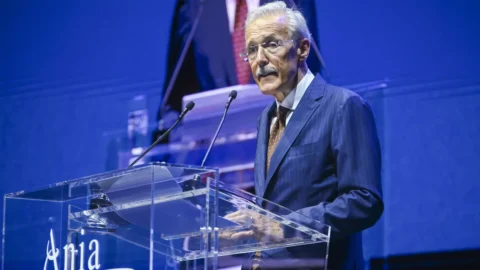
There is one theme that defines, perhaps more than any other, the stability of our socioeconomic system and the future of our social contract, and it is summed up in two words: risk and longevity. This was the thought expressed by Giovanni Liverani, president of ANIA (National Association of Insurance Companies), during his recent speech at the "Itinerari Previdenziali" conference in Milan. "This is the most emblematic oxymoron of our time: the longevity risk“, said Liverani opening his speech.
Why is longevity perceived as a risk today? According to the president of Ania, this is precisely a paradox.We've been fighting for centuries to extend life, and now that we've succeeded, we call this success 'risk.' The reality is that average lifespan is increasing, but society hasn't yet developed the tools to ensure the quality of this expanding lifespan.
“Families change – continued Liverani – single-member households increase and what once worked, the so-called family welfare is disappearingIf longevity is a success story for science and social systems, its management is today an unprecedented political and economic challenge. In particular, I see three risk areas that directly impact the lives of millions of citizens and impact the quality of life of those who will age: economic fragility, the health fragility and overloading the NHS".
With regard to the economic fragility, Liverani claims that "more than twenty years have passed since the introduction of supplementary pension provision, but only about 38% of employed workers has a pension plan. Let's talk about almost 10 million members on an immensely larger potential audience. Yet, there are countries in Europe where participation rates are much higher, in some cases approaching 100%. Why is Italy so far behind?
The topic, as often happens, is one of economic policy: we need tax incentives to increase pension savings"Just consider that the tax-deductible threshold for contributions has been stuck at €5.164,57 for over twenty years, and the increase recently introduced with last year's Budget Law was only €135! This is certainly a first step, albeit a timid one; a sign that gives us hope that public decision-makers will pay attention," Liverani stated.
“The step taken in the 2026 Budget Law to guarantee the portability of contributions "This change will encourage employers to embrace all existing pension solutions on the market. This change will serve to stimulate efficiency and competition within the pension fund sector, which in Italy is characterized by suboptimal returns and high costs compared to its potential and, above all, compared to other countries around the world," acknowledged the president of ANIA.
Ensuring greater efficiency, transparency, economies of scale, and competition among pension funds means directly protecting the pension savings of the current 10 million citizens and thousands of companies that already contribute for their employees, and at the same time making the tool more attractive for those who have not yet joined. Conversely, inaction, or worse, any steps backward, as we hear proposed on this front, would condemn millions of future pensioners to a fall in the standard of living that no government will be able to stem in ten or twenty years if we don't act today,” warns Liverani.
Sulla health fragility the president of the insurers recalls that we already have about 3,8 million non-self-sufficient elderly people in Italy. Behind this number are millions of families experiencing daily financial and psychological drama. The public system alone does not offer complete solutions. All of us—institutions, sector operators, citizens, businesses—must ask ourselves a question: do we prefer to manage a massive social emergency of families impoverished by the enormous costs of caring for the dependent in ten or twenty years' time, or do we want to encourage today—and perhaps, why not?—mandatory mutual assistance that guarantees dignity for all? Failure to act would leave these families alone, fueling a sense of abandonment that would have profound consequences for trust in institutions.
All of this leads to the topic of overload of the National Health System. “Today citizens pay out of their own pockets approximately 45 billion euros, in addition to the approximately 138 billion that the State pays—through the Regions and through taxes—to the National Health Service. This flow of resources is, on the one hand, inefficient by definition, and, on the other, largely unaccounted for by the public service. The Ania proposal is clear: Increasing the intermediation of this expenditure through health funds and insurance policies, which currently accounts for only 10%, would not only make spending more efficient for citizens, but would also relieve the NHS, financially and operationally.