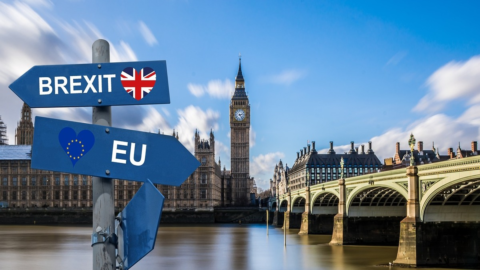
Ten years ago, when the UK had voted to leave the European Union, the vision was of a "global Britain" capable of pursuing trade agreements with partners around the world, untethered from EU policies set in Brussels. Today, the the scenario is different: more difficult geopolitical conditions and growing European protectionism are forcing the British government to choose: forge closer ties with the EU, also benefiting from financing, or opt for the investments from China?
The talks of the top with EU leaders in Brussels, expected future, they are revealing difficult, according to observers. Among others, the British Prime Minister will sit at the table. Andy Burnham, the president of the European Commission Ursula von der Leyen and the President of the European Council Antonio Costa.
Britain left the EU in 2020 after the 2016 referendum, ending over forty years of membership. Since then, efforts to deepen cooperation have often clashed with the political sensitivities surrounding Brexit. But last month Burnham said Britain should have an “honest discussion” about its future relationship with the EU and argued that the Brexit deal, achieved by previous governments, it damaged the economy.
The issues on the summit table: from youth to food to carbon. But the real focus is the automotive sector.
Il package of agreements with the European Union that Burnham hopes to bring home at the summit includes a broad agenda: in a factsheet published ahead of the summit the government said there will be opportunities for young to live, study and travel in Europe, will reduce trade barriers for food and agricultural products and will connect the markets of carbon British and European. But it is clear to everyone that in the EU-UK game the real goal is to find an agreement on the auto sector.
With the recent plan “Made Europe” the EU asks companies to to include a certain percentage of components of manufacturing European as a condition for accessing the European subsidies or for sell to EU governments and agencies. Obviously the main objective is to help manufacturers in sectors such as electric vehicles and batteries to compete with Chinese imports low cost. But this plan excludes including products made in the UKThe EU has imposed duties up to 45% on electric vehicles of manufacturing Chinese and restricted vehicle imports hybridsA European official said there was an ongoing discussion about whether the United Kingdom should follow suit. However, while a first draft reviewed by Reuters suggested that Britain would align its policies with those of the EU under a “partnership of trust”, a later draft removed this wording, indicating that there was no agreement on a special status for Britain.
Burnham has been trying to strengthen ties with the EU: wants cars and parts made in the UK are considered "produced in Europe" according to the regulations. “The EU and the United Kingdom are at face many of the same challenges, and that is why it is vital that we protect trade flows between us,” a UK government spokesperson said.
For their part, the main Member states of the EU are firm on one point: Great Britain, to participate, must align with the block on trade protection measures and conditions for investments from third countries. This could mean that Britain would have to impose duties in turn customs duties on Chinese-made electric vehicles, risking a clash with Beijing which Burnham would prefer to avoid. Last month, the Chinese embassy in London said it "firmly opposes any discriminatory practices" involving Chinese products and had raised the issue with the British authorities.
Burnham at a crossroads: open the door to Chinese investment or reconnect with the EU?
The government of Burnham it is therefore found in a particularly difficult position when he sits at the summit table tomorrow, he highlights an analysis Reuters. The British automotive sector is largely foreign-owned and is benefiting from an influx of Chinese investments. There is a game at stakeBritish industry which, according to data from the Society of Motor Manufacturers and Traders (SMMT), contributed approximately 830.000 jobs and £18 billion ($23,66 billion) of added value to the national economy in 2025.
- investments in the automotive sector in the UK have collapsed after the Brexit vote from 2016: Honda closed its plant in 2021 and Stellantis in 2025, after which the main ones will also providers in the sector have cut jobs and closed factories. Instead, the Chinese car manufacturers are expanding, opening dealerships and creating jobs across the UK. And Britain is in great need of these investments Industrial. British consumers, especially those on a budget, appreciate the lower prices of Chinese brands. The market share of Chinese cars in the UK increased to 17,8% in the year to the end of October, double that of the same period in 2025, according to SMMT data. Furthermore, Britain needs a rapid diffusion of electric vehicles to reach thezero emissions goal net greenhouse gas emissions by 2050.
But British producers can't even afford to be excluded from EU purchasing and subsidy programs.
This would pose an “existential” threat, calling into question the viability of UK factories, he said. Reuters David Bailey, professor of business economics at the University of Birmingham. Of the 717.000 cars produced in Britain in 2025, nearly 57% were exported to the EU, according to SMMT data. Another 6% went to China, a key destination for companies like Jaguar Land Rover.