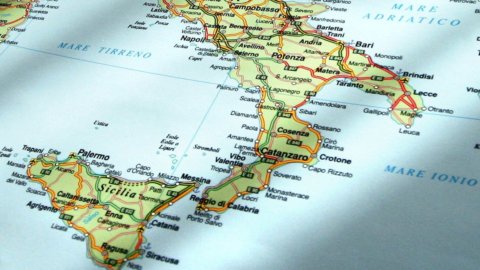
The positive employment performance in Southern Italy, highlighted by ISTAT (50,1% of employed people in the second quarter of 2025, a record high since 2004, but still 12 points below the national average of 62,6%) must be a stimulus to continue, focusing with even greater conviction on training, demographic policies, and encouraging female employment, in Southern Italy as in the rest of the country. This is what emerged during the launch of the first South Day, promoted by Chamber of Commerce of Bari in the context of Fiera del LevanteThe second, on Thursday 18th, will be dedicated to the theme of'energy Because, as the president of the Chamber of Commerce, Luciana Di Bisceglie, said in her opening remarks, they are "two sides of the same coin: without stable employment, adequate wages, and productivity, there is no development; without accessible, safe, and sustainable energy, there is no industry or social cohesion."
De Romanis: "Italy is at the bottom of the EU's training spending."
In the course of the debate on work, Veronica DeRomanis (Luiss Guido Carli – Stanford University), presented a series of emblematic data for our country.
Italy spends less than all other European countries in training, only 7,2% of total expenses, and in 2026 it will grow less than the continental average. Not only that, according to Eurostat, we are also last for female employment and birth rate, with an aging and overall decline in the population that appears more marked in the South, also due to the South's reduced attractiveness for migration from abroad.
Our country, according to Eurostat, is in third-last place in the European ranking for share of graduates (only 30,6%), and secondly for unemployed people, who are neither studying nor looking for work. The so-called NEETs are 15,2% of the population between 15 and 29 years old. Over 40% of employed people are over 50, double the number 20 years ago, today exceeding 10 million.
Salvatore Rossi: "The South is growing faster than the Center-North, but the gap remains wide."
As for the South, "it's been about five years – he highlights Salvatore Rossi, former director of Bankitalia and president of Telecom – that the growth of employment, of labour productivity, of internal production is higher than that of the Centre-North, however the secular gap between the two areas of the country, although slightly reduced, remains large. To reduce it further, it is necessary to enhance and refine the talents that the South is rich in, and for this reason a much more advanced educational system than the current one is necessary.” Also because the growth signals recorded refer to value-added service activities, high technology that is starting to develop in some districts of the South.
Quagliariello: "In 20 years, the South has lost 700 residents."
Standardized Quagliariello, director of the School of Government at Luiss, who closed the proceedings, reaches the same conclusions. He does so by starting from demographic data: "even when the economy of the South improves or employment increases, internal flows towards the Center-North do not stop. In just over 20 years, the South has lost over 700 thousand residents, 36.800 in 2024 alone, 64% of which between Campania and Sicily.” And also for Quagliariello, looking at the continued brain drain and mismatch between supply and demand of work, it is necessary to look at training and valorisation of human resources and, above all "in policies for the South, it is necessary prioritize the quality of investments directing them towards human capital, social infrastructure, and community strengthening."