It's not just a security issue. It's a question of quality of life, international image, and coexistence. In Venice, pickpocketing continues to be one of the main problems in the historic center, so much so that many residents perceive it as one of the factors making life in the city increasingly difficult. In recent years, images of groups of citizens shouting "Attention, pickpocket!" have gone viral worldwide. This phenomenon has helped raise awareness among tourists, but it also speaks to the level of exasperation reached by those who experience Venice every day.
Growing numbers
According to the 2025 operating budget of the Venice Local Police, anti-pickpocketing activity has seen a sharp increase. The number of people reported to the judicial authorities for pickpocketing has increased from 68 to 191, with an increase of approximately 180 % compared to the previous year. The report also highlights 121 complaints linked to pickpocketing, confirming the intensification of checks and police operations. The phenomenon is particularly concentrated in areas with high tourist density: Piazzale Roma, Santa Lucia train station, Rialto, San Marco, the ACTV landing stages and the main vaporetto lines, where the crowd makes it easier for organized gangs to act.
Organized gangs and a sense of impunity
Law enforcement agencies describe an increasingly structured phenomenon. Local police also emphasize how the regulatory framework makes it difficult to effectively combat habitual pickpockets, forcing officers to repeatedly intervene against the same individuals.
Not just tourists
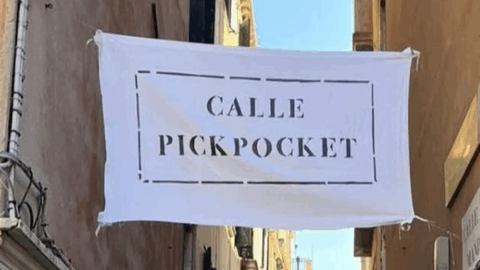
While the most frequent victims are foreign visitors, the problem also affects residents. Many Venetians report avoiding certain streets, the busiest piers, or certain times of day. It's not uncommon to witness impromptu chases or hear residents shouting to warn passersby. Exasperation has also led to symbolic gestures. Already in the summer of 2025, some residents provocatively installed a fake "nizioleto" with the words: “Calle Pickpocket”, transforming a street in the historic center into a manifesto against a situation now considered chronic. With the start of summer 2026 and the return of large tourist flows, attention to the phenomenon is even greater. Residents, operators, and institutions are confident that increased security and law enforcement presence will help reduce pickpocketing, restoring greater safety for those who live in Venice and those who choose it as a travel destination.
Damage to the image
Pickpocketing also poses an economic and reputational problem. Venice welcomes millions of visitors every year and relies largely on tourism. Each incident shared on social media fuels the perception of an unsafe city, with repercussions for merchants, tour operators, and the entire local economic system. At the same time, according to the Local Police report, the Administration has invested in strengthening urban security in recent years: video surveillance cameras have gone from 134 in 2015 to over 820 in 2025, while the agents have increased from 394 to 462.
The real challenge
The fight against pickpocketing isn't just about arresting perpetrators. It's a challenge that involves urban security, effective justice, protection of residents, and safeguarding Venice's international image. Because a World Heritage city can't rely on videos shot by citizens or impromptu shouts of "Beware, pickpocket." Security isn't just a tourist right: it's above all a prerequisite for Venice to remain a city to experience, not just to visit.
Living in Venice is becoming increasingly difficult
For those who live in Venice year-round, the problem of pickpocketing isn't limited to the news. It means changing their daily habits. Some avoid using the vaporetto during rush hour, others skip stopping at Piazzale Roma or the train station, and others prefer longer routes to avoid the busiest areas. Elderly people and commuters are often forced to pay constant attention to their belongings, turning even a simple journey around the city into an apprehensive experience. Added to this is a growing sense of helplessness. Many residents report recognizing familiar faces among the habitual pickpockets and repeatedly witnessing stops and checks without perceiving a real solution to the problem. The consequence is a progressive loss of confidence in the system's ability to ensure safety and peace of mind in daily life. The phenomenon also has indirect effects on the quality of life. The increase in tourist pressure, combined with the constant presence of pickpocket gangs, fuels the perception of a city increasingly less designed for its residents. The cries of "Attention pickpocket", now a common sight along the streets and bridges, represent the symbol of a normality that many Venetians find unacceptable. The challenge, therefore, is not just about combating petty crime. It concerns the right of residents to experience their city without fear, to move freely in public places, and to avoid seeing Venice reduced to a scenario where safety depends on the spontaneous initiative of citizens. Because a city that is a World Heritage Site must be, above all, a city where it is possible to live with dignity, serenity, and trust in its institutions.