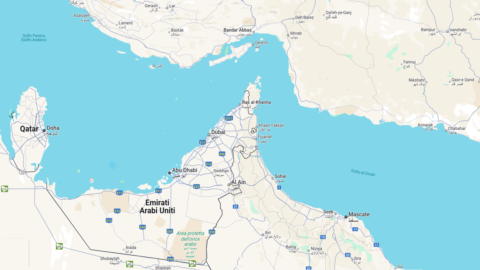
Oil remains below $95 a barrel in Europe after Trump announced yesterday a two-week ceasefire agreement with Iran, conditional on the immediate and safe reopening of the Strait of Hormuz. Despite doubts about the stability of the agreement, which fails to resolve the deep-seated problems linked to the war in the Middle East, markets are eager to believe that oil traffic through the Strait will soon resume, with shipowners ready to dispatch 800 oil tankers. Thus, oil and gas prices are collapsing, dragging down the stocks of energy companies from Europe to the United States.
At the halfway point of the European session, the future on Brent crude oil is trading at $94,4 a barrel, down 13,5% after hitting a nearly one-month low of $91,70. WTI has lost more than 16%, settling at $95. European benchmark diesel prices also fell, losing $271,50, or 17,8%, to $1.256,25 a ton.
Trump's breakthrough came shortly before the deadline set for Iran to open the Strait of Hormuz, through which 20% of the world's oil passes, under penalty of large-scale attacks on its civilian infrastructure. "In theory, 10-13 million barrels per day "Crude oil and petroleum products trapped behind the Strait should now be gradually released," said Tamas Varga, an analyst at brokerage firm PVM Oil. "Restoring the pre-March status quo depends entirely on the possibility that the truce turns into peace permanent during the negotiations in Pakistan.” Trump said the United States received from Iran a 10-point proposal, which defined a workable basis for negotiating, and added that the parties are well on their way to reaching a definitive agreement for a long-term peace. "It's a good start and could pave the way for a more permanent reopening, but there are still many 'what ifs' to be resolved," said Tony Sycamore, an analyst at IG.
All the more so since in the meantime several Gulf states they reported missile launches and drone attacks, or issued warnings to civilians urging them to take cover. The US-Israeli war against Iran has seen the sharpest monthly increase in oil prices in history, by more than 50%.
Energy stocks tumble from Europe to the US pre-market
The other side of the coin is represented by the crollo this morning on the energy stock market Americans and Europeans precisely because of the collapse in oil prices.
In Europe, the British Bp, shell, the Italian Eni, the French oneTotalEnergies and the Spanish Repsol they are all down between 6% and 9%. The European oil and gas sector was the worst performer, losing 4,3% and heading for its biggest daily decline since April 2025. The index is still up nearly 30% since the start of 2026.
Wall Street's pre-market trading is shaping up to be the same, if not worse, debacle. Shares of major U.S. energy companies are Exxon Mobil e Chevron are showing a decrease of 6,3% and 4,6% respectively. oil and gas producers Occidental Petroleum, Devon Energy, Diamondback Energy, and ConocoPhillips all fell between 5% and 8%. Service companies for the oil sector such as Baker Hughes and SLB lost 2,6% and 4,1% respectively, while Refinery Marathon Petroleum and Phillips 66 lost 3% and 5%, respectively.
The surge in oil prices had contributed to the energy stocks U.S. stocks posted their best quarter ever in the January-March period. The S&P 500 Energy Index gained approximately 37,2% in the first quarter, becoming the best-performing sector in the benchmark S&P 500 index, which declined approximately 4,6% over the same period.