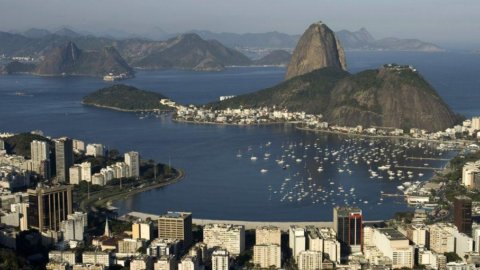
You say Brazil and you think of football. And therefore it is perfectly understandable to talk about Brazil now that the World Cup is being played there, evoking images of balls and beaches. But, beyond the pre-printed postcards, what country is Brazil really, and who are the Brazilians?
Difficult questions, especially for those who are on the other side of an ocean, but some numbers contained in an article published by Forbes come to our rescue. The portrait that emerges is that of a people of footballers, probably, but also of great surfers on the internet, especially with regard to social networks.
In fact, Brazilians publish the highest number of posts on Facebook of any other country and spend an average of 361 minutes per user per month on Zuckerberg's social network. A country, more or less technologically advanced, in which over half of the population uses the internet regularly (although only 5% speak English fluently) and in which there are more mobile phones than people, despite the fact that smartphones are still not widespread. Brazilians also use credit cards as much as Americans.
A country where people work only 228 days a year and nobody can work more than 44 hours a week without getting overtime. A large country, above all, and rich in resources. The Forbes article, in fact, shows in a quick outline how Brazil is, in fact, "big" as the rest of South America, both in terms of size and population, as well as mobile phone and internet users.
And it is precisely this position of pre-eminence that attracts so many investments to the country, despite the difficulties in conducting business in Brazil (116th in the relative ranking drawn up by the World Bank): if you conquer the giant, it is the widespread idea, you will be able to conquer all the rest of the South America.
Attachments: The Forbes article