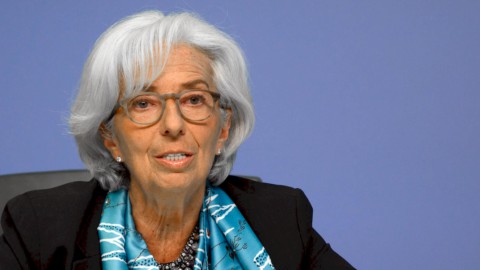
La ECB President Christine Lagarde tries to reassure the markets during his speech to the European Parliament. The number one of the Eurotower has confirmed the commitment to "act against the risks of fragmentation", or rather against the unjustified increase in spreads of some Eurozone countries, Italy in primis.
Lagarde: "Anyone who has doubts about our determination makes a mistake"
“On 15 June, we decided to apply flexibility in the reinvestment of maturing securities in the PEPP portfolio, in order to preserve the functioning of the monetary policy transmission mechanism, an essential condition for the ECB to be able to fulfill its price stability mandate,” he said. said Lagarde.
As for the now famous anti-spread shield, the president of the ECB explained: “we have decided to task the competent committees of the Eurosystem, together with the services of the ECB, to accelerate the completion of the design of a new anti-fragmentation tool to be submitted to the board of directors”. A decision that renews "previous commitments to adjust all the instruments envisaged by the mandate, incorporating flexibility if justified, to ensure that inflation stabilizes at the 2% target in the medium term".
'Fragmentation is a risk associated with and against our monetary policy we must apply flexibility and use tools against fragmentation: action against fragmentation is the precondition for an appropriate transmission of monetary policy and is at the heart of our mandate”, said the president of the ECB, reiterating that without an appropriate transmission of monetary policy there will be no there would be stability in the euro area. Lagarde then sent a clear message to the markets: the anti-fragmentation tool "will be effective, proportionate and consistent with our mandate: anyone who has doubts about our determination makes a mistake".
Lagarde: "Raise in interest rates depends on inflation"
“After September, based on our current assessment, we expect a gradual but sustained path of further increases interest rates,” Lagarde said, noting that “in line with our commitment to our medium-term target of 2%, the pace at which we adjust our monetary policy will depend on incoming data and how we assess the medium-term inflation trend”.
The president of the ECB then explained “The measure of the rate increase it will depend on the updated outlook for medium-term inflation. If the medium-term inflation outlook persists or worsens, a larger increase will be appropriate at our September meeting."
Lagarde: "The economy can continue to grow"
“Russia's unwarranted aggression against Ukraine is hitting the euro area economy hard and the outlook is still surrounded by high uncertainty. But there are conditions why the economy continues to grow and recover further in the medium term,” added Lagarde. "Fiscal policy is helping to cushion the impact of the war and governments have intervened to slow energy inflation."
"We do not expect a recession in the euro area however we are following very closely what is happening in the economy”, said the ECB president. Lagarde indicated that there could be risks of worsening growth, even of recession, as a result of negative developments in the war in Ukraine, difficulties in accessing oil and gas, and a 'boycott' by Russia.
La wage growth “has started to pick up although currently remains moderate: we expect negotiated wage growth to strengthen a bit further this year and then to remain above average levels over the forecast period supported by tight labor markets , increases in minimum wages and some offsetting effects for high inflation rates,” concluded Lagarde.